

In modern technological scenarios such as smartphones, electric vehicles, and energy storage power stations, rechargeable lithium batteries act like "energy magicians," supporting the continuous operation of devices with their astonishing cycle life. A high-quality lithium battery can complete over a thousand charge-discharge cycles while maintaining a capacity retention rate of over 80%. Behind this "magic" lies a profound integration of materials science, electrochemical engineering, and intelligent management technologies.
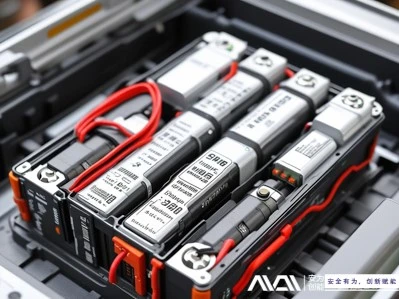
I. The Microscopic Stage of Energy Cycling: The "Rocking Chair Motion" of Lithium Ions
The charging and discharging process of a lithium battery is essentially a "round trip" of lithium ions between the positive and negative electrodes. Taking the commonly used lithium iron phosphate battery as an example:
Charging Stage: An external power source forces electrons to flow from the positive electrode (lithium iron phosphate, LiFePO₄) to the negative electrode (graphite). Simultaneously, lithium ions are extracted from the positive electrode lattice, pass through the electrolyte and separator, and are intercalated into the layered structure of graphite, forming a "lithium-graphite intercalation compound" (LiₓC₆). At this point, the positive electrode transforms into lithium-deficient FePO₄, while the negative electrode becomes enriched with lithium ions.
Discharging Stage: Lithium ions are extracted from the graphite negative electrode, travel back through the electrolyte to the positive electrode, and are re-intercalated into the FePO₄ lattice, reverting to LiFePO₄. Meanwhile, electrons flow through the external circuit to power the device.
This process is aptly described as the "rocking chair battery" mechanism-lithium ions "rock" back and forth between the positive and negative electrodes, while electrons form an electric current through the external circuit. The electrolyte serves as a "highway" for lithium ions, requiring high ionic conductivity and chemical stability; the separator acts like an "intelligent traffic policeman," allowing lithium ions to pass through while blocking the direct flow of electrons to prevent short circuits.
II. Breakthroughs in Materials Science: Building Long-Lasting "Energy Containers"
The cycle life of a lithium battery is highly dependent on the performance optimization of the positive electrode material, negative electrode material, electrolyte, and separator.
1. Positive Electrode Material: A Stable "Energy Source"
Lithium Iron Phosphate (LiFePO₄): Its olivine-type crystal structure undergoes almost no volume change during charging and discharging, akin to a "reinforced concrete" structure. CALB's "Zhi" series energy storage cells, using lithium iron phosphate positive electrodes, achieve a cycle life of 15,000 cycles with zero capacity degradation in the first 1,000 cycles, setting a new industry record.
High-Nickel Ternary Materials (NCM/NCA): Increasing the nickel content enhances energy density, but poses challenges to cycle stability. CATL has overcome this by employing bulk doping and surface coating techniques to suppress structural collapse of high-nickel positive electrodes during cycling, extending their cycle life beyond 2,000 cycles.
2. Negative Electrode Material: An Efficient "Sponge" for Lithium Storage
Graphite Negative Electrode: Natural and artificial graphite remain mainstream choices due to their low cost and stable cycling performance. BYD has improved the cycling efficiency of graphite negative electrodes to over 99.9% by optimizing graphite particle morphology and the composition of the solid electrolyte interphase (SEI) film.
Silicon-Based Negative Electrode: Silicon has a theoretical specific capacity ten times that of graphite, but suffers from severe volume expansion. Tesla's 4680 battery adopts a silicon-carbon composite negative electrode, reducing volume expansion to within 30% through nanostructuring and elastic binders, achieving a cycle life of over 1,000 cycles.
3. Electrolyte and Separator: Safeguarding the "Lifeline" of Ion Transport
Electrolyte: Traditional lithium hexafluorophosphate (LiPF₆) electrolytes are prone to decomposition at high temperatures, generating HF that corrodes electrodes. Novel lithium bis(fluorosulfonyl)imide (LiFSI) electrolytes offer higher thermal stability and ionic conductivity, extending cycle life by 30% at 45°C.
Separator: Polyethylene (PE) and polypropylene (PP)-based separators, coated with alumina or boehmite ceramic layers, can withstand temperatures up to 150°C without shrinkage while improving lithium ion transport uniformity. EVE Energy's manganese-core crystal element batteries use composite solid electrolyte separators, increasing the lithium ion transference number from 0.3 to 0.7 and extending cycle life by 20%.
III. Intelligent Management Technologies: The "Digital Brain" for Extending Lifespan
Modern lithium battery packs incorporate battery management systems (BMS) that precisely control the charging and discharging process by continuously monitoring parameters such as voltage, current, and temperature, preventing "overcharging," "over-discharging," and "overheating."
1. Dynamic Balancing Technology: Eliminating the "Wooden Barrel Effect"
Battery packs consist of hundreds of cells connected in series, and capacity degradation in a single cell can拖累 overall performance. The BMS uses active balancing circuits to transfer energy from high-capacity cells to low-capacity cells, keeping capacity differences between cells within ±2%. Sunwoda's Flash Charge Battery 3.0 series employs distributed balancing modules with 98% balancing efficiency, extending pack cycle life by 15%.
2. Predictive Maintenance: Anticipating "Aging Signals"
Desay Battery has introduced pressure sensor technology to monitor internal cell pressure in real-time. When abnormal pressure rises occur, the system immediately triggers protection mechanisms to prevent thermal runaway. Meanwhile, machine learning algorithms analyze historical data to predict remaining cell lifespan, providing decision-making support for maintenance.
3. Fast Charging Strategy Optimization: Balancing Speed and Lifespan
During fast charging, rapid lithium deposition on the negative electrode surface can form lithium dendrites, puncturing the separator and causing short circuits. BYD's megawatt-level fast charging technology reduces lithium deposition rates by 50% through pulse charging and negative electrode pre-lithiation, achieving a cycle life of 800 cycles even under 10C fast charging.
IV. Environmental and Usage Factors: The "Invisible Variables" Affecting Lifespan
Even with advanced materials and management technologies, the lifespan of lithium batteries is still influenced by usage conditions:
Temperature: High temperatures (>45°C) accelerate electrolyte decomposition and SEI film thickening, increasing internal resistance; low temperatures (<-20°C) reduce lithium ion migration rates, lowering charging and discharging efficiency. CATL's XiaoYao extended-range hybrid battery uses a lithium-sodium AB battery system integration technology to improve low-temperature range by 5%, maintaining an 85% capacity retention rate at -20°C.
Depth of Discharge (DOD): Deeper discharges cause more severe structural damage to electrode materials. Experiments show that reducing DOD from 100% to 80% can double battery cycle life.
Mechanical Stress: Vibrations and impacts can dislodge active materials inside cells. Electric vehicle battery packs require shock absorption designs and mounting brackets to limit vibration acceleration to within 5g.