

As the silver-blue photovoltaic panels at the Qinghai photovoltaic power station shimmer under the scorching sun and the wind turbines off the coast of the East China Sea carve elegant arcs in the monsoon winds, humanity's pursuit of clean energy has entered uncharted waters. The battery landscape in 2030 will unfold as a grand narrative of technological evolution, market competition, and energy revolution. In this transformation, lithium-ion batteries will not vanish; instead, their role is being redefined-shifting from an "absolute protagonist" to a "cornerstone technology," coexisting with emerging technologies like solid-state batteries and sodium-ion batteries to form a diversified energy storage ecosystem.
I. Lithium-ion Batteries: The "Ballast" of 2030
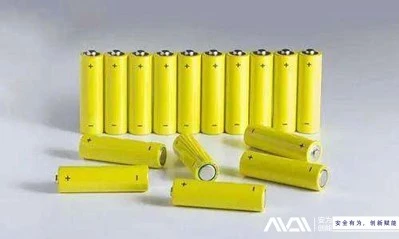
Despite the rising buzz around new technologies like solid-state and sodium-ion batteries, lithium-ion batteries will remain at the heart of the global battery market in 2030. The International Energy Agency (IEA) projects that by 2030, the global market for power and energy storage batteries will surpass $500 billion, with lithium-ion batteries accounting for over 80% of the share. This dominance is underpinned by three critical factors:
1. Irreplaceable Technological Maturity
After three decades of development, lithium-ion batteries have established a complete industrial chain spanning material systems to manufacturing processes. Leading Chinese companies like CATL and BYD have pushed the boundaries of innovation, with technologies such as CTP (cell-to-pack) and blade batteries elevating the energy density of lithium iron phosphate (LFP) batteries to over 160Wh/kg, extending cycle life beyond 8,000 cycles, and reducing costs by 60% since 2020. Such accumulated expertise cannot be easily disrupted.
2. Market Penetration Momentum
In 2024, lithium-ion batteries powered 95% of globally sold new energy vehicles (NEVs). By 2030, the global NEV fleet is expected to exceed 300 million vehicles, generating a retired battery capacity of 200GWh-a massive "second-life energy storage resource pool." This scale effect will further cement lithium-ion batteries' cost advantage in energy storage.
3. Broad Application Coverage
From residential energy storage walls to grid-scale peak-shaving stations, from 5G base station backup power to electric ship propulsion systems, lithium-ion batteries serve as the "universal interface" for distributed energy systems. AVEnergy's "Lingxi Series" energy storage system exemplifies this adaptability, offering modular designs scalable from 5kWh to MWh levels.
II. Solid-State Batteries: The "Game-Changer" of 2030
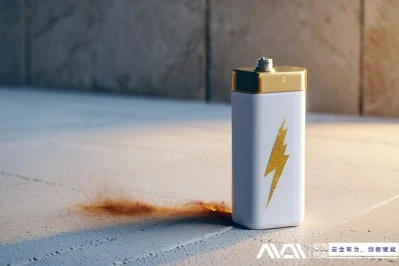
While lithium-ion batteries remain dominant, solid-state batteries are accelerating toward commercialization as potential disruptors. The year 2025 marks the dawn of solid-state battery industrialization: WeLion New Energy has achieved mass production of 360Wh/kg semi-solid-state batteries, while CATL plans small-scale production of all-solid-state batteries by 2027. BYD and Changan Automobile aim for full-scale mass production by 2030.
The core advantages of solid-state batteries lie in their dual breakthroughs in safety and energy density:
Intrinsic Safety: By replacing liquid electrolytes with solid-state electrolytes, they eliminate thermal runaway risks. AVEnergy's solid-state battery prototypes have passed UL9540A fire safety tests, achieving "zero thermal propagation" even under extreme conditions like nail penetration and crushing.
Energy Density Leap: Using lithium metal anodes and high-nickel cathodes, solid-state batteries can exceed 500Wh/kg-a 60% improvement over current lithium-ion batteries. This enables electric vehicles to surpass 1,000 km range and makes aviation electrification feasible.
However, three challenges hinder their widespread adoption:
Cost Barriers: Sulfide solid-state electrolyte materials cost 4-10 RMB/Wh, ten times higher than liquid lithium-ion batteries.
Manufacturing Complexity: Poor interfacial contact between solid electrolytes and electrodes requires novel fabrication processes.
Supply Chain Reconfiguration: The entire industrial chain-from electrolytes to separators-needs restructuring.
By 2030, solid-state batteries are projected to capture 10-15% of the premium electric vehicle and low-altitude aircraft markets, forming a complementary relationship with lithium-ion batteries.
III. Sodium-Ion Batteries: The "Cost Disruptor" of 2030
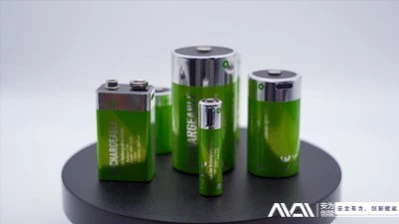
As lithium resource prices fluctuate amid surging demand, sodium-ion batteries are carving out a niche with their "abundant resources and low costs." By 2024, global sodium-ion battery shipments had exceeded 10GWh, with companies like HiNa Battery and CATL delivering products boasting 140-160Wh/kg energy density, over 3,000 cycles, and 30% lower costs than lithium-ion alternatives.
Three drivers fuel sodium-ion batteries' rise:
Resource Autonomy: China holds 45% of global sodium reserves, with extraction costs one-twentieth of lithium's.
Low-Temperature Performance: At -20°C, sodium batteries retain 85% capacity, outperforming lithium-ion's 70%.
Enhanced Safety: Layered oxide or polyanionic cathodes paired with hard carbon anodes raise thermal runaway temperatures by 100°C compared to lithium-ion batteries.
By 2030, sodium-ion batteries will dominate two sectors:
Energy Storage: Replacing lead-acid batteries in grid peak shaving and telecom base station backup power.
Budget EV Market: Forming a "high-low tier" partnership with lithium-ion batteries to cover price-sensitive segments like A00-class EVs and electric two-wheelers.
IV. Technological Coexistence: The Energy Ecosystem of 2030
The 2030 battery landscape will feature a "lithium-ion-led, solid-state-breakthrough, sodium-ion-penetration, and flow-battery-complementary" ecosystem. This coexistence manifests across three dimensions:
1. Scenario-Specific Adaptation
Lithium-ion batteries will dominate high-energy-density applications, solid-state batteries will capture premium markets, sodium-ion batteries will serve cost-sensitive segments, and flow batteries (e.g., vanadium redox) will specialize in long-duration storage (>4 hours).
2. Technological Convergence
Companies like AVEnergy are exploring hybrid systems combining semi-solid-state and sodium-ion technologies, balancing energy density and cost through material innovation.
3. Ecosystem Synergy
Retired lithium-ion batteries will be repurposed for residential storage, solid-state battery recycling will feed new production, and sodium-ion batteries will displace toxic lead-acid alternatives, creating closed-loop supply chains.
V. China's Role: From Follower to Leader
In this global battery revolution, Chinese companies are transitioning from "scale leadership" to "technological pioneering." By 2030, China will account for 70% of global lithium-ion battery capacity and over 40% of solid-state battery patents. AVEnergy's innovations exemplify this shift: its proprietary "breathing" thermal management system maintains battery pack temperature differentials within ±1.5°C, while AI-driven health prediction algorithms extend storage system lifespans by 20%. These breakthroughs not only solidify China's lithium-ion dominance but also provide engineering validation platforms for solid-state and sodium-ion technologies.