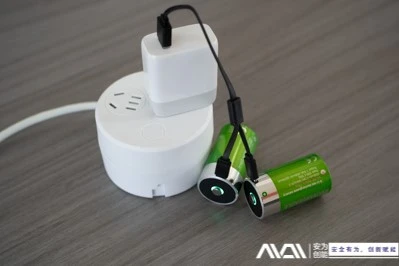
Lithium-ion batteries, as the core technology of modern energy storage, have deeply integrated into critical fields such as smartphones, electric vehicles, and energy storage systems. However, issues like limited cycle life and irreversible capacity degradation continue to hinder technological breakthroughs and industrial upgrades. In recent years, from Fudan University's "lithium injection" technology to global research institutions' in-depth analysis of degradation mechanisms, revolutionary advancements in extending the lifespan of lithium-ion batteries are emerging. This article will explore the core logic of "lifespan extension" for lithium-ion batteries from three dimensions: cycle count improvement, degradation mechanism analysis, and cutting-edge technological breakthroughs.
I. Cycle Count: From Thousands to Tens of Thousands
The cycle life of a lithium-ion battery is typically defined as the point at which its capacity decays to 80% of its initial value. Under traditional technologies, the cycle life of ternary lithium batteries is approximately 500-2000 cycles, while lithium iron phosphate batteries can reach over 2000 cycles. However, these figures still fall short of meeting the 10-year lifespan requirement for electric vehicles or the 20-year lifespan for energy storage systems. A research team from Fudan University has achieved a breakthrough with AI-designed lithium carrier molecules, trifluoromethylsulfinyl lithium (CF3SO2Li), enabling the first "external lithium supply" technology. By injecting this molecule into the battery through the electrolyte, active lithium ions lost during reactions can be precisely replenished, extending the battery's cycle life from 500-2000 cycles to 12,000-60,000 cycles, equivalent to a 1-2 order-of-magnitude increase in lifespan.
The core of this breakthrough lies in breaking traditional design principles. Traditional lithium-ion batteries rely on cathode materials to provide active lithium ions, whereas Fudan University's technology achieves an "extracorporeal circulation" of lithium ions through molecular-level intervention. Experimental data shows that after tens of thousands of charge-discharge cycles, the battery retains 96% of its initial capacity, with the cost accounting for less than 10% of the total battery cost, indicating significant potential for large-scale commercialization.
II. Degradation Mechanisms: Five Culprits and Solutions
The capacity degradation of lithium-ion batteries is not caused by a single factor but results from the combined effects of multiple factors, including cathode and anode materials, electrolytes, the solid electrolyte interphase (SEI) film, temperature, and charge-discharge strategies.
1. Cycling Aging: Structural Damage to Electrode Materials
Repeated lithium-ion intercalation and deintercalation during charge-discharge cycles can cause structural damage to electrode materials. For example, lithium cobalt oxide is prone to lattice collapse under high voltage, and higher nickel content in ternary materials leads to poorer crystal structure stability. After 200 cycles, the capacity retention rate of some ternary materials may drop to 92%. Although lithium iron phosphate has a stable structure, its energy density is relatively low. Solutions include developing highly stable materials, such as single-crystal ternary materials and silicon-carbon composites.
2. Overcharging and Overdischarging: Catalysts for Irreversible Side Reactions
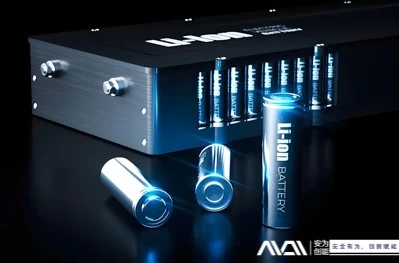
Overcharging can lead to electrolyte decomposition, cathode oxidation, and even lithium dendrite growth, while overdischarging can cause copper current collector dissolution in the anode, damaging the battery structure. Protective measures include using intelligent battery management systems (BMS) to limit charge-discharge voltages (e.g., 3.0-4.2V) and optimizing charge-discharge strategies, such as shallow charging/discharging and avoiding long-term full-charge storage.
3. High Temperature: A "Catalyst" Accelerating Side Reactions
High temperatures accelerate side reactions such as SEI film thickening, electrolyte decomposition, and cathode material phase transitions. For example, at 45°C, the electrolyte decomposition rate increases threefold, and active lithium loss increases by 0.5% per month. Solutions include optimizing electrolyte formulations (e.g., adding film-forming additives), using solid-state electrolytes, and controlling battery operating temperatures within the 25-35°C range.
4. Excessive SEI Film Growth: A "Stumbling Block" for Lithium-Ion Migration
During the first charge-discharge cycle, an SEI film forms on the anode surface through electrolyte decomposition. However, during subsequent cycles, the SEI film continues to grow, consuming reversible lithium ions and increasing lithium-ion diffusion resistance. Improvement directions include optimizing electrolyte formulations, using pre-lithiation technologies, and developing novel additives.
5. Cathode and Anode Material Degradation: "Invisible Killers" of Active Materials
Cathode materials (e.g., ternary materials, lithium iron phosphate) undergo phase transitions or transition metal dissolution under high voltage, while anode materials (e.g., graphite, silicon-based anodes) experience particle cracking due to repeated expansion/contraction. Solutions include developing highly stable materials (e.g., single-crystal ternary materials, silicon-carbon composites) and optimizing electrode structure designs.
III. Cutting-Edge Technologies: From Material Innovation to System Optimization
1. Lithium Replenishment Technologies: From "Pre-lithiation" to "External Lithium Supply"
Traditional pre-lithiation technologies involve adding lithium-containing materials to the anode to reduce lithium-ion loss during SEI film formation. In contrast, Fudan University's "lithium injection" technology replenishes active lithium ions through electrolyte injection of lithium carrier molecules after SEI film formation. This technology not only extends battery lifespan but also provides a new path for waste battery repair and recycling.
2. Solid-State Electrolytes: A Complete Solution to Side Reactions
Solid-state electrolytes offer high ionic conductivity, high mechanical strength, and high chemical stability, potentially solving issues such as liquid electrolyte decomposition and lithium dendrite growth. However, insufficient ionic conductivity in solid-state electrolytes remains a barrier to mass production. Currently, research institutions are enhancing the performance of solid-state electrolytes through material modification and interface optimization.
3. Intelligent BMS: The "Guardian" of Battery Lifespan
Intelligent BMS systems extend battery lifespan by monitoring battery status in real-time, balancing charging, and protecting against overcharging/overdischarging. For example, some electric vehicles optimize charging strategies through cloud-based big data, increasing battery pack cycle life by 15%. In the future, BMS will integrate deeply with AI technology to achieve precise prediction and dynamic optimization of battery lifespan.
4. Manufacturing Process Optimization: Reducing Defects from the Source
Manufacturing defects such as electrode coating thickness variations and dust contamination can lead to local current density differences and micro-short circuits, accelerating battery degradation. Top battery manufacturers reduce moisture content to below ten parts per million through fully automated dry room production and high-precision coating technologies, significantly improving battery consistency.
IV. Future Prospects: From "Lifespan Extension" to "Immortality"
The lifespan extension technologies for lithium-ion batteries are evolving from single-material innovations to system-level optimizations. In the future, with the maturation of AI-assisted molecular design, solid-state electrolytes, intelligent BMS, and other technologies, the cycle life of lithium-ion batteries is expected to exceed 100,000 cycles, potentially achieving "immortality." Meanwhile, advancements in battery recycling and second-life applications will further reduce resource consumption and promote the sustainable development of green energy.
However, technological breakthroughs still face challenges such as cost, safety, and scalable production. For example, the macro-scale preparation of lithium carrier molecules, the mass production processes of solid-state electrolytes, and the reliability of intelligent BMS remain key focuses of future research.
The "lifespan extension techniques" of lithium-ion batteries are not merely technological issues but pivotal to the energy revolution. From Fudan University's "lithium injection" technology to collaborative innovations by global research institutions, humanity is gradually unraveling the mysteries of battery degradation and paving the way for a green energy future. Perhaps in the near future, the batteries in our hands, under our feet, and on our rooftops will all possess "immortal" energy hearts.