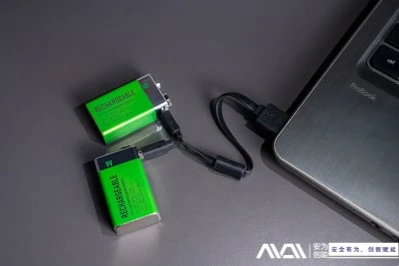
In an era dominated by mobile devices, the convenience and efficiency of energy supply have emerged as critical pain points for user experience. The advent of Type-C lithium batteries not only resolves charging compatibility issues through standardized interfaces but also redefines the concept of "plug-and-play" mobile energy with breakthroughs in fast-charging technology, intelligent management, and multi-scenario adaptability. From smartphones to power tools, smart homes to electric vehicles, Type-C lithium batteries are driving a paradigm shift in energy supply through technological innovation.
I. Technological Breakthroughs: From Interface Revolution to Energy Revolution
The widespread adoption of Type-C interfaces has been a catalyst for upgrading lithium battery technology. Traditional USB interfaces, constrained by their inability to support reversible plugging, limited power delivery capabilities, and protocol compatibility issues, struggle to meet the demands of modern devices for efficient charging. In contrast, Type-C interfaces enable bidirectional power transfer (up to 240W), high-speed data transmission (10Gbps under USB 3.1 standards), and video output, realizing the vision of "one cable for all needs." For instance, Southchip's fast-charging solution for power tools achieves 65W power delivery via Type-C, with an efficiency of 96.2% and a standby current of just 4μA, eliminating the need for bulky proprietary chargers.
Fast-charging technology stands as the core competitive advantage of Type-C lithium batteries. Leveraging the USB Power Delivery (PD) 3.1 protocol, devices can dynamically negotiate voltages (9V, 12V, 15V, or 20V) and combine them with multi-protocol power acquisition chips (e.g., XSP08T) to achieve adaptive power matching. For example, a 3-series lithium battery (12.6V) charged at 9V/3A can reach 80% capacity in 1 hour and fully charge in 2 hours-three times faster than traditional 5V/2A charging. This "charge-as-you-go" capability significantly alleviates user anxiety about battery life.
Intelligent management systems ensure the safety of Type-C lithium batteries. Chip-level protection mechanisms (e.g., overcharge protection at 4.28V±50mV, over-discharge protection at 2.4V±100mV, and overcurrent protection ranging from 8A to 12A), combined with battery health state (SOH) monitoring, dynamically adjust charging and discharging strategies. For instance, when the battery temperature exceeds a threshold, the system automatically reduces charging power; when battery aging increases internal resistance, the discharge rate is adjusted to extend lifespan.
II. Scenario Revolution: From Consumer Electronics to Industrial Applications
In consumer electronics, Type-C lithium batteries have become standard. Smartphones, tablets, and laptops leverage Type-C interfaces for "one-cable" functionality, supporting fast charging and connecting to displays, external hard drives, and other devices. For example, ORICO's T1 power bank (10,000mAh) features Type-C bidirectional fast charging, enabling users to charge devices and transfer data with a single cable.
In smart homes, Type-C lithium batteries drive device miniaturization and intelligence. Smart door locks and lighting systems achieve low-power standby and rapid activation via Type-C interfaces. For instance, a smart door lock using a Type-C lithium battery reduces standby power consumption to 0.5W, shortens charging time to 1.5 hours, and extends battery life to 6 months.
Industrial applications highlight the high reliability of Type-C lithium batteries. The power tool industry benefits from Type-C bidirectional charging, enabling tools to double as power banks. For example, Southchip's solution supports 60W reverse discharge, allowing workers to charge smartphones and tablets during outdoor operations while automatically identifying device needs via protocol chips to prevent overcharging.
III. Industrial Transformation: Driven by Standardization and Ecosystem Synergy
The proliferation of Type-C lithium batteries relies on collaborative innovation across the supply chain. Chip manufacturers develop multi-protocol power acquisition chips (supporting PD, QC, Huawei SCP, etc.), power adapter manufacturers enhance power density (e.g., GaN technology reduces charger size by 50%), and device manufacturers optimize battery management systems (BMS) to build a complete fast-charging ecosystem. For example, a drone brand using a Type-C interface achieves 100W fast charging, reaching 70% capacity in 15 minutes and significantly improving mission efficiency.
Standardization accelerates market penetration. The EU's mandate to standardize Type-C interfaces for electronic devices by 2024, coupled with Apple's adoption of Type-C for the iPhone 15 series, is projected to save consumers €250 million annually in charging device costs and reduce 11,000 tons of e-waste. This synergy between policy drivers and market demand propels the large-scale adoption of Type-C lithium batteries.
The integration of green energy concepts赋予 Type-C lithium batteries new missions. Optimized charging algorithms (e.g., trickle charging, dynamic adjustment during constant-voltage phases) reduce energy loss during charging, while eco-friendly materials (e.g., recyclable lithium-ion batteries) lower lifecycle carbon emissions. For instance, a power bank brand using graphene-based anode materials increases energy density by 20%, extends cycle life beyond 1,000 charges, and supports solar charging input, enabling "off-grid energy supply."
IV. Future Prospects: The Cornerstone of the Energy Internet
The ultimate value of Type-C lithium batteries lies in their potential as nodes in the energy internet. Through vehicle-to-everything (V2X) technology, electric vehicles can use Type-C interfaces to supply power back to home energy storage systems. Smart home devices can share energy via Type-C (e.g., a refrigerator charging a smartphone), while industrial IoT nodes form distributed energy networks. This "decentralized" energy supply model will revolutionize traditional energy infrastructure.
Technological iterations will continue. Next-generation Type-C interfaces may integrate wireless charging modules for dual-mode (contact + contactless) power delivery. The combination of solid-state battery technology with Type-C interfaces could increase energy density to over 500Wh/kg. AI algorithms will enable predictive maintenance of battery management systems, identifying safety hazards in advance.
Conclusion
Type-C lithium batteries represent more than an interface upgrade-they are a revolution in mobile energy supply. By breaking down scenario boundaries through technological breakthroughs, restructuring industrial landscapes through ecosystem synergy, and leading sustainable development with green concepts, they are becoming the energy connectors between the physical and digital worlds. In the era of carbon neutrality and the Internet of Everything, Type-C lithium batteries are poised to redefine humanity's journey toward a more efficient, convenient, and environmentally friendly mobile energy future.