

Lithium-ion batteries, as a cornerstone of modern energy storage technology, have witnessed their development closely intertwined with the innovation of electrolytes. From the widespread application of liquid electrolytes in the early days to the recent rise of solid-state electrolyte technology, the evolution of electrolytes has not only propelled significant leaps in battery performance but also reshaped the future landscape of the energy storage sector.
I. The Golden Age and Limitations of Liquid Electrolytes
Liquid electrolytes served as the core component in the early development of lithium-ion batteries, laying the foundation for their commercialization with their high ionic conductivity and mature fabrication processes. Traditional liquid electrolytes, composed of organic solvents (such as ethylene carbonate and dimethyl carbonate) and lithium salts (like LiPF6), excel in forming lithium-ion complexes through solvation, enabling efficient ion transport. This system played a pivotal role in the initial development of lithium-ion batteries, particularly in the consumer electronics sector, where their high energy density and long cycle life drove the widespread adoption of portable devices.
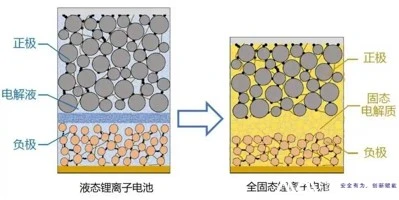
However, the limitations of liquid electrolytes gradually surfaced with technological advancements. Their flammable and explosive organic solvents pose significant thermal runaway risks, especially under high-temperature or overcharging conditions, potentially leading to combustion or even explosion. Additionally, the solid electrolyte interphase (SEI) film formed between the liquid electrolyte and electrode materials thickens continuously during cycling, increasing lithium-ion transport resistance and resulting in capacity fade and shortened cycle life. More critically, the narrow electrochemical window of liquid electrolytes restricts their compatibility with high-voltage cathode materials (such as lithium-rich manganese-based and high-nickel ternary materials), limiting further improvements in battery energy density.
II. The Rise of Solid-State Electrolytes: Technological Breakthroughs and Material Innovations
To overcome the performance bottlenecks of liquid electrolytes, solid-state electrolyte technology emerged. Its core advantage lies in replacing liquid solvents with solid-state ion conductors, fundamentally eliminating flammability risks while broadening the electrochemical window to accommodate high-voltage cathode materials. Solid-state electrolytes are primarily classified into inorganic solid-state electrolytes and polymer solid-state electrolytes, with the former represented by oxides and sulfides, and the latter centered around polyethylene oxide (PEO)-based materials.
1. Inorganic Solid-State Electrolytes: High Ionic Conductivity and Mechanical Stability
Inorganic solid-state electrolytes achieve lithium-ion migration through point defects (such as vacancies and interstitials) in their crystal structures, with ionic conductivities reaching several to tens of times that of traditional liquid systems. For instance, the sulfide solid-state electrolyte Li10GeP2S12 exhibits an ionic conductivity of up to 35 mol dm⁻³ at room temperature, far surpassing conventional liquid electrolytes. The high mechanical strength of these materials effectively suppresses lithium dendrite growth, enhancing battery safety. However, their brittleness leads to poor interfacial contact stability, necessitating optimization through nanostructuring coatings or composite structural designs.
2. Polymer Solid-State Electrolytes: Flexibility and Processability Advantages
Polymer solid-state electrolytes, based on PEO, form solid solutions through lithium salt dissolution. Their advantages include good flexibility, high viscosity, ease of processing, and the ability to promote lithium-ion conduction in amorphous regions through chain segment mobility. However, the ionic conductivity of polymer electrolytes drops significantly at low temperatures, and their high interfacial impedance limits high-power applications. Currently, performance improvements can be achieved through cross-linking modifications, plasticizer addition, or composite inorganic fillers (such as oxide nanoparticles.
3. Semi-Solid Electrolytes: An Innovative Pathway in the Transitional Stage
To balance performance and cost, semi-solid electrolyte technology has become a focal point of current industrialization efforts. This system retains a small amount of liquid electrolyte to improve interfacial contact while incorporating solid-state electrolytes to enhance safety. For example, the ultra-fast-charging solid-state battery equipped in the IM L6 model employs a flexible solid electrolyte separator and a super semi-solid cell, achieving an energy density exceeding 400 Wh/kg, marking a breakthrough in semi-solid technology for electric vehicle applications.
III. Technological Challenges and Industrialization Pathways of Solid-State Electrolytes
Despite the immense potential of solid-state electrolyte technology, its commercialization still faces multiple challenges. Core issues include:
Interfacial Impedance: The unstable solid-solid interface between solid-state electrolytes and electrode materials leads to the formation of space charge layers, impeding lithium-ion transport. Interfacial coatings, in-situ film formation, or three-dimensional electrode structure designs can reduce interfacial impedance.
Ionic Conductivity: Polymer electrolytes exhibit a sharp drop in ionic conductivity at low temperatures, necessitating molecular design or composite modifications to enhance low-temperature performance. For instance, the ionic conductivity of PEO-based electrolytes can be increased by 1-2 orders of magnitude through composite inorganic fillers.
Cost and Process: The preparation of oxide and sulfide solid-state electrolytes requires high-temperature sintering, resulting in high costs. Scalable production necessitates the development of low-cost synthesis processes, such as sol-gel methods and hydrothermal techniques.
In terms of industrialization, global enterprises are accelerating their布局 (strategic deployment). Weilan New Energy has initiated a 20 GWh solid-state battery production line, while traditional lithium-ion battery companies like CATL and Ganfeng Lithium are also intensifying their R&D efforts. On the policy front, China has included solid-state batteries in its "New Energy Vehicle Industry Development Plan (2021-2035)", driving their R&D and industrialization processes.

IV. Future Prospects: Solid-State Batteries Reshaping the Energy Storage Landscape
The breakthroughs in solid-state electrolyte technology will propel lithium-ion batteries towards higher energy density, greater safety, and enhanced environmental friendliness. If all-solid-state batteries achieve commercialization, their energy density is expected to exceed 500 Wh/kg, completely resolving range anxiety in electric vehicles. Additionally, the application of solid-state batteries in fields like aviation and energy storage will further expand, enabling long-life, high-safety energy storage in high-altitude drones and smart grids.
Looking ahead, the evolution of solid-state electrolyte technology represents not only a material innovation but also a transition from the "liquid age" to the "solid age" in energy storage systems. With breakthroughs in key technologies such as interfacial engineering and material synthesis, solid-state batteries are poised to achieve large-scale mass production within 5-10 years, becoming the core solution for next-generation energy storage.
From liquid to solid, the evolutionary journey of lithium-ion battery electrolytes is a testament to technological iteration and humanity's relentless pursuit of clean energy and safe energy storage. As solid-state battery technology matures, a more efficient and sustainable energy world is accelerating its arrival.