

From steam engines to internal combustion engines, every leap in human civilization has been accompanied by an energy revolution. Today, a transformation centered on battery technology is reshaping global industrial landscapes-from the widespread adoption of electric vehicles to deep-space exploration by satellites, from the proliferation of smart homes to innovations in medical devices. As an "energy storage medium," battery technology is quietly reconstructing the operational logic of human society. This revolution is not merely about technological breakthroughs; it is a profound reconfiguration of civilization forms and survival paradigms.
I. Energy Revolution: From "Constraint" to "Freedom"-A Paradigm Shift
Under traditional energy systems, humanity has long been constrained by the physical limitations of "energy transmission." Gasoline vehicles require a global network of gas stations, power grids depend on fixed-line electricity distribution, and medical devices are limited by the reach of power outlets. Breakthroughs in battery technology are shattering these shackles.
1. "Spatial Liberation" in Transportation
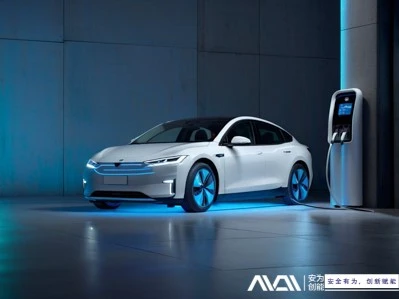
By 2025, the global stock of electric vehicles (EVs) has surpassed 300 million. CATL's "Xiaoyao" super hybrid battery marks the end of range anxiety-with 400 km of pure electric range and 4C ultra-fast charging capability, enabling 400 km of range in just 10 minutes of charging. Even more noteworthy is the commercialization of solid-state batteries: SVOLT and SAIC Motor's jointly developed semi-solid battery achieves a monomer energy density of 368 Wh/kg, with test vehicles exceeding 1,083 km in range. CALB's "Boundary-Free" all-solid-state battery, slated for vehicle integration by 2027, boasts an energy density of 430 Wh/kg. These advancements not only enable EVs to rival gasoline vehicles in range but also redefine automotive design through "cell-to-pack" architecture, maximizing space utilization.
2. "Decentralized Reconstruction" of Energy Networks
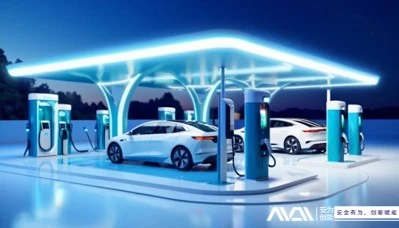
In the realm of renewable energy, battery technology is reshaping the relationship between energy production and consumption. Global energy storage system installations exceeded 134 GWh in 2023, with lithium-ion batteries dominating, while emerging technologies like sodium-ion and solid-state batteries accelerate penetration. A German solar power plant adopting a solid-state battery storage system reduced curtailment rates from 15% to 3%, achieving 24/7 stable power supply through "solar-storage-charging" integration. This decentralized energy network enables remote regions to break free from grid dependence, even giving rise to new forms of "energy-autonomous communities."
3. "Life Extension" in Medical Devices
Implantable medical devices like pacemakers and cochlear implants once required frequent surgical replacements due to battery limitations. Today, TDK's CeraCharge solid-state battery, with an energy density of 1,000 Wh/L, supports over a decade of continuous operation. More revolutionary is flexible battery technology-Samsung's 0.3 mm ultra-thin bendable battery is already used in smart bandages, enabling real-time wound monitoring and continuous power supply. This "symbiosis of energy and living organisms" is redefining the boundaries of medical technology.
II. Civilization Reconstruction: From "Resource Competition" to "Energy Democracy"
Breakthroughs in battery technology are not merely altering energy consumption patterns but reshaping international relations, industrial structures, and human survival philosophies.
1. "Decentralization" of Resource Wars
Under traditional energy systems, OPEC influenced the global economy through production control. Battery technology is dismantling this monopoly: the rise of sodium-ion batteries gives Chinese companies a cost advantage in energy storage (50% cheaper than lithium-ion), while solid-state batteries' sulfide routes rely on elements like lithium and silicon, prompting global firms to accelerate (investment) in African lithium mines and South American salt lakes. This "multi-element competition" replaces "single-resource monopolies," driving international relations from "zero-sum games" toward "technological cooperation"-such as the EU and African nations jointly building "battery material corridors," and China collaborating with Chile on lithium recycling technologies.

2. "Spatial Folding" of Industrial Civilization
Battery technology is breaking spatial constraints in traditional industries. A German factory using solid-state battery-powered AGVs (Automated Guided Vehicles) achieves 24/7 uninterrupted production, increasing productivity per unit area by 40%. Tesla's Shanghai Gigafactory reduces production line footprint by 30% through "cell-to-pack" design. More profound is "energy democratization"-remote African villages access the internet for the first time via solar + solid-state battery systems; Antarctic research stations achieve year-round self-sufficiency through nuclear-solid-state hybrid systems. This "energy equity" is erasing geographical divides, propelling civilization toward "distributed symbiosis."
3. "Temporal Revolution" in Survival Philosophies
As energy storage transcends time and space, human perception of time is undergoing a qualitative transformation. Electric vehicles with "10-minute charging for 400 km range" technology turn long-distance travel from "planning charging stops" to "spontaneous journeys." Smart home systems powered by battery storage enable "off-grid operation," transforming households from "grid slaves" to "energy masters." Deeper still is the "reconstruction of temporal value"-a German hospital using solid-state battery-powered surgical robots reduces surgical interruption risks by 90%, allowing surgeons to focus on treatment rather than power outages. This "energy certainty" is reshaping humanity's mastery over time.
III. Future Challenges: Reflections on Civilization Amidst Technological Surge
Despite promising prospects, the rapid advancement of battery technology poses profound challenges.
1. The "Hidden Costs" of Environmental Damage
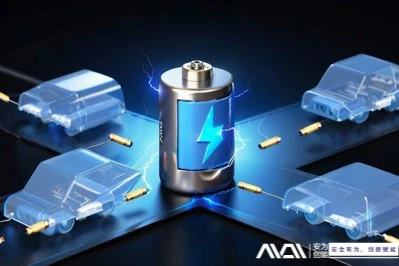
Global lithium-ion battery production emitted 250 million tons of CO₂ in 2023, while cobalt mining caused 15% of children in the Democratic Republic of Congo to exceed blood lead limits. While solid-state batteries reduce electrolyte pollution, sulfide routes may release harmful gases. The EU's "New Battery Regulation" mandates 70% battery recycling by 2030, compelling companies to develop "cradle-to-cradle" circular technologies-such as CATL's "Lithium Mine Return Program," which achieves 95% material regeneration from retired batteries.
2. The "Gray Rhino" of Safety Ethics
A 2024 energy storage station fire caused by battery thermal runaway resulted in over $1 billion in direct losses. While solid-state batteries reduce spontaneous combustion risks, high energy densities pose "chain reaction" threats. The U.S. Department of Energy requires battery safety digital twin systems by 2026, using AI to monitor 100,000+ cells in real time. A more fundamental challenge is the "weaponization of energy"-North Korea's demonstration of a nuclear-battery-powered underwater drone with a 3-year endurance has sparked international concerns about "perpetually lurking weapons."
3. The "Energy Trap" of Civilization Alienation
As energy access becomes too convenient, humanity risks falling into "energy inertia." Japanese research shows that users of battery-powered smart homes experience a 37% daily decline in physical activity. More dangerously, "energy monopolies" could emerge-if a few firms control solid-state battery patents, a "petrodollar-style" hegemony might recur. Therefore, UNESCO calls for an "Ethical Convention on Battery Technology" to enshrine energy equity as a fundamental principle of human civilization.
Conclusion: Energy Sustainability and Civilization Symbiosis
Standing at the 2025 juncture, battery technology has evolved from an "energy container" to a "civilization carrier." It could propel humanity into a "perpetual power" utopia or trigger resource wars, safety failures, and civilization alienation. The true future lies not in the technology itself but in humanity's ability to harness it-through international cooperation to establish equitable energy distribution systems, technological innovation for environmentally friendly sustainable development, and ethical constraints to prevent energy abuse. Only thus can battery technology become an eternal light illuminating human civilization, rather than a Pandora's box of self-destruction.