

Ceramic Edge Material and Structure
During the coating process of lithium battery positive electrodes, a ceramic edge approximately 3-5mm wide is coated on the edge of the material area. The ceramic edge is typically made of materials such as alumina (Al₂O₃) and boehmite (AlOOH). These ceramic materials possess low thermal conductivity, high heat resistance, and excellent chemical stability, forming a protective barrier within the battery.
Formation Process of Ceramic Edge
The ceramic edge is usually formed through a coating process. During the coating of the positive electrode sheet, a specific coating device evenly applies the ceramic slurry to the edge of the sheet. The ceramic slurry generally consists of ceramic powder, binder, and solvent, which, after stirring and dispersion, form a stable slurry system. Precise control of the coating thickness and uniformity is essential during the coating process to ensure the effective functioning of the ceramic edge.
Advantages of Lithium Battery Positive Electrode Coated with Ceramic Edge
Enhanced Stability of Positive Electrode Sheet
The ceramic edge can enhance the structural stability of the positive electrode material, effectively reducing the risk of edge peeling and damage to the positive electrode sheet. During battery charge and discharge cycles, the positive electrode material undergoes volume expansion and contraction, which can lead to the shedding of active material from the edge of the sheet. The high strength and good adhesion of the ceramic edge can secure the positive electrode material, preventing it from shedding and thereby improving the battery's cycle life.
Moreover, the ceramic edge exhibits high thermal stability and corrosion resistance, effectively preventing degradation and dissolution of the positive electrode material starting from the edge. In high-temperature environments, the ceramic edge maintains its structural and performance stability, inhibiting adverse reactions between the positive electrode material and the electrolyte, thereby extending the battery's service life.
Reduced Risk of Burr-Induced Short Circuits
During the manufacturing of lithium batteries, the cutting of aluminum foil can easily produce burrs and solder beads. These burrs and solder beads may puncture the separator, leading to a short circuit between the positive and negative electrodes. Coating with a ceramic edge can reduce the generation of burrs and solder beads during the cutting of aluminum foil, as the high hardness of ceramic materials makes them less prone to producing burrs during the cutting process.
Additionally, during the insertion of the cell into the casing, the bending of the tabs can easily lead to contact with the edge of the electrode sheet, potentially causing a short circuit. With a ceramic edge, it can act as a buffer, reducing the risk of contact between the tabs and the edge of the electrode sheet, thereby lowering the probability of short circuits.
Insulating Effect
The ceramic edge is coated on the side of the tab. During battery assembly, if the separator is not well-wrapped or the alignment of the positive and negative electrode sheets is poor, it may lead to contact between the negative tab and the positive electrode sheet or between the positive tab and the negative electrode sheet. The ceramic edge can provide insulation, preventing short circuits between the positive and negative electrodes.
Among the four modes of internal short circuits in batteries, the aluminum foil-negative electrode short circuit is considered the most dangerous. This is because the short circuit resistance is neither too high nor too low, and when the short circuit resistance is close to the battery's internal resistance, the heat generation at the short circuit point is the highest. Furthermore, the decomposition temperature of the solid electrolyte interface (SEI) film on the negative electrode is relatively low, serving as the starting point of the thermal runaway chain reaction in the battery. Coating with a ceramic edge can help avoid this problem to some extent, improving battery safety.
Prevention of Thermal Runaway
Lithium-ion batteries are prone to thermal runaway, leading to battery fires or explosions, when overcharged, over-discharged, or subjected to mechanical damage. Coating the positive electrode with a ceramic edge can effectively prevent thermal runaway. Ceramic materials, with their low thermal conductivity, can form a thermal barrier within the battery, impeding the diffusion of heat to the surroundings. Additionally, ceramic materials are non-flammable at high temperatures, effectively inhibiting the spread of flames within the battery.
Inhibition of Positive Electrode Material Dissolution
During charge and discharge cycles, the positive electrode material is prone to dissolution, leading to the loss of active material and battery performance degradation. Coating the positive electrode with a ceramic edge can form a protective layer on the surface of the positive electrode sheet, inhibiting the dissolution of the positive electrode material and extending the battery's cycle life.
Reduction of Interface Side Reactions
Interface side reactions between the positive electrode material and the electrolyte are a major cause of battery performance degradation. Coating the positive electrode with a ceramic edge can form a stable interface layer on the surface of the positive electrode sheet, reducing the occurrence of interface side reactions and improving the battery's cycle stability.
Application Prospects of Lithium Battery Positive Electrode Coated with Ceramic Edge
Electric Vehicle Sector
Electric vehicles demand high safety and energy density from their batteries. The positive electrode coating with a ceramic edge technology can enhance battery safety and cycle life, meeting the requirements of electric vehicle applications. Currently, some leading battery manufacturers have started applying this technology in electric vehicle batteries to improve their performance. With the continuous expansion of the electric vehicle market, the positive electrode coating with a ceramic edge technology is expected to find wider application in the electric vehicle sector.
Portable Electronic Devices Sector
Portable electronic devices (such as smartphones, laptops, etc.) require high volumetric energy density and safety from their batteries. The positive electrode coating with a ceramic edge technology can improve battery energy density and safety without increasing battery volume, meeting the needs of portable electronic devices. With the continuous upgrading of portable electronic devices and the increasing demands on battery performance, the positive electrode coating with a ceramic edge technology is expected to play a significant role in this sector.
Energy Storage Systems Sector
Energy storage systems demand high cycle life and safety from their batteries. The positive electrode coating with a ceramic edge technology can effectively extend battery cycle life, improving the economic efficiency and reliability of energy storage systems. Against the backdrop of large-scale integration of renewable energy and the construction of smart grids, the market demand for energy storage systems is increasing, and the positive electrode coating with a ceramic edge technology is expected to find widespread application in this sector.
Development Trends of Lithium Battery Positive Electrode Coated with Ceramic Edge Technology
Development of Novel Ceramic Materials
Currently, the positive electrode coating with a ceramic edge mainly uses traditional ceramic materials such as alumina and zirconia. In the future, the development of novel ceramic materials with higher performance (such as silicon nitride, silicon carbide, etc.) will become an important research direction. Novel ceramic materials possess higher strength, better thermal stability, and chemical stability, further enhancing battery performance.
Optimization of Coating Process
The existing coating process suffers from issues such as uneven coating and poor adhesion. In the future, by optimizing the coating process (such as adopting new technologies like electrostatic spraying and laser sintering), the uniformity and adhesion of the ceramic layer can be improved, further enhancing battery performance.
Design of Multifunctional Ceramic Layers
Future ceramic layers can not only provide protection and insulation but also possess other functions (such as conductivity, catalysis, etc.). By designing multifunctional ceramic layers, battery performance and safety can be further improved to meet the needs of different application scenarios.
Realization of Large-Scale Production
Currently, the positive electrode coating with a ceramic edge technology is still in the laboratory and small-scale trial production stage. In the future, by developing efficient and low-cost production processes, realizing large-scale production of the positive electrode coating with a ceramic edge technology will be the key to promoting its commercial application.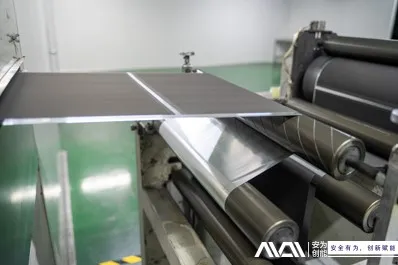
Conclusion
The positive electrode coating with a ceramic edge technology, as an emerging battery manufacturing process, offers significant advantages in improving battery safety, cycle life, and energy density. By enhancing the stability of the positive electrode sheet, reducing the risk of burr-induced short circuits, providing insulation, preventing thermal runaway, inhibiting positive electrode material dissolution, and reducing interface side reactions, the positive electrode coating with a ceramic edge technology can effectively improve lithium battery performance. With the rapid development of electric vehicles, portable electronic devices, and energy storage systems, the positive electrode coating with a ceramic edge technology will play an important role in future battery technologies. By developing novel ceramic materials, optimizing the coating process, designing multifunctional ceramic layers, and realizing large-scale production, the positive electrode coating with a ceramic edge technology is expected to achieve greater breakthroughs in the battery field, driving the continuous progress of lithium-ion battery technology.