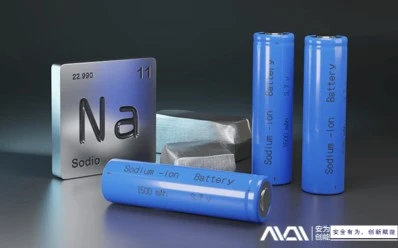
In the context of the global energy transition and the pursuit of "carbon peak and carbon neutrality" goals, battery technology has emerged as the core battleground determining the landscape of the new energy industry. Lithium-ion batteries have long dominated the power battery and energy storage markets due to their high energy density and long cycle life. However, as the scarcity of lithium resources intensifies and the price of lithium carbonate fluctuates wildly, sodium-ion batteries are stepping out of the laboratory and into industrialization, leveraging their advantages of abundant resources, low cost, and excellent low-temperature performance. This competition between technological routes not only determines the survival of enterprises but will also reshape the global energy storage landscape.
I. Resource Endowment: The Natural Advantages of Sodium-Ion Batteries
Global lithium reserves stand at a mere 0.0065%, with over 70% concentrated in South America's "Lithium Triangle" and Australia. This highly concentrated resource distribution and geopolitical risks in the supply chain have directly driven up the cost of raw materials for lithium-ion batteries. Take lithium carbonate as an example: its price surged more than tenfold between 2021 and 2022, peaking at over 600,000 yuan per ton, causing the cost of lithium-ion batteries to soar from 30% to 60% of the total. In contrast, sodium, the core raw material for sodium-ion batteries, boasts an abundance of 2.64% in the Earth's crust, 440 times that of lithium, and is evenly distributed globally. China's Qinghai Salt Lake alone holds sodium resources sufficient to support annual battery production capacity exceeding 100 GWh, with raw material costs just one-third to one-fifth of those for lithium-ion batteries.
CATL's second-generation sodium-ion battery has already reduced costs to below 0.3 yuan/Wh, 20%-30% lower than lithium iron phosphate batteries. This cost advantage is particularly pronounced in energy storage scenarios: for a 1 GWh energy storage power station, sodium-ion batteries can save over 300 million yuan in initial investment and reduce lifecycle costs by 15%-20%. For price-sensitive applications like low-speed electric vehicles and base station backup power, the cost-effectiveness of sodium-ion batteries is accelerating their adoption.
II. Technological Breakthroughs: From Laboratory to Industrialization
Technological bottlenecks have long hindered the commercialization of sodium-ion batteries. The larger radius of sodium ions (1.02 Å) compared to lithium ions (0.76 Å) results in slower intercalation/deintercalation kinetics in cathode and anode materials, making it difficult to match the cycle life and energy density of lithium-ion batteries. However, recent innovations in material systems have opened up breakthrough opportunities for sodium-ion batteries.
1,Cathode Materials: Layered oxides (e.g., NaFeO₂), Prussian blue analogs (e.g., Na₂Fe[Fe(CN)₆]), and polyanionic compounds (e.g., Na₃V₂(PO₄)₃) have emerged as mainstream technological routes. CATL's layered oxide cathode has increased energy density to 160 Wh/kg, a 40% improvement over the first generation. HiNa Battery's Prussian blue cathode material has extended cycle life from 1,000 to 3,000 cycles through doping modifications.
2,Anode Materials: Hard carbon, with its large interlayer spacing and high sodium storage capacity (over 300 mAh/g), has become the preferred choice. BYD's "hard carbon-soft carbon" composite anode improves the first-cycle efficiency from 85% to 92% by regulating pore structure while enabling 10C fast charging (80% charge in 6 minutes).
3,Electrolytes: The introduction of aqueous electrolytes has significantly reduced costs and safety risks. Cubic Energy's 3M NaTFSI aqueous electrolyte boosts ionic conductivity to 20 mS/cm, 50% higher than organic electrolytes, and enables stable operation at -40°C.
In system integration, CATL's pioneering "AB battery system" combines sodium-ion and lithium-ion batteries in specific ratios, leveraging the low-temperature performance of sodium batteries (92% capacity retention at -30°C) while enhancing system energy density through lithium batteries. Lynk & Co 900's Xiaoyao super hybrid battery, based on this technology, achieves a balance of 400 km pure electric range and 4C ultra-fast charging.
III. Market Landscape: Energy Storage and Low-Speed Vehicles as Primary Battlefields
Although sodium-ion batteries still lag behind lithium-ion batteries in energy density (160-230 Wh/kg vs. 250-350 Wh/kg), their safety and wide temperature range make them irreplaceable in specific scenarios.
1,Energy Storage Market: According to EVTank, global demand for sodium-ion batteries is projected to reach 116 GWh by 2026, with energy storage accounting for over 60%. State Grid Corporation of China and China Southern Power Grid have launched demonstration projects for sodium-ion battery energy storage, leveraging their cycle life exceeding 8,000 cycles and calendar life exceeding 15 years to perfectly meet the needs of grid peak shaving and renewable energy consumption for long-duration energy storage.
2,Low-Speed Electric Vehicles: Markets like A00-class electric vehicles and electric tricycles are highly cost-sensitive. Taking the Wuling Hongguang MINI EV as an example, adopting sodium-ion batteries could reduce battery pack costs by 4,000 yuan, potentially lowering the terminal price to the 20,000 yuan range. By 2025, models like the Chery QQ Ice Cream and Jiangling Yichi Yutu have already taken the lead in adopting sodium-ion batteries, achieving a range exceeding 300 km.
3,Extreme Environment Applications: In extreme cold tests at -40°C in Mohe, the endurance of a six-rotor drone equipped with a sodium-ion battery increased by 60% compared to lithium-ion batteries. Base stations on the Qinghai-Tibet Plateau adopting sodium-ion batteries reduced low-temperature capacity decay from 40% to 15% and maintenance costs by 70%.
IV. Challenges and Solutions: Industrial Chain Collaboration is Key
Despite the promising prospects of sodium-ion batteries, their industrialization still faces three major bottlenecks:
1,Immature Industrial Chain: Core links such as dedicated cathode materials and electrolytes for sodium-ion batteries have yet to achieve large-scale supply. Take Prussian blue cathode as an example: its mass production yield is only 60%-70%, 20 percentage points lower than that of lithium-ion battery cathode materials.
2,Lack of Technical Standards: The significant difference in voltage platforms between sodium-ion batteries (2.8-3.2V) and lithium-ion batteries (3.6-3.7V) necessitates the adaptation of existing Battery Management Systems (BMS). Additionally, the thermal runaway temperature of sodium-ion batteries (250°C) is lower than that of lithium-ion batteries (300°C), posing higher requirements for thermal management.
3,Low Market Awareness: Consumers remain skeptical about the energy density and cycle life of sodium-ion batteries. A third-party survey found that only 32% of respondents are willing to pay a premium for sodium-ion battery models.
The solution lies in collaborative innovation across the industrial chain:
1,Upstream Materials: Companies like Ronbay High-Tech and Easpring Material Technology are accelerating the layout of sodium-ion battery cathode materials, with planned production capacity exceeding 200,000 tons by 2025. Electrolyte manufacturers like Tinci Materials and Sinochem International have launched customized sodium-ion electrolytes, reducing costs to below 80,000 yuan per ton.
2,Midstream Manufacturing: Leading enterprises like CATL and BYD are driving the compatible transformation of sodium-ion battery production lines with lithium-ion battery lines, reducing single-line investment from 1 billion yuan to 500 million yuan. HiNa Battery has built the world's first GWh-level sodium-ion battery mass production line, achieving a yield exceeding 90%.
3,Downstream Applications: The National Energy Administration has included sodium-ion batteries in the pilot demonstration directory for new energy storage technologies. The Ministry of Industry and Information Technology has issued industry standards for sodium-ion batteries, regulating product design, testing, recycling, and other aspects.
V. Future Outlook: Technological Convergence and Ecosystem Reconstruction
The rise of sodium-ion batteries is not a replacement for lithium-ion batteries but a complement and convergence of technological routes. Over the next decade, the battery industry will witness a "lithium-sodium coexistence" pattern:
1,Material System Innovation: Breakthroughs in technologies such as solid-state electrolytes and lithium-sodium alloy anodes are expected to increase the energy density of sodium-ion batteries to over 300 Wh/kg, comparable to medium-nickel ternary lithium-ion batteries.
2,System Integration Optimization: Through technologies like Cell-to-Pack (CTP) and Cell-to-Chassis (CTC), the volume utilization rate of sodium-ion battery packs can increase from 55% to 70%, further reducing system costs by 15%.
3,Circular Economy Closed-Loop: Although sodium-ion batteries do not contain rare metals like cobalt and nickel, resulting in lower recycling value, they can achieve a residual value rate of over 20% through a "cascading utilization + recycling" model, repurposing retired batteries for two-wheelers, energy storage, and other applications.
According to BloombergNEF, by 2030, the market share of sodium-ion batteries in the global battery market will rise from the current 1% to 15%, with installed capacity exceeding 1.5 TWh. This technological revolution driven by resource endowments will not only rewrite the competitive rules of the battery industry but also provide a low-cost, sustainable new path for humanity's energy transition.