I. Diversified Landscape of Power Battery Technologies
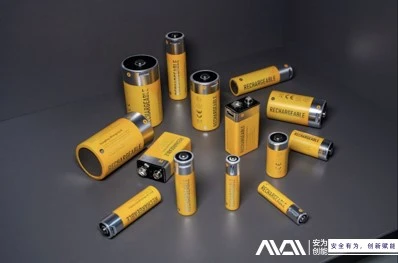
The rapid development of the new energy vehicle (NEV) industry has spurred a competitive landscape of diversified battery technologies. Currently, mainstream lithium-ion battery (LIB) systems can be categorized into three technical routes: ternary lithium batteries, lithium iron phosphate (LFP) batteries, and lithium cobalt oxide (LCO) batteries. These are supplemented by transitional technologies such as nickel-metal hydride (NiMH) and lead-acid batteries, alongside frontier directions like hydrogen fuel cells and solid-state batteries. This technical divergence stems from differences in material chemistry and strategic considerations related to vehicle manufacturers' market positioning, cost control, and safety requirements.
1.1 Dual Dominance of Lithium-Ion Batteries
Ternary Lithium Batteries: Focused on high-nickelization (NCM811, NCA9 series) as the core development direction, achieving breakthroughs in energy density exceeding 300Wh/kg by increasing nickel content. CATL's Qilin Battery and Tesla's 4680 large-format cylindrical cells have entered mass production, reaching energy densities of up to 350Wh/kg. However, thermal runaway risks necessitate solutions like single-crystal positive electrodes and ceramic-coated separators. Their superior low-temperature performance grants them over 60% market share in northern China, though cobalt scarcity drives significant cost fluctuations.
LFP Batteries: Achieving technological breakthroughs through structural innovations like BYD's Blade Battery and CTP/CTB designs. BYD has optimized lithium manganese iron phosphate (LMFP) positive electrodes to boost energy density to 210Wh/kg, reducing costs by 30% compared to ternary systems. With a cycle life exceeding 8,000 cycles, LFP batteries dominate over 75% of the 100,000–200,000 RMB vehicle segment. However, their capacity retention drops to 65% at -20°C, limiting market penetration in cold regions.
1.2 Market Positioning of Transitional Technologies
NiMH Batteries: Maintain a 15% market share in hybrid vehicles like the Toyota Prius, offering -40°C cold-start capabilities and 3,000-cycle lifespans, making them indispensable in specialty vehicle applications.
Lead-Acid Batteries: Confined to low-speed electric vehicles and UPS backup power systems. Despite energy densities below 80Wh/kg, their manufacturing cost of 0.3 RMB/Wh sustains annual sales of 20 million units in Southeast Asia and Africa.
II. Industrialization of Cutting-Edge Technologies
The global power battery industry is undergoing a technological leap from liquid to semi-solid and full-solid-state systems, with breakthroughs in sodium-ion batteries and hydrogen fuel cells in specific applications.
2.1 Commercialization Breakthroughs in Solid-State Batteries
Semi-Solid Batteries: Nearing mass production. The Weilai ET7, equipped with Weilan New Energy's semi-solid battery, reduces interfacial impedance to 15Ω·cm² via in-situ cured electrolytes, achieving 360Wh/kg energy density. However, cycle life remains at 800 cycles.
Full-Solid-State Batteries: Toyota plans to mass-produce sulfide-based systems by 2028, targeting energy densities exceeding 500Wh/kg. Challenges like interfacial compatibility between solid electrolytes and electrodes, and lithium dendrite suppression, persist.
2.2 Differentiated Competition in Sodium-Ion Batteries
CATL's second-generation sodium-ion battery, pairing Prussian white cathodes with hard carbon anodes, achieves 160Wh/kg energy density and 88% capacity retention at -20°C. This system offers cost advantages in A00-segment vehicles, with Chery's QQ Ice Cream sodium-ion variant priced at 49,800 RMB (23% lower than lithium-ion counterparts). However, the 150Wh/kg energy density ceiling limits mid-to-high-end market penetration.
2.3 Technical Bottlenecks in Hydrogen Fuel Cells
Toyota's Mirai, utilizing metal bipolar plate proton exchange membrane fuel cells, achieves 60% system efficiency and 3-minute refueling but faces high platinum catalyst costs (200 USD/kW) and expensive 70MPa hydrogen storage tanks (over 100,000 RMB per unit). China National Heavy Duty Truck's hydrogen-powered trucks reduce system costs to 4,000 RMB/kW through graphite bipolar plates and titanium alloy hydrogen tanks, though delayed hydrogen refueling infrastructure remains a key obstacle.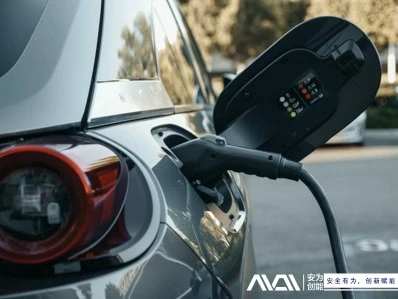
III. Synergistic Evolution of Structural Innovation and Manufacturing Processes
Battery technological breakthroughs rely not only on material innovations but also on deep integration of structural design and manufacturing processes.
3.1 Cell-to-System Integration Technologies
BYD's Blade Battery: Increases volume utilization to 66% via stacking processes, a 20% improvement over traditional module designs.
Tesla's 4680 Battery: Adopts tab-less designs to reduce internal resistance to 2mΩ, paired with CTC (cell-to-chassis) integration to reduce vehicle weight by 120kg.
CATL's Qilin Battery: Extends thermal runaway propagation time to 24 hours via dual-sided cooling technology, an eightfold improvement over conventional systems.
3.2 Intelligent Manufacturing for Cost Efficiency
SVOLT's Short-Blade Battery Production Line: Enables stable production of 0.12mm ultra-thin separators with an overall equipment effectiveness (OEE) of 85%.
EVE Energy's 46-Series Large-Format Cylindrical Battery Line: Achieves 99.99% defect detection rates via AI vision systems, with single-line capacity exceeding 20PPM. This manufacturing precision reduces annual power battery production costs by 15%.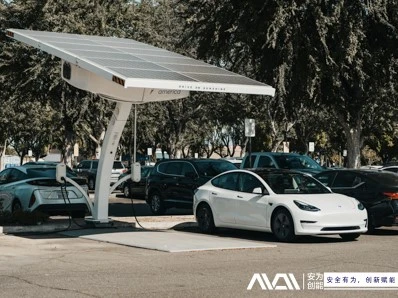
IV. Market Differentiation and Competitive Landscape of Technical Routes
Different technical routes compete in niche markets, with leading enterprises constructing moats through technological matrices.
4.1 Route Selection in Passenger Vehicle Markets
Premium Segment (>300,000 RMB): Binds 800V high-voltage platforms with semi-solid batteries. The Weilai ET7, equipped with a 150kWh semi-solid battery pack and battery-swapping system, offers "chargeable, swappable, and upgradeable" energy services.
Mainstream Segment (100,000–200,000 RMB): Combines LFP batteries with CTP technology to reduce BYD's Qin PLUS DM-i's energy consumption to 11.8kWh/100km, cutting operating costs by 70% compared to gasoline counterparts.
4.2 Scenario-Specific Adaptation in Commercial Vehicle Markets
Bus Applications: CATL's MTB technology integrates battery systems directly into bus frame beams, increasing volumetric energy density by 40%.
Truck Applications: Hydrogen fuel cells achieve breakthroughs in heavy-duty trucks. FAW Jiefang's J7 hydrogen-powered truck, equipped with a 135kW fuel cell system, achieves over 600km range, though purchase costs remain 2.3 times higher than diesel models.
4.3 Technological Extension in Energy Storage Markets
BYD's Cube Energy Storage System: Combines Blade Batteries with liquid cooling technology to boost system energy density to 167Wh/kg and cycle life to 12,000 cycles. This technological migration enables power battery enterprises to form a second growth curve in energy storage, with CATL's energy storage business revenue accounting for 28% in 2024.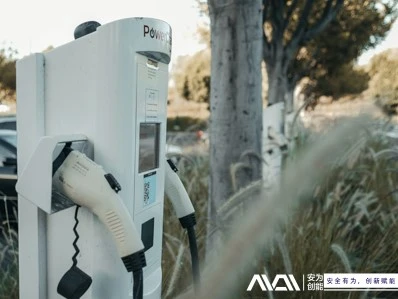
V. Future Prospects of Technological Evolution
Power battery technologies are evolving toward "higher energy density, faster charging speeds, lower material costs, and stronger safety performance."
5.1 Revolutionary Breakthroughs in Material Systems
Lithium-Rich Manganese-Based Cathodes: Offer theoretical specific capacities of 300mAh/g, a 50% improvement over existing systems, though voltage decay issues remain unresolved.
Lithium Metal Anodes: Enable battery energy densities exceeding 500Wh/kg, though lithium dendrite growth-induced short-circuit risks remain obstacles to industrialization.
5.2 Paradigm Shifts in Manufacturing Processes
Dry Electrode Technology: Eliminates solvent recovery processes, reducing equipment investment by 40%. Tesla's 4680 production lines partially adopt this process.
Composite Current Collectors: Utilize "metal-polymer-metal" sandwich structures to reduce battery internal resistance by 30% while enhancing puncture safety.
5.3 Closed-Loop Construction of Recycling Systems
GEM's Directed Recycling Technology: Achieves 95% lithium recovery rates and over 99% cobalt-nickel recovery rates. This resource recycling model reduces lifecycle carbon emissions of power batteries by 30%, supporting China's "dual carbon" goals.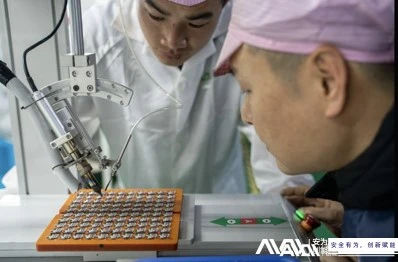
Conclusion
The competition in new energy battery technologies is fundamentally a three-dimensional (game of strategy) involving materials science, manufacturing processes, and system integration. The leap from liquid LIBs to solid-state batteries represents not only quantitative improvements in energy density but also qualitative changes in safety mechanisms. In this technological marathon, China's power battery industry has formed a complete innovation chain from basic research to engineering implementation, with CATL, BYD, and other enterprises leading technological standardization efforts and reshaping the global industrial landscape. Over the next five years, as sodium-ion batteries scale up, hydrogen energy chains mature, and solid-state batteries achieve mass production breakthroughs, new energy battery technologies will accelerate humanity's transition to a sustainable energy era.