

Between the bi-daily charging reminders of a smartwatch and the years-long lifespan of a remote control battery, modern society is undergoing a silent energy revolution. According to the International Energy Agency, the global battery market size surpassed $150 billion in 2023, with rechargeable lithium-ion batteries accounting for 68% of the market share, while alkaline disposable batteries still hold 29% of the space. The rivalry between these two technological routes is not just a choice of energy carriers but also reflects humanity's deep thinking about sustainable development pathways.
I. The Fundamental Divide in Technical Principles
1.1 The Journey of Lithium Ions
The mystery of rechargeable lithium-ion batteries lies in the "swinging" lithium ions. Taking mainstream ternary lithium batteries as an example, during charging, lithium ions detach from the layered nickel-cobalt-manganese oxide cathode, cross the polymer separator, and embed into the graphite anode; during discharging, they move in reverse to generate current. This design enables a single 18650 battery to achieve a voltage of 3.7V and an energy density exceeding 250Wh/kg, equivalent to one-thirtieth the weight of gasoline. The emergence of solid-state batteries, which use sulfide electrolytes to replace flammable liquids, raises the onset temperature of thermal runaway from 120°C to 400°C.
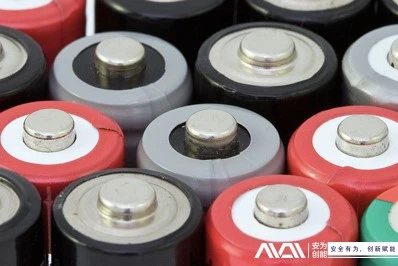
1.2 The One-Way Chemical Reaction
The essence of disposable batteries lies in carefully designed controlled chemical reactions. In alkaline batteries, zinc powder reacts with manganese dioxide in potassium hydroxide electrolyte through oxidation-reduction, producing a stable voltage of 1.5V. Its sealed structure makes the reaction irreversible, terminating when the zinc shell is fully corroded or the manganese dioxide is depleted. Lithium-thionyl chloride disposable batteries exhibit astonishing performance: with an energy density of 650Wh/kg, they can operate in environments ranging from -55°C to 150°C, and they lose only 5% of their charge over a 30-year storage period.
II. A Comprehensive Competition of Performance Parameters
2.1 The Paradox of Energy Density
Apparently contradictory data reveal the essence of technology: while the energy density of single-use lithium-thionyl chloride batteries is 2.6 times that of lithium batteries, rechargeable lithium batteries release an equivalent energy of 1300% over their entire lifecycle (500 cycles). This explains why smartphones choose lithium batteries, while pacemakers insist on disposable lithium batteries-the former requires continuous energy supply, while the latter prioritizes absolute reliability.
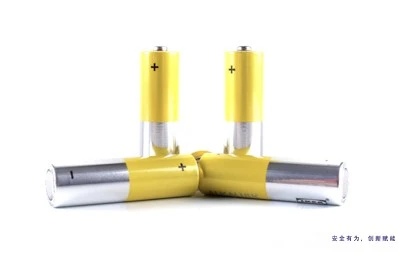
2.2 The Temporal Contest
In cycle life tests, lithium iron phosphate batteries retain 80% of their capacity after 2000 charge-discharge cycles at 25°C, while nickel-metal hydride batteries experience a capacity decline to 60% after 500 cycles. In contrast, unopened alkaline batteries have a self-discharge rate of about 2% per year, while lithium battery packs have rates of 5-10%. This creates an interesting phenomenon: devices left idle for long periods are better suited to disposable batteries, while those in frequent use must choose rechargeable options.
2.3 The Dual Standard of Safety
In puncture experiments, fully charged lithium batteries can heat up to 800°C within three minutes, triggering thermal runaway, while alkaline batteries only experience electrolyte leakage. However, in practical applications, lithium battery packs use Battery Management Systems (BMS) to keep failure rates below 0.001‰, while disposable batteries cause 2,000 pediatric emergencies annually due to ingestion. Safety is never an absolute proposition but a balance in system engineering.
III. The Hidden Ledger of Economics and the Environment
3.1 The Temporal Folding of Cost Calculations
Over a ten-year period, the total cost of the lithium battery solution for a remote control is only one-seventh that of alkaline batteries. This time-discount effect is even more pronounced in the electric vehicle sector: although lithium batteries account for 40% of the total vehicle cost, the electricity cost per kilometer is 75% less than that of gasoline vehicles.
3.2 The Butterfly Effect of Carbon Footprints
Research from the Massachusetts Institute of Technology shows that producing 1kWh of lithium batteries generates 110kg of carbon dioxide, while equivalent energy from disposable batteries emits 280kg of CO2. However, when recycling is taken into account, lithium batteries can reduce their carbon footprint by another 60% through secondary use. The real dilemma lies in the fact that only 32% of global lithium batteries enter formal recycling channels, while the recycling rate for disposable batteries is less than 5%, resulting in 120,000 tons of heavy metals seeping into soil annually.
IV. The Survival Rules of Application Scenarios
4.1 Irreplaceable Areas for Disposable Batteries
In space stations 400 kilometers above Earth, lithium-thionyl chloride batteries are the preferred emergency power source due to their zero-maintenance characteristics; in implantable defibrillators, disposable batteries must ensure stable power supply for ten years; and in mine rescue capsules, any charging risk is absolutely prohibited. The common logic in these scenarios is that the cost of life far outweighs the cost of energy.
4.2 The Expanding Realm of Lithium Batteries
When smart home devices need to transmit data 120 times a day, when agricultural drones must operate continuously for four hours in the field, and when virtual power plants need to store fluctuating solar energy, the cyclic nature of lithium batteries demonstrates dominance. Tesla's Powerwall home energy storage system, through 5000 cycles, can reduce household electricity costs by 40%, an economic model that one-way discharge devices can never match.
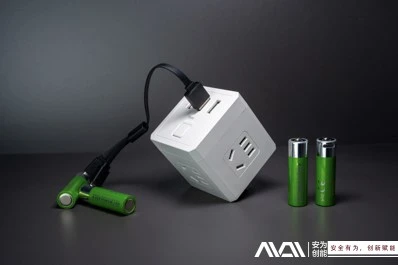
V. Disruptive Variables on the Future Race Track
Solid-state battery technology is expected to achieve mass production by 2030, with energy densities exceeding 500Wh/kg and cycle lives surpassing 10,000 cycles. An even more revolutionary change stems from bio-batteries: the sugar fuel cell developed by Harvard University, which utilizes an enzyme-catalyzed reaction between glucose and oxygen, has achieved a continuous microcurrent supply for 30 days in animal experiments. The popularization of wireless charging technology has the potential to reconstruct the energy ecosystem-when every seat in an office building can be powered wirelessly, batteries will no longer serve merely as energy containers but as transmission media.
In this seemingly tranquil energy revolution, humanity stands at a watershed in choice: should we continue the 20th-century consumption logic with disposable batteries, or should we build a new energy civilization with a recyclable system? The answer may lie in the latest experiments conducted by Yuasa Corporation in Japan-they are powering their entire factory with recycled electric vehicle batteries, while on the assembly line, a new generation of biodegradable bio-batteries are being produced.