

In today's era of rapid technological iteration across smartphones, electric vehicles (EVs), and energy storage systems, battery capacity has emerged as a critical consumer consideration. From smartphone manufacturers promoting "6000mAh mega-batteries" to EV brands touting "1000km range" as a selling point, the pursuit of higher battery capacity seems to have become the sole benchmark for technological advancement. However, does a larger capacity truly equate to superior battery performance? This article delves into the intricate relationship between battery capacity and performance from four dimensions: technical principles, application scenarios, economic costs, and safety risks.
1. Capacity vs. Performance: Not a Linear Relationship
Battery capacity (measured in mAh or Wh) is a core metric for quantifying a battery's energy storage capability. However, this single number does not comprehensively represent overall battery performance. Take lithium-ion batteries as an example: their energy density (energy storage per unit weight or volume) directly impacts device portability. The Tesla Model 3's standard-range variant has a 60kWh battery, while the long-range version upgrades to 82kWh, extending range by 40% but adding 120kg to vehicle weight. This results in a 0.5-second increase in 0-100km/h acceleration time (from 5.6 to 6.1 seconds). Similar trade-offs are evident in smartphones: a flagship model increasing battery capacity from 4500mAh to 5500mAh led to a 0.8mm thickness increase and weight exceeding 220g, compromising one-handed usability.
Charging/discharging efficiency is also affected by capacity. Larger batteries endure higher current densities during fast charging, causing excessive heat generation. Experiments show that a capacity increase from 3000mAh to 5000mAh can elevate battery surface temperatures by 5–8°C under the same fast-charging protocol, accelerating electrolyte decomposition and electrode material degradation. This "capacity-efficiency" paradox forces engineers to balance energy density with thermal management.
2. Application Scenarios: Customized Needs Dictate Capacity Choices
Capacity requirements vary significantly across domains. In consumer electronics, portability is paramount. The Samsung Galaxy S24 Ultra employs a 5000mAh dual-cell battery with a stacked design, maintaining an 8.6mm thickness to balance endurance and grip. Conversely, portable power station brands like Jackery offer 1000Wh units with modular designs weighing 20kg, catering to camping and emergency power needs. This "scenario-specific customization" underscores that capacity is neither inherently superior nor inferior-it's about suitability.
The EV sector exemplifies the complexity of capacity selection. The NIO ET7 offers 75kWh, 100kWh, and 150kWh battery pack options, allowing users to choose based on commuting distances and charging accessibility. Data shows 65% of urban users opt for the 75kWh version, while long-distance travelers prefer 150kWh. This tiered strategy meets diverse needs without over-provisioning resources.
Energy storage systems prioritize cost-effectiveness. A solar power plant using 280Ah lithium iron phosphate batteries to form a 1MWh storage unit achieves an 8000-cycle lifespan (at 80% depth of discharge) and a 0.32 yuan/kWh levelized cost of electricity (LCOE), yielding a 12.8% internal rate of return (IRR). Blindly pursuing higher capacity could raise initial investment by 30% while delivering less than 10% revenue growth.
3. Economic Ledger: Soaring Costs Behind Capacity Increases
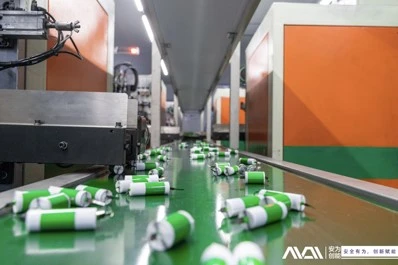
Battery capacity and manufacturing costs exhibit an exponential relationship. For 18650 cylindrical cells, increasing capacity from 2600mAh to 3500mAh raises material costs by 18% (due to a 35% increase in cathode material usage) and reduces manufacturing yield from 95% to 92%, resulting in a 25% cost hike. This cost escalation is particularly pronounced in EVs: CATL's 140kWh Qilin Battery adds 68,000 yuan (~$9,400) in cost compared to the 75kWh standard version, inflating vehicle prices by 12%.
Lifecycle cost (LCC) analysis reveals deeper economic contradictions. An electric bus using a 200kWh battery incurs 200,000 yuan (~$27,500) more in initial investment than a 150kWh version but reduces daily operating costs (including charging and maintenance) by only 8%. Critically, the 200kWh battery's residual value drops by 15 percentage points after five years, negating initial charging savings. This "long-tail cost" effect compels enterprises to reevaluate capacity decisions.
4. Safety Red Line: Escalating Risks with Capacity Expansion
High-capacity batteries pose significant safety challenges. The Samsung Galaxy Note7 explosions stemmed directly from reduced separator thickness (from 25μm to 20μm) due to increased energy density, tripling the risk of internal short circuits. Modern EV battery packs employ three-level protection ("cell-module-pack"), but when cell capacity increases from 50Ah to 300Ah, thermal runaway propagation speeds up by 40%, demanding millisecond-level response times from battery management systems (BMS).
Thermal management complexity grows exponentially with capacity. Tesla's 4680 cells, adopting a cell-to-pack design to boost pack capacity to 100kWh, require a dual-loop liquid cooling system (increasing refrigerant flow by 200%) and a 15% system cost increase. This "capacity-safety" trade-off drives the industry toward inherently safer technologies like solid-state batteries.
5. Future Trends: Technological Breakthroughs Redefine Capacity Value
Material innovations are breaking capacity-performance constraints. CATL's condensed matter battery achieves 500Wh/kg energy density-a 40% improvement over traditional lithium-ion batteries-while raising thermal runaway temperatures to 300°C via in-situ curing technology. The application of solid electrolytes enables the use of lithium metal anodes, theoretically exceeding 1000Wh/kg. These breakthroughs suggest future capacity increases will no longer come at the expense of other performance metrics.
System-level optimizations are reshaping capacity decision-making. BYD's cell-to-body (CTB) technology increases battery pack volume utilization to 66%, reducing a 100kWh pack's volume by 15%. Huawei Digital Energy's intelligent string-level energy storage system achieves 98% capacity utilization through independent battery cluster control. These advancements enable "precision capacity configuration."
Conclusion: Rational Choices Rooted in Demand Essentials
The value of battery capacity ultimately lies in the optimal balance of technical, economic, and safety constraints. For consumers, selecting a smartphone battery requires weighing the "capacity-volume-weight" trifecta. EV users must balance "range-cost-safety," while energy storage investors need to calculate the "capacity-lifespan-LCC" economic equation. As material science, thermal management, and AI algorithms advance, future batteries will achieve a "quadruple convergence" of high capacity, performance, cost-effectiveness, and safety. Until then, a rational understanding of the capacity-performance relationship remains pivotal for informed technological decisions.