A coin-sized lithium battery can power a smart door lock for an entire year without replacement. A high-density power battery enables electric vehicles (EVs) to exceed 1,000 kilometers on a single charge. An energy storage station transforms photovoltaic power into stable electricity for thousands of households. Battery technology innovations are quietly revolutionizing human civilization, reshaping life from micro remote controls to massive transportation systems, from smart homes to industrial energy storage. The evolution of batteries has become a microcosm of modern technological advancement.
1. Micro-Device Energy Revolution: The Intelligent Transformation of Remote Control Batteries
Traditional remote controls rely on alkaline or carbon-zinc batteries, which suffer from high self-discharge rates and poor low-temperature performance. For instance, smart TV remotes equipped with Bluetooth/Wi-Fi modules, touchscreens, and voice recognition consume significantly more power, making conventional batteries inadequate. Lithium-ion batteries, with their stable 3.7V voltage platform and ultra-low self-discharge rate (<2% annually), have emerged as the core power source for next-gen smart remotes.
Huazhijie Electronics' R&D practices exemplify this trend. The company's custom soft-pack lithium batteries for North American smart home brands feature irregular shapes to fit ultra-thin remotes perfectly, maintaining stable performance across -20°C to 60°C temperature ranges. Their integrated Battery Management System (BMS) monitors voltage, current, and temperature in real time, automatically cutting off power during abnormalities and reducing safety risks by 90%. This "smart battery + customized design" approach extends remote lifespans from 1–2 years to 5–8 years.
Technological breakthroughs are reshaping market dynamics. By 2025, the global smart remote control market reached $12 billion, with lithium-ion batteries accounting for 65% of the market (up from 15% in 2020). Xiaomi Ecosystem's magnetic charging remote, powered by graphene composite electrodes, achieves "10-minute charging for 3-month usage," eliminating frequent battery replacements.
2. Transportation Paradigm Shift: The Energy Density Race in EV Batteries
The explosive growth of new energy vehicles (NEVs) stems from continuous improvements in battery energy density and cost reduction. By 2025, China's NEV penetration rate surpassed 50%, with battery installations reaching 480GWh. Ternary lithium batteries and lithium iron phosphate (LFP) batteries dominate this dual-competition landscape.
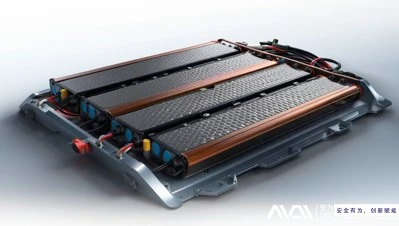
CATL's Qilin Battery employs third-generation Cell-to-Pack (CTP) technology, boosting system energy density to 255Wh/kg and enabling EV ranges beyond 700 km. BYD's Blade Battery achieves 180Wh/kg energy density within the LFP system, while its Cell-to-Body (CTB) integration doubles vehicle torsional stiffness. These innovations have alleviated range anxiety-mainstream EV models now offer 500–800 km ranges, with charging infrastructure coverage quadrupling since 2020.
The commercialization of solid-state batteries is disrupting the industry further. Toyota's 2026 mass-production plan for all-solid-state batteries uses sulfide electrolytes and lithium metal anodes, achieving 500Wh/kg energy density and 1,200 km range after 10-minute charging. China's GAC Aion aims to deploy all-solid-state batteries in 2026, utilizing in-situ curing processes to reduce electrolyte content below 5%, enhancing safety by 300% compared to liquid batteries. This energy density race is rewriting transportation rules, with emerging fields like electric flying cars and maritime vessels pinning hopes on advanced batteries.
3. Energy System Reconstruction: The Ecological Layout of Energy Storage Batteries
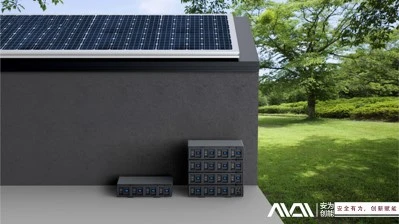
As renewable energy surpasses 40% of the grid mix, energy storage batteries have become critical for balancing supply and demand. By 2025, the global energy storage market hit $80 billion, with China leading at 45% market share. Lithium-ion batteries dominate grid-scale frequency regulation and industrial storage with >95% round-trip efficiency, while sodium-ion batteries penetrate residential storage markets due to cost advantages.
CATL's EnerC containerized storage system employs liquid cooling to maintain battery temperature differences within ±2°C, extending system lifespan beyond 15 years. Huawei Digital Power's intelligent string storage solution uses AI algorithms to optimize charging/discharging strategies, boosting photovoltaic plant efficiency by 8%. These innovations have driven storage costs down-by 2025, lithium-ion storage costs fell to $0.02/kWh, a 65% reduction since 2020, entering the grid parity era.
More profound changes occur in battery recycling. Brunp Recycling's "charged disassembly" technology breaks down batteries without prior discharge, achieving 95%+ lithium recovery. Huayou Cobalt's hydrometallurgical process cuts cobalt recovery costs by 40%, creating a closed-loop ecosystem of "battery production-usage-recycling." By 2030, recycled batteries are projected to supply 30% of global lithium demand, transforming resource dependency.
4. Future Horizons: Energy Revolutions Beyond Chemical Systems
Battery evolution continues unabated. In nuclear batteries, Betavolt's BV100 generates power through nickel-63 isotope decay, enabling 50-year continuous operation for spacecraft and polar expeditions. In bio-batteries, UK scientists developed urine-powered fuel cells using microbial organic decomposition, providing low-cost energy for remote regions.
On the materials science frontier, lithium-air batteries theoretically offer 3,500Wh/kg energy density-10× higher than current lithium batteries-while graphene supercapacitors achieve "second-charging" speeds, 1,000× faster than conventional batteries. Though still laboratory-stage, these technologies hint at disruptive energy paradigms.

Conclusion: Energy Flow Shapes Civilization
From remote controls to electric vehicles, from home storage to interstellar exploration, battery advancements essentially represent humanity's mastery of energy flow. As solid-state batteries shatter range barriers, storage systems enable seamless renewable integration, and recycling closes resource loops, we are witnessing the dawn of a "zero-carbon energy" era. This microscopic particle-driven macro revolution will ultimately redefine humanity's energy civilization coordinates.