

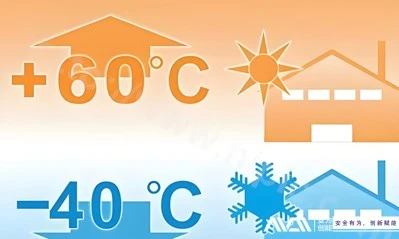
In the perpetual darkness of an Arctic research station, a drone equipped with ultra-low-temperature lithium batteries pierces through -40℃ winds; beneath the scorching Saharan sun, a lithium-based energy storage system with high-temperature-resistant electrolytes continuously powers a research outpost; and along China's northeastern border, a patrol drone with specialized thermal management maintains stable flight for over two hours in -30℃ cold. Behind these scenarios lies a revolutionary breakthrough in lithium battery technology-the ability to operate across a full temperature range from -20℃ to 60℃, which is reshaping humanity's understanding of energy storage boundaries.
I. The Low-Temperature Dilemma: Lithium Batteries' Achilles' Heel
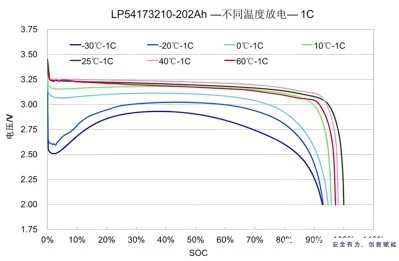
Traditional lithium batteries suffer catastrophic performance degradation in cold environments. When temperatures drop below 0℃, electrolyte viscosity surges, reducing lithium-ion migration rates to 1/5 of room-temperature levels. Take lithium iron phosphate (LFP) batteries as an example: at -10℃, their capacity drops to 89% of nominal levels, while at -20℃, capacity losses can reach 50-70%. More critically, low-temperature charging triggers lithium dendrite formation on anode surfaces, which can puncture separators and cause micro-short circuits. Experimental data shows that after just 10 fast-charge cycles at -20℃, battery internal resistance increases by 30%.
These performance collapses create significant operational barriers in polar research, high-altitude transportation, and cold-region infrastructure. In 2023, an Arctic expedition team suffered total communication system failure due to lithium battery malfunctions, resulting in direct losses exceeding $150,000. While conventional solutions like battery preheating systems offer partial relief, they consume 10-15% additional energy and struggle to maintain stability below -40℃.
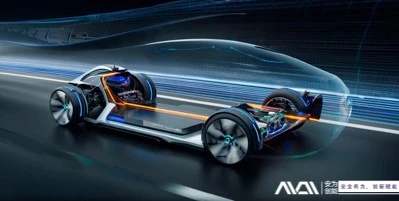
II. Technological Breakthroughs: Three Core Innovations Enabling Full Temperature RangeOperation
1. Electrolyte Revolution: From "Frozen" to "Fluid"
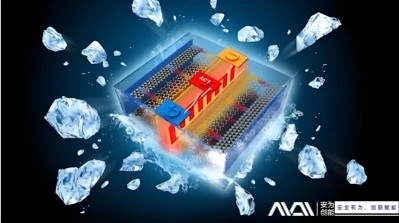
Researchers at the Dalian Institute of Chemical Physics developed ultra-low-temperature electrolytes using novel fluorinated solvents and dual-salt systems, lowering the freezing point from -20℃ to -50℃. This electrolyte maintains 0.5 mS/cm ionic conductivity at -40℃-three orders of magnitude higher than conventional formulations. Crucially, their proprietary anode film-forming additive creates a low-impedance SEI layer on graphite surfaces, reducing lithium-ion intercalation resistance by 60% and enabling stable drone operation at -36℃.
2. Electrode Material Reengineering: Nanoscale and Composite Structures
To combat low-temperature capacity fading, scientists reduced electrode particle sizes to below 50nm through nanotechnology. For instance, nano-structured LFP maintains 90% capacity at -20℃-25% higher than micron-scale materials. More advanced composite electrodes incorporate titanium oxide conductive networks, shortening lithium-ion transport paths by 70% and achieving 85% capacity retention after 300 cycles at -30℃.
3. Intelligent Thermal Management System Upgrades
Modern lithium battery systems have evolved into "battery + smart thermal control" hybrids. Tesla's 4680 cells employ top-mounted liquid cooling plates that maintain temperature differentials below 2℃ across the pack. Chinese firm CATL developed phase change material (PCM) thermal management systems that absorb heat through solid-liquid phase transitions, raising battery temperatures from -40℃ to 0℃ within 10 minutes. AI-driven thermal algorithms now analyze data from 128 temperature sensors to dynamically adjust heating power, reducing energy consumption by 40% compared to traditional systems.
III. High-Temperature Challenges: From "Tolerance" to "Proactive Defense"
When temperatures exceed 45℃, lithium batteries face a cascade of degradation mechanisms: electrolyte decomposition, cathode material collapse, and uncontrolled SEI layer growth. At these extremes, carbonate-based solvents in conventional electrolytes decompose into CO and CH₄ gases, causing battery swelling, while cathode materials like lithium cobalt oxide (LCO) suffer irreversible 15% capacity loss at 60℃ due to lattice structure collapse.
1. Enhanced Electrolyte Thermal Stability
By incorporating ionic liquids and high-temperature stabilizing additives, next-generation electrolytes now withstand decomposition temperatures up to 350℃-a 150℃ improvement over traditional lithium hexafluorophosphate (LiPF₆) systems. For example, a LiFSI-based electrolyte developed by a leading manufacturer maintains 85% capacity retention after 1,000 cycles at 80℃, outperforming conventional formulations by 30%.
2. Cathode Material Surface Coating Technologies
Atomic layer deposition (ALD) techniques apply 2-5nm Al₂O₃ coatings on cathode surfaces, effectively suppressing transition metal dissolution and electrolyte decomposition. Experiments show that coated NCM811 cathodes retain 88% capacity after 500 cycles at 60℃-a 16% improvement over uncoated materials-while raising thermal runaway temperatures from 210℃ to 280℃.
3. Advanced Cooling System Innovations
Huawei Digital Power's "dual-cycle liquid cooling" technology combines independent cooling plates with immersion cooling, maintaining battery surface temperatures below 45℃ at 55℃ ambient conditions. Tesla's Cybertruck employs "direct refrigerant cooling," achieving threefold higher heat dissipation efficiency than conventional liquid cooling-critical for high-temperature electric vehicle applications.
IV. Full Temperature Range Applications: From Lab to Industrialization
1. Polar Research and Deep Space Exploration
The Dalian Institute of Chemical Physics' ultra-low-temperature high-specific-energy lithium batteries powered a hexacopter drone through complex flight paths at -36℃ in Mohe, China. These batteries exhibit less than 10% range degradation at -40℃-three times better than industry averages. This technology now supports Antarctic research stations, providing year-round power for meteorological monitoring equipment.
2. Temperature-Independent Electric Vehicles
BYD's Blade Battery extends operational range to -30℃ to 70℃ through optimized electrolyte formulations and electrode structures. During 2024 winter testing, vehicles equipped with this technology showed just 18% range reduction at -25℃-40% better than conventional models. CATL's "Qilin Battery" achieves 2C fast-charging capability at 45℃ through large-area cell cooling technology.
3. Industrial Energy Storage in Extreme Environments
In the Taklimakan Desert, a photovoltaic energy storage project using high-temperature lithium batteries completes two daily charge-discharge cycles at 50℃ with 92% system efficiency. Meanwhile, in Siberia's oil fields, ultra-low-temperature lithium systems support monitoring equipment across a -50℃ to 60℃ range, reducing monthly failures from three to zero.
V. Future Prospects: Challenges and Opportunities
Despite breakthroughs, significant hurdles remain: battery internal resistance remains 3-5 times higher than room-temperature levels below -50℃, while current electrolytes still decompose above 80℃. Moreover, full temperature range performance improvements increase costs by 30-50%, limiting mass adoption.
However, with solid-state batteries and lithium metal anodes approaching commercialization, lithium battery temperature ranges could expand to -60℃ to 100℃ by 2030, according to the Institute of Physics, Chinese Academy of Sciences. This would enable energy storage solutions for Mars exploration, deep-sea mining, and other extreme environments.
From Arctic expeditions to desert solar farms, from deep-space probes to border patrols, full temperature range lithium batteries are writing a new chapter in energy storage. This technological revolution transcends mere performance enhancements-it represents humanity's relentless pursuit to transcend natural limits and expand our frontier of existence. When lithium batteries unleash their full power in -50℃ gales, we witness not just scientific progress, but the enduring spirit of exploration that defines our civilization.