

Amid the global wave of energy transformation, rechargeable lithium batteries are reshaping industrial landscapes at an annual growth rate exceeding 30%. From Tesla's Shanghai Gigafactory rolling out a Model 3 equipped with lithium iron phosphate (LFP) batteries every 40 seconds to CATL securing a record 39 GWh battery order from Renault for the European market, lithium technology has permeated transportation, energy storage, consumer electronics, and beyond. The fundamental logic driving this technological substitution lies in five disruptive comparative advantages.
1. Energy Density: A Storage Revolution Breaking Physical Limits
Traditional nickel-metal hydride (NiMH) batteries deliver 70-100 Wh/kg, while ternary lithium batteries surpass 300 Wh/kg and LFP batteries reach 180 Wh/kg. This order-of-magnitude leap is rewriting industry rules:
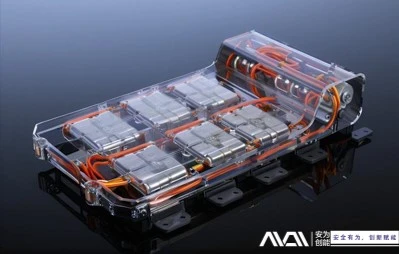
Electric Vehicles: Tesla's Model 3 with 21700 ternary cells achieves over 600 km range-a 300% improvement over Toyota's NiMH-powered Prius. BYD's Blade Battery elevates LFP system density to 160 Wh/kg, enabling the Han EV's 605 km range.
Consumer Electronics: The iPhone 15 Pro Max's 3,279 mAh lithium battery delivers 4x longer usage despite a 58% volume reduction compared to the original iPhone. DJI's Mavic 3 drone achieves 46-minute flight with a 5,000 mAh battery, thanks to lithium's density advantage.
Aerospace: Boeing's 787 Dreamliner shed 632 kg by adopting lithium over NiCd batteries, equivalent to carrying 7 additional passengers. SpaceX's Starship relies on custom lithium batteries for lightweight propellant pump actuation.
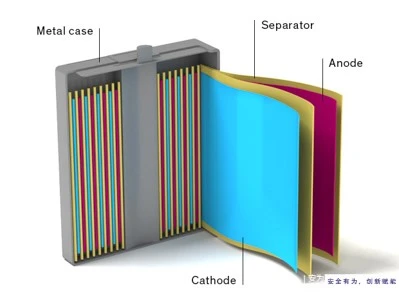
This breakthrough stems from lithium ions' efficient migration between graphite anodes and lithium cobalt oxide/LFP cathodes. While competitors rely on brute-force capacity increases through battery stacking, lithium achieves "weight reduction with enhanced efficiency."
2. Cycle Life: Rewriting Cost Dynamics Through Durability
LFP batteries maintain >80% capacity after 8,000 cycles in labs, with ternary cells reaching 3,000 cycles. Real-world applications confirm this advantage:
Grid Storage: CATL's EnerC containerized system in Shandong's Laizhou project delivers 15-year lifespan with daily cycling, reducing levelized cost of storage (LCOS) by 67% versus lead-acid batteries.
Two-Wheelers: Yadea's Crown series with TTFAR Graphene 3.0 batteries survives 2,000 cycles at -20°C to 55°C-6x longer than lead-acid-slashing 5-year costs by 58%.
Data Centers: Tencent's Tianjin facility uses BYD's Blade Battery storage with liquid cooling for 10,000-cycle lifespan, cutting per-watt-hour costs to ¥0.12 ($0.017)-73% below diesel backup systems.
This longevity is reshaping business models. NIO's Battery-as-a-Service (BaaS) leasing, based on 10-year lithium battery life, offers monthly subscriptions from $137 with lifetime warranties, driving EV penetration past 35%.
3. Charge/Discharge Efficiency: Redefining User Experience Benchmarks
Lithium's electrochemical properties are transforming user behavior:
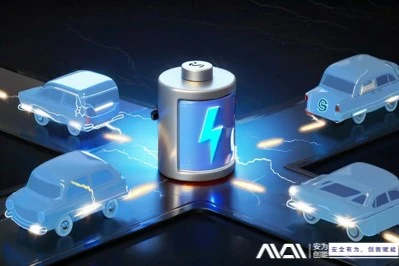
Ultra-Fast Charging: GAC Aion V Plus's 6C Super Charging adds 207 km range in 5 minutes. Tesla's V3 Superchargers deliver 250 kW peak power, replenishing 250 km in 15 minutes.
Dynamic Response: BYD's Han EV unleashes 363 kW peak power with Blade Batteries, accelerating 0-100 km/h in 3.9 seconds while maintaining cathode temperatures below 35°C.
Cold-Weather Performance: CATL's Qilin Battery extends charging speeds by 50% at -10°C through cell-to-pack cooling, reducing Nordic EV range loss from 40% to 25% in winter.
These efficiencies gain strategic value in energy internet applications. Huawei Digital Power's intelligent string storage system leverages millisecond-level lithium response for 40% improved grid frequency regulation, generating $27 million annual revenue at Australia's Hornsdale project.
4. Safety: From Technical Breakthroughs to Industry Standards
Despite early thermal runaway concerns, iterative innovations have established multi-layered protections:
Material Innovation: LFP's olivine structure remains stable at 500°C-150°C higher than ternary materials. BYD's Blade Battery passes needle penetration, crush, and oven tests, redefining EV safety benchmarks.
Structural Design: CATL's CTP 3.0 Qilin Battery delays thermal propagation from 5 to 24 minutes with three-dimensional insulation, buying critical evacuation time.
Management Systems: Tesla's BMS monitors 2,500 data points in real-time, using AI to predict battery health and reducing thermal runaway risk to one in a billion.
These advancements are dispelling safety doubts. ACEA data shows 2024 EU EV fire rates at 0.003%-lower than ICE vehicles' 0.005%-reversing public perceptions.
5. Environmental Benefits: Closing the Green Manufacturing Loop
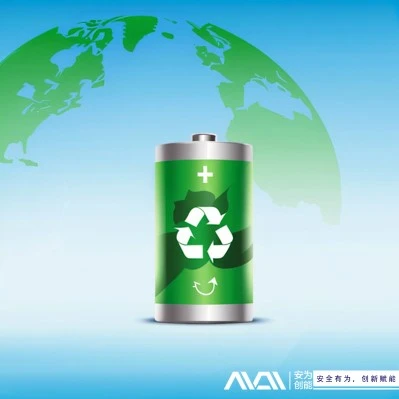
The lithium industry is building a cradle-to-cradle ecosystem:
Clean Production: CATL's Yibin plant operates on 100% renewable energy, cutting per-kWh production emissions to 30 kg CO₂e-60% below industry averages.
Second-Life Applications: China Tower has deployed 200,000 retired EV batteries for 5G base stations, avoiding 1.2 million tons of CO₂ emissions. BMW repurposes i3 batteries into home storage systems, extending lifecycle by 3-5 years.
Material Recovery: Brunp Recycling's "directed recycling" achieves 99.3% nickel-cobalt-manganese recovery and 95% lithium recovery, reducing emissions by 15 tons CO₂ per ton of recycled material.
These green credentials are becoming competitive differentiators. The EU's Battery Regulation mandates 50% carbon footprint reduction by 2030 versus 2021 levels. Chinese firms now control 65% of global market share through integrated green supply chains.