In the wave of transformation toward high-energy-density and high-safety battery technologies for the new energy vehicle (NEV) industry, solid-state batteries (SSBs) are regarded as a disruptive solution due to their intrinsic safety characteristics. However, translating laboratory data into large-scale applications requires overcoming multiple hurdles in material stability, manufacturing processes, and testing standards. This article delves into the safety performance boundaries of SSBs from three dimensions: technological principles, failure modes, and standards evolution.
I. Intrinsic Safety Advantages: The First Line of Defense via Material Properties
The core safety enhancement of SSBs stems from the physicochemical properties of solid electrolytes. Compared to the flammable carbonate-based electrolytes in conventional lithium-ion batteries, sulfide, oxide, and polymer solid electrolytes exhibit remarkable thermal stability. For instance, the sulfide solid electrolyte LGPS retains its crystalline structure at 600°C, the oxide solid electrolyte LLZO decomposes above 1400°C, and the polymer solid electrolyte PEO decomposes only above 200°C. This thermal stability enables SSBs to excel in mechanical abuse tests such as nail penetration and shearing. Zhongke GuNeng's Ah-level sulfide all-solid-state battery demonstrated a voltage fluctuation of less than 0.5V during nail penetration tests, with a thermal runaway threshold exceeding 500°C-far surpassing the 200°C critical point of conventional liquid-electrolyte batteries.
The mechanical strength of solid electrolytes is pivotal in suppressing lithium dendrite growth. In traditional liquid-electrolyte batteries, lithium dendrites can penetrate the separator and cause short circuits upon reaching 20μm in length on the anode surface. In contrast, the high shear modulus of solid electrolytes (e.g., 12GPa for LLZO) effectively impedes dendrite penetration. The "polymer-in-ceramic" composite electrolyte membrane developed by the University of Science and Technology Beijing maintained 90% capacity retention after 1,000 cycles at 60°C, with no dendrite-induced short circuits observed. This material-level safety margin reduces thermal runaway risks by over 60% under high-rate charging scenarios (e.g., 5C).
II. Failure Mode Challenges: The "Weakest Link" Effect Cannot Be Ignored
Despite their material advantages, SSBs face failure risks from complex multiphase interfaces. The "tortuous growth" of lithium dendrites is a典型案例 (a classic case)-when the interfacial impedance between the solid electrolyte and electrode exceeds 15Ω·cm², lithium ions concentrate at interface defects, leading to dendrite growth along grain boundaries or pores. Toyota's 2024 sulfide SSB test data revealed that dendrite growth rates triple at -20°C compared to room temperature, directly reducing cycle life from 800 to 200 cycles. This interfacial issue is more pronounced in oxide SSBs, where the solid-solid contact resistance between LLZO and lithium metal anodes reaches 1000Ω·cm², necessitating atomic layer deposition (ALD) of a Li₃PO₄ protective layer to reduce impedance below 50Ω·cm².
The toxicity risks associated with SSB damage are also non-negligible. Sulfide electrolytes generate highly toxic H₂S gas upon contact with moisture, with concentrations as low as 1ppm triggering respiratory irritation. A laboratory incident showed that a punctured 10Ah sulfide pouch battery released H₂S at 50ppm within 30 seconds, far exceeding OSHA's 10ppm safety threshold. While oxide SSBs pose no toxic gas risks, lithium aluminum germanium phosphate (LAGP) undergoes violent exothermic reactions with lithium above 1400°C, with a thermal runaway energy density of 1200J/g-equivalent to 40% of the explosive power of TNT by mass.
III. Standards Evolution and Industrialization Pathways: Bridging the Gap from Lab to Mass Production
The GB38031-2025 national standard, implemented in 2025, sets quantitative thresholds for SSB safety performance. It extends thermal runaway protection time from 5 minutes to 2 hours and introduces new tests for bottom impact (150J steel ball drop) and external short circuits after 300 fast-charging cycles. Under this framework, Weilai New Energy's 360Wh/kg semi-solid-state battery extended thermal runaway propagation time from 180 seconds (conventional) to 10,800 seconds by embedding aerogel thermal barriers between cells. CATL's composite current collector technology reduced battery internal resistance by 30%, limiting temperature rise to 15°C after fast-charging cycles.
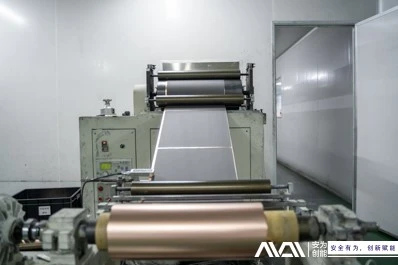
Cost control and process stability remain major bottlenecks in mass production. The air instability of sulfide solid electrolytes drives up manufacturing costs-current lithium sulfide raw material prices reach $650/kg, over 200 times that of liquid electrolytes. Zhongke GuNeng's wet-film-forming process achieved 25μm-thick electrolyte membranes (8cm×15cm) with 3.2mS/cm ionic conductivity, but yield rates remain below 60%. Oxide SSBs offer superior cycle stability (over 2000 cycles for LLZO systems), yet their sintering temperatures exceed 1200°C, increasing per-line energy consumption by 40% compared to liquid-electrolyte production lines.
IV. Future Technological Directions: Multidimensional Synergy to Elevate Safety Thresholds
Material innovations, such as combining lithium-rich manganese-based cathodes with lithium metal anodes, are considered the ultimate solution. WhenSheng Technology's Li₁.₂Ni₀.₂Mn₀.₆O₂ cathode maintains structural stability at 4.6V, offering 25% higher capacity than NCM811 systems. SES AI's hybrid lithium metal anode technology controls dendrite growth rates below 0.1μm/cycle via in-situ SEI film formation. These breakthroughs could enable SSBs to surpass 500Wh/kg energy density while raising thermal runaway thresholds from 300°C to 450°C.
Synergistic optimization of structural design and manufacturing processes is equally critical. Tesla's 4680 production line employs dry electrode technology, reducing equipment investment by 40% by eliminating solvent recovery steps while increasing electrode density to 3.8g/cm³-a 15% improvement over wet processes. SVOLT Energy's short-blade battery line integrates AI vision inspection systems, boosting separator wrinkle defect detection rates from 95% to 99.99% and reducing short-circuit risks by two orders of magnitude. Combined with CTP 3.0 technology's 72% volume utilization rate, these advancements are redefining safety benchmarks for power batteries.
Conclusion
The safety enhancement of SSBs results from the synergy of materials science, electrochemical engineering, and intelligent manufacturing. From intrinsically safe solid electrolytes to intelligent thermal management systems, from nanoscale interface engineering to cloud-based battery health diagnostics, each technological breakthrough reshapes safety boundaries. While current SSB manufacturing costs remain 3–5 times higher than those of liquid-electrolyte batteries, the approaching 2030 mass-production milestone for sulfide SSBs and the 2035 commercialization prospects for lithium metal anode batteries herald a "zero thermal runaway" era for NEVs. For Chinese power battery enterprises, technological accumulation and patent布局 (strategic deployment) in SSBs are not only pivotal for securing industrial dominance but also critical technical pillars for achieving China's "dual carbon" goals.