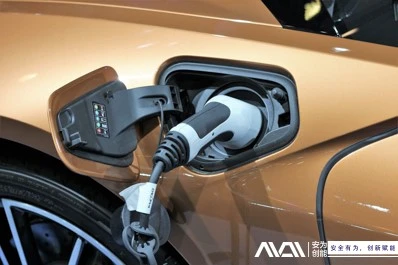
In the current wave of vigorous development of new energy technologies, solid-state battery, as a highly promising next-generation battery technology, has attracted extensive attention from all walks of life. As people's requirements for the endurance of electronic devices and the driving range of electric vehicles continue to increase, and their emphasis on battery safety performance grows day by day, solid-state battery is highly anticipated to address many pain points of traditional liquid lithium-ion batteries in terms of safety and range. However, before its large-scale popularization and application, a key question lingers in consumers' minds: Is solid-state battery safe and capable of providing long range? To answer this question, we need to delve into the working mechanism, technical characteristics, and current research and application status of solid-state batteries.
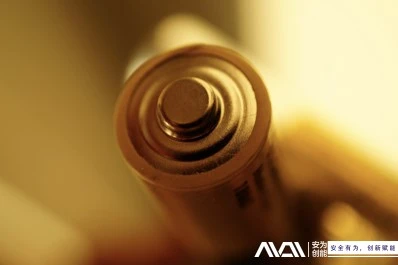
Working Principle and Structural Characteristics of Solid-State Battery
The core difference between solid-state battery and traditional liquid lithium-ion battery lies in the form of electrolyte. Traditional liquid lithium-ion batteries employ liquid electrolyte to achieve the charging and discharging process through the movement of lithium ions between the positive and negative electrodes. In contrast, solid-state batteries utilize solid electrolyte, which is typically made of ceramic, polymer, or sulfide materials. In solid-state batteries, lithium ions also deintercalate from the positive electrode during charging and intercalate into the negative electrode through the solid electrolyte; during discharging, they move in the opposite direction, while electrons flow from the negative electrode to the positive electrode through the external circuit, generating current to power the device.
The use of solid electrolyte endows solid-state batteries with unique structural characteristics. Compared to liquid electrolyte, which requires a separator to prevent short-circuiting between the positive and negative electrodes, solid electrolyte itself has the dual functions of ion conduction and electrode isolation, making the battery structure more compact. Meanwhile, solid electrolyte exhibits higher stability and is less prone to volatilization and leakage, laying a foundation for improved battery safety performance.
Safety Performance of Solid-State Battery
Traditional liquid lithium-ion batteries pose a risk of thermal runaway under high-temperature conditions. When the battery temperature exceeds a certain threshold, such as 80°C, the liquid electrolyte may decompose to produce flammable gases, and side reactions within the battery intensify, leading to a rapid accumulation of heat and ultimately causing the battery to catch fire or even explode. Data from the German TÜV testing agency clearly reveal this hidden danger.
Solid-state batteries exhibit significant advantages in thermal stability. Due to the absence of volatile and flammable liquid components in solid electrolyte, its thermal stability is much higher than that of liquid electrolyte. The puncture test conducted by the New Energy and Industrial Technology Development Organization (NEDO) of Japan is impressive: when a steel needle punctures a solid-state battery, the battery temperature only rises by 2°C, whereas a traditional liquid lithium-ion battery will catch fire and explode within just 3 seconds. This experimental result visually demonstrates the superior safety of solid-state batteries in the face of extreme mechanical abuse.
In a paper titled "Are Solid-State Batteries Safer Than (Liquid) Lithium-Ion Batteries?" published in Science in April 2022, researchers discussed the heat release and temperature rise limits of liquid lithium-ion batteries, semi-solid batteries with a certain amount of electrolyte, and all-solid-state batteries under three thermal runaway scenarios. The study found that in the thermal runaway state caused by external heating, all-solid-state batteries outperform semi-solid and liquid lithium-ion batteries. The high density of solid electrolyte in all-solid-state batteries can form an effective gas barrier, preventing contact between lithium on the negative electrode and oxygen released from the positive electrode. In this hypothetical scenario, there would be no significant heat release.
Inhibition of Lithium Dendrite Growth
During the charging and discharging process of traditional liquid lithium-ion batteries, lithium ions may directly crystallize on the surface of the negative electrode during fast charging, forming dangerous lithium dendrites. The growth of lithium dendrites not only leads to battery capacity decay but may also puncture the separator, causing a short circuit between the positive and negative electrodes and triggering a safety incident. This hidden danger was revealed by engineers from CATL.
Solid-state batteries show potential in inhibiting lithium dendrite growth. The special structure and properties of solid electrolyte can provide a more uniform path for lithium ion migration, reducing the possibility of lithium dendrite formation. Although completely eliminating lithium dendrite growth still poses challenges in practical applications, the improvement trend of solid-state batteries in this regard is evident compared to liquid lithium-ion batteries.
Potential Safety Risks
Despite the many advantages of solid-state batteries in terms of safety, they are not absolutely safe. In certain extreme cases, such as when the solid electrolyte fails or lithium dendrites penetrate the solid electrolyte, causing a short circuit, the safety of all-solid-state batteries and semi-solid batteries is not superior to that of liquid lithium-ion batteries. Professor Ai Xinping from the School of Chemistry and Molecular Sciences at Wuhan University points out that the claim that all-solid-state batteries have both high energy density and good safety actually involves a conceptual sleight of hand. Because some materials in solid-state batteries may produce toxic gases such as hydrogen sulfide in the event of an accident, although they will not directly burn people like traditional batteries, hydrogen sulfide gas is toxic and can cause serious harm to the human body.

Potential of Solid-State Battery in Range
In theory, solid-state batteries have the potential to achieve high energy density, which is expected to significantly enhance the endurance of devices. Solid electrolyte allows the use of pure metallic lithium as the negative electrode, which significantly increases the energy storage capacity per unit volume. Experimental data from the Qingdao Institute of Bioenergy and Bioprocess Technology of the Chinese Academy of Sciences show that the energy density of their solid-state battery samples has exceeded 500Wh/kg, while the energy density of the 21700 battery used in Tesla Model 3 is only 260Wh/kg.
Taking electric vehicles as an example, driving range has always been a focus of consumer attention. Kunpeng Battery from Chery, as a representative of solid-state batteries, plans to achieve an energy density of 400Wh/kg in 2024 and increase it to 600Wh/kg in 2025. According to the plan, when mass-produced in 2027, the pure electric driving range is expected to exceed 1500km. If these goals are achieved, it will greatly alleviate the range anxiety of electric vehicle users.

Challenges in Actual Range
However, from the laboratory to practical applications, solid-state batteries still face some challenges in terms of range. Firstly, the interface impedance between solid electrolyte and electrodes is relatively prominent, which is akin to setting up a toll booth on a highway, hindering the rapid transmission of lithium ions and affecting the battery's charging and discharging efficiency, thereby adversely impacting the range. Secondly, the fatal flaw of sulfide electrolyte, which produces highly toxic hydrogen sulfide when exposed to water, not only increases safety risks during battery production and use but also poses severe challenges to the stability and reliability of the battery. In addition, the low yield of solid electrolyte film preparation leads to high production costs on a large scale, limiting the widespread application of solid-state batteries and indirectly affecting the process of demonstrating their long-range advantages in the market.
Conclusion and Outlook
In summary, solid-state batteries demonstrate significant potential in terms of safety and range. In terms of safety, their thermal stability advantages are evident, and they can effectively inhibit lithium dendrite growth, making them more safe and reliable than traditional liquid lithium-ion batteries in most cases. However, in the face of extreme situations such as solid electrolyte failure, there are still certain safety risks. In terms of range, the theoretical advantage of high energy density provides the possibility for long range, and some experimental data and corporate plans also show promising prospects. However, in practical applications, issues such as interface impedance, electrolyte defects, and cost have become obstacles hindering the full realization of their long-range advantages.
Despite facing numerous challenges, solid-state batteries are still regarded as an important development direction for next-generation battery technologies.