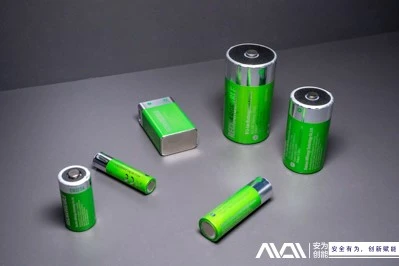
The Battery and Waste Batteries Regulation (hereinafter referred to as the New Battery Regulation), which came into effect in August 2023, represents the implementation of the world's strictest battery regulatory framework. Covering the entire battery lifecycle-from design and manufacturing to recycling-the regulation introduces mandatory requirements such as carbon footprint accounting, battery passports, and recycled material ratios, reshaping the global competitive landscape of the lithium-ion battery industry. China, as the world's largest lithium-ion battery manufacturer with over 70% of global production capacity, now faces unprecedented compliance challenges and transformation opportunities.

1. Technical Barriers Driving Industrial Upgrades
The New Battery Regulation mandates that traction batteries must meet carbon footprint limits by 2027, with battery passports required starting in 2026. This means lithium-ion batteries exported from China to Europe must disclose full lifecycle carbon emissions data-from raw material extraction to recycling-and establish traceable digital management systems. For example, Sunwoda Power, which obtained early carbon footprint certification, has seen its European orders booked through 2024, demonstrating the new rule that "compliance equals market access." The regulation compels companies to accelerate clean energy adoption, process optimization, and green supply chain development, objectively driving China's lithium-ion battery industry toward quality-driven growth rather than scale expansion.
2. Opportunities and Challenges in Supply Chain Restructuring
Europe accounts for only 8% of global lithium-ion battery production capacity, yet its new energy vehicle penetration rate has reached 25%. Chinese battery manufacturers are localizing production to avoid trade barriers-such as CATL's German factory and SVOLT's French base-while also benefiting from Europe's billion-dollar subsidies. However, requirements for recycled material usage and supply chain due diligence are forcing Chinese companies to restructure their global resource networks. For instance, CNGR Advanced Material's partnership with Finnish mining group Terrafame for nickel-cobalt development is a strategic response to the EU's traceability demands for critical minerals.
3. Recycling Systems as a New Battleground
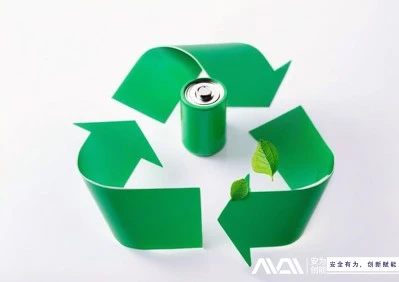
The regulation requires extended producer responsibility by 2025, with battery recycling rates exceeding 70%. Chinese companies are leveraging their mature second-life battery technology to turn recycling into a profit growth driver. GEM's joint battery recycling center with Volkswagen achieves over 99% recovery rates for nickel, cobalt, and manganese-meeting EU circular economy requirements while reducing reliance on imported raw materials. This "manufacturing-recycling-remanufacturing" closed-loop model may become a core competitive advantage for Chinese battery companies against EU carbon tariffs.
4. Survival Pressures on SMEs
Compliance costs under the New Battery Regulation are estimated at 3%-5% of revenue, posing significant challenges for SMEs with annual revenue below €400 million. Some companies lacking technological reserves may exit the European market, while industry leaders like Eve Energy are consolidating their positions through investments in European recycling firms. This polarization trend could reshape the global lithium-ion battery industry landscape.
5. China's Strategic Responses
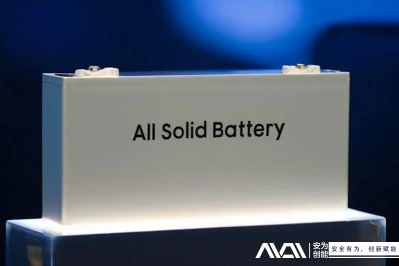
To counter EU green barriers, Chinese companies must build a three-dimensional defense system of "technology + standards + resources." Technologically, accelerating R&D in low-carbon alternatives like solid-state and sodium-ion batteries; in standards, participating in international carbon footprint rule-making; and in resources, securing lithium reserves in Africa and South America to mitigate geopolitical risks. Additionally, platforms like the China-EU Battery Association can promote mutual recognition of standards and prevent long-term technical trade barriers.
6. Reshaping the Global Industry Landscape
The New Battery Regulation marks a shift from "cost-first" to "sustainability-first" competition in the global lithium-ion battery industry. Chinese companies, with their first-mover advantages in recycling technology and battery passport systems, are already influencing some standards. Meanwhile, European firms, due to technological lag, remain dependent on Chinese supply chains in the short term. This dynamic balance may foster deeper cooperation between China and Europe in battery recycling and carbon trading.
The EU's new battery regulation is both a challenge and a catalyst for China's lithium-ion battery industry to transition from a " manufacturing powerhouse" to a " technological leader." In the wave of green transformation, companies that achieve compliance first will secure a dominant position in the global value chain.