

A lithium-ion battery in a smartphone sees its battery life drop from 10 hours to 6 hours after two years of normal use; an electric vehicle's battery pack experiences a reduction in claimed range from 500 km to 400 km after covering 80,000 km; and a lithium-ion battery in an energy storage station witnesses its capacity decline to 80% of its initial value after 2,000 charge-discharge cycles... These everyday scenarios raise a core question: What factors determine the lifespan of a lithium-ion battery? Does its degradation follow a predictable trajectory? This article will unveil the "life code" of lithium-ion batteries from three dimensions: technical principles, testing standards, and usage scenarios.
I. The Dual Yardsticks of Lithium-Ion Battery Lifespan: Cycle Life and Calendar Life
The lifespan assessment of lithium-ion batteries involves two parallel systems: cycle life and calendar life. The former measures the capacity degradation of a battery during charge-discharge cycles, while the latter focuses on the aging speed of a battery during static storage.
1. Cycle Life: The "Countdown" of Charge-Discharge Cycles
According to the standards set by the International Electrotechnical Commission (IEC), the cycle life test of a lithium-ion battery should be conducted at 25°C, with the battery charged and discharged at a current of 0.2C until its capacity degrades to 80% of the initial value. For instance, lithium iron phosphate (LFP) batteries can achieve a cycle life of 3,000-6,000 cycles, while ternary lithium batteries typically offer 800-2,000 cycles. This difference stems from material characteristics: the olivine structure of LFP is more stable, whereas the layered structure of ternary materials is prone to phase transitions at high temperatures.
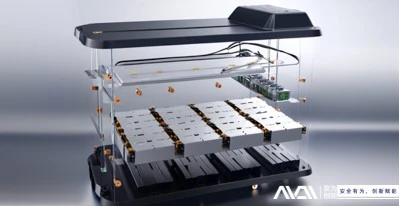
Case Study: The 21700 ternary lithium batteries equipped in Tesla Model 3 can maintain a capacity retention rate of over 80% after 1,200 cycles under standard operating conditions, equivalent to over three years of daily charge-discharge usage.
2. Calendar Life: The "Invisible Killer" in the Time Dimension
Even when not in use, lithium-ion batteries gradually degrade due to side reactions such as electrolyte decomposition and SEI (Solid Electrolyte Interphase) film thickening. Calendar life is significantly affected by temperature: LFP batteries can have a calendar life of up to 10 years at 25°C, but this lifespan shortens to 2-3 years at 45°C.
Experimental Data: A comparative test on an energy storage station revealed that lithium-ion batteries stored at 35°C experienced a 3% annual capacity degradation rate, compared to only 1.2% at 15°C.
II. The Five Major Culprits Affecting Lifespan: Degradation Mechanisms from Micro to Macro Scales
The capacity degradation of lithium-ion batteries is essentially a reduction in the migration efficiency of lithium ions between the positive and negative electrodes, driven by multiple factors:
1. Cyclic Aging: "Structural Fatigue" of Electrode Materials
Each charge-discharge cycle induces microscopic structural changes in the electrode materials: lattice collapse in the positive electrode material and layered structure rupture in the graphite negative electrode reduce the embedding sites for active lithium ions. For example, after 500 cycles, the lattice parameters of lithium cobalt oxide (LCO) positive electrodes shrink by 2%-3%, directly leading to a 15%-20% capacity degradation.
2. Overcharging/Over-discharging: The "Chemical Incineration" of Electrolytes
Overcharging: When the voltage exceeds 4.2V, the electrolyte decomposes to produce CO₂ and H₂O, while the positive electrode material (e.g., NCM) undergoes oxidation reactions, releasing oxygen and accelerating electrolyte consumption.
Over-discharging: When the voltage drops below 2.5V, the copper current collector of the negative electrode dissolves and deposits on the positive electrode surface, forming conductive pathways that cause internal short circuits.
Protection Technologies: Modern Battery Management Systems (BMS) can prevent over 90% of overcharging/over-discharging damage by strictly controlling the charge-discharge window within 3.0-4.2V through real-time monitoring of voltage, current, and temperature.
3. High-Temperature Environments: The "Uncontrolled Growth" of SEI Films
At 45°C, the thickness of SEI films increases by 0.1μm per month (compared to 0.02μm/month at room temperature). Thicker SEI films impede lithium-ion migration, increasing battery internal resistance by 30%-50%. More critically, high temperatures accelerate electrolyte decomposition, producing corrosive substances like HF that further damage the electrode structure.
Solutions: CATL's "low-temperature electrolyte" maintains ionic conductivity at -20°C, while SVOLT Energy's "L-blade battery" extends the operating temperature range to -30°C to 60°C by optimizing tab design.
4. Mechanical Damage: The "Invisible Destruction" from Vibration and Impact
During operation on bumpy roads, electric vehicle battery packs endure high-frequency vibrations. Experiments show that after 100,000 vibrations in the 10Hz-55Hz frequency band, battery internal resistance increases by 10%-15%, with a 5% capacity degradation. Additionally, drop impacts may puncture the separator, triggering internal short circuits.
Protection Standards: IEC 62660-2 requires power batteries to pass a 1-meter drop test, while Tesla's Cybertruck battery pack claims to withstand a 9-meter drop impact.
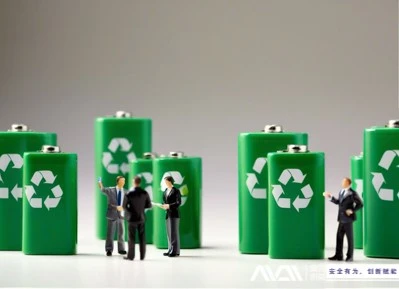
5. Manufacturing Defects: Lifespan Limits Determined by "Genetics"
Process issues such as insufficient electrolyte injection and misalignment of electrode sheets directly accelerate battery capacity degradation. A manufacturer's comparative test revealed that a 5% deviation in electrolyte injection volume could result in a 300-cycle difference in cycle life.
III. The Golden Rules for Extending Lifespan: From Usage Habits to System Design
Prolonging the lifespan of lithium-ion batteries requires a three-pronged approach: user habits, BMS algorithms, and thermal management systems:
1. User-End Practices: Avoid "Deep Charging/Discharging" and "High-Temperature Fast Charging"
Shallow Charging/Discharging: Maintaining the battery charge level between 20%-80% can extend the cycle life of ternary lithium batteries to over 1,500 cycles.
Temperature Control: Avoid charging at temperatures above 35°C; opt for nighttime low-temperature charging in summer.
Long-Term Storage: If the battery needs to be idle for over six months, maintain the charge level at 40%-60% and recharge every three months.
2. System-End Solutions: Precise Regulation by BMS
Modern BMS systems incorporate the following features:
Active Balancing: By transferring energy between cells, it equalizes the charge levels of high-capacity and low-capacity cells, extending the overall lifespan of the battery pack.
State of Health (SOH) Estimation: Real-time assessment of battery remaining lifespan based on parameters like internal resistance and voltage provides a basis for maintenance.
Thermal Management: Liquid cooling systems control battery temperature fluctuations within ±2°C, significantly slowing capacity degradation.
3. Material Innovations: Lifespan Breakthroughs for Next-Generation Batteries
Solid-State Batteries: By replacing liquid electrolytes with solid electrolytes, they inhibit lithium dendrite growth, enabling cycle lives exceeding 5,000 cycles.
Silicon-Based Anodes: Through nanostructuring to mitigate volume expansion, they offer a theoretical capacity 10 times higher than graphite, though challenges remain in stabilizing SEI films.
Lithium-Rich Manganese-Based Cathodes: With a specific capacity exceeding 300mAh/g and better cycling stability than traditional ternary materials, they represent a promising direction.
IV. Future Outlook: The Evolution from "Consumables" to "Durable Goods"
With advancements in material science and system design, the lifespan of lithium-ion batteries is pushing physical limits:
Electric Vehicle Sector: BYD's Blade Battery claims to retain over 85% capacity after 4,500 cycles, equivalent to a vehicle lifespan exceeding 1 million kilometers.
Energy Storage Sector: CATL's "long-life battery cells" achieve a capacity degradation of less than 15% after 15,000 cycles, meeting the operational demands of 25-year power stations.
Consumer Electronics Sector: Apple's iPhone 15 series introduces "Battery Health Management 2.0," which optimizes charging strategies through machine learning, extending battery life by 20%.
Conclusion: The Energy Ethics Behind Battery Lifespan
The lifespan of lithium-ion batteries is not merely a technical issue but also an ethical proposition in energy utilization. When a battery's lifespan extends from 2 years to 10 years, it translates to millions of tons less electronic waste globally each year. When an electric vehicle's battery pack matches the vehicle's lifespan, users are freed from "range anxiety." From microscopic material innovations to macroscopic system designs, humanity is redefining the boundaries of "energy storage"-and it all begins with decoding the lifespan of a tiny lithium-ion battery.