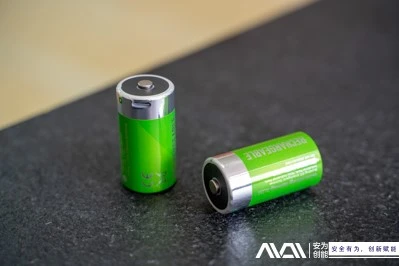
Lithium batteries have become the "energy heart" of modern life, powering everything from smartphones and laptops to electric vehicles and energy storage systems. Their performance directly impacts device longevity and user experience. However, many users still harbor misconceptions: some believe batteries must be fully drained before recharging, others insist that fast charging damages cells, and some even store idle lithium batteries in drawers without proper preparation. These behaviors are silently accelerating battery degradation. Combining cutting-edge research with industry best practices, this article reveals five lesser-known facts about extending lithium battery lifespan, helping you break through cognitive barriers and achieve scientific maintenance.

Cold Fact 1: The "Golden Charge Range" for Lithium Batteries is 20%-80%, Not 100%
Traditional Misconception: Most users charge their devices to 100% for a sense of security, but this habit is secretly harming battery lifespan.
Scientific Basis: Lithium battery lifespan is closely tied to Depth of discharge (DOD). Experiments show that when lithium batteries remain at 100% or 0% state of charge (SoC) for extended periods, electrolyte decomposition accelerates, increasing capacity fade by over 300%. For example, Tesla Model 3's battery management system (BMS) defaults to a 90% charge limit, only allowing manual override to 100% before long trips-a design choice rooted in lifespan protection.
Practical Tips:
Smartphones/Tablets: Enable "Optimized Battery Charging" (e.g., iOS's Battery Health Management) to cap charging at ~80%.
Laptops: Set charge thresholds via BIOS or third-party tools (e.g., BatteryBar). Lenovo ThinkPad models support 60%-80% limits.
Electric Vehicles (EVs): Use home slow charging for daily use; reserve fast charging for long-distance trips to avoid frequent full charges.
Cold Fact 2: Monthly "Full Charge Cycles" Correct Gas Gauge Errors
User Pain Point: After prolonged use, devices may abruptly shut down at 30% or stall at 80% during charging. This isn't battery failure but gas gauge inaccuracy.
Technical Principle: Lithium battery charge estimation relies on voltage-capacity curves, which drift with shallow charging. Lithium iron phosphate (LFP) batteries, with their flat voltage profiles, suffer 20%+ estimation errors. Monthly full discharges (0%-100%) recalibrate the gas gauge, improving accuracy.
Practical Tips:
Smartphones: Once a month, drain the battery to auto-shutdown, then recharge fully with the original adapter.
EVs: Perform "battery balancing" every 5,000 km via the vehicle's infotainment system or a dealership service.
Energy Storage: Deep cycle portable power stations quarterly to prevent false capacity readings.
Cold Fact 3: Low-Temperature Charging Requires "Preheating"; High-Temperature Charging Demands "Cooling"
Extreme Environment Challenges: Lithium batteries are highly temperature-sensitive. Below 0°C, slowed lithium-ion migration causes lithium plating (dendrites), risking internal shorts. Above 45°C, electrolyte decomposition doubles capacity fade rates.
Industry Solutions:
EVs: Tesla Model Y preheats batteries to 10°C+ before charging in cold climates using electric heaters.
Consumer Electronics: iPhone 15 Pro's dual-layer graphite sheets reduce CPU temperatures by 3°C during charging, slowing aging.
Energy Storage: Huawei's LUNA2000 uses liquid cooling to maintain battery temps at 25°C ±2°C.
Practical Tips:
Cold Weather: Warm devices in pockets for 10 minutes before charging or use self-heating power banks.
Hot Weather: Remove metal/thick cases during charging; use fans for cooling; avoid direct sunlight.
In-Car Charging: Use AC vents for cooling in summer; avoid charging below -20°C in winter.
Cold Fact 4: Long-Term Storage of Lithium Batteries Requires "Half-Charge"
User Behavior Analysis: Surveys show 30% of users store idle devices (e.g., spare phones) at 100% SoC, while 25% drain them completely-both accelerate aging.
Scientific Storage Standards: IEEE 1725-2023 recommends storing lithium batteries at 40%-60% SoC, 15°C-25°C, and <50% humidity. DJI drone batteries feature a "storage mode" that automatically sets 50% SoC and disables communications to reduce self-discharge.
Practical Tips:
Pre-Storage: Perform one full charge cycle, then adjust to ~50% SoC.
Environment: Store in dry, cool drawers or dedicated cases; avoid metal contact.
Maintenance: Check charge every 3 months; recharge if below 40% to prevent deep discharge.
Cold Fact 5: Different Lithium Battery Chemistries Require "Tailored Care"
Material-Dependent Lifespan: Battery lifespan varies by chemistry:
LFP: 3,000–6,000 cycles but poor low-temp performance (-30% capacity at -20°C).
NMC/NCA: High energy density but thermal instability; strict charge temp control needed.
LTO: 10,000+ cycles but low energy density; suited for niche applications.
Tailored Maintenance Strategies:
LFP Batteries: Weekly full charge cycles to calibrate gas gauges and activate cells.
NMC/NCA Batteries: Charge to 95% instead of 100%; avoid high-temp fast charging (e.g., Tesla V3 Superchargers activate only when battery temp <40°C).
LTO Batteries: No special care needed but inspect electrode connectors periodically.
The Lon g-Term Value of Scientific Maintenance
Extending lithium battery lifespan isn't just about saving money-it's an environmental imperative. Globally, over 500,000 tons of lithium batteries are discarded annually, with only 30% recycled properly. Scientific maintenance can:
Double a smartphone battery's lifespan from 3 to 6 years, cutting e-waste by one unit.
Extend an EV battery's life from 8 to 12 years, reducing lifetime CO2 emissions by 20%+.
The power to prolong lithium battery life lies in your hands. Start today by adjusting charging habits, monitoring storage conditions, and understanding material-specific needs. Scientific maintenance isn't just about protecting devices-it's a pledge to safeguard our planet's future.