Background & Challenges
All-solid-state lithium metal batteries are hailed as the "holy grail" of energy storage, with their solid electrolytes completely eliminating the flammability risks of traditional liquid batteries. However, poor physical contact between electrodes and solid electrolytes causing high interfacial impedance has been a critical bottleneck hindering commercialization. Chinese researchers have proposed an innovative solution through interdisciplinary collaboration focusing on material microstructure.

Core Technological Breakthrough
The team employed atomic layer deposition (ALD) technology to construct a 5-nanometer lithium nitride transition layer on the lithium metal surface. This layer exhibits exceptional ionic conductivity while effectively suppressing lithium dendrite growth. Experimental results show this reduces interface impedance to 1/10 of conventional methods, extends cycle life from under 100 to over 500 cycles, and achieves 550Wh/kg energy density - far surpassing commercial lithium-ion batteries.

Industrialization Significance
This breakthrough could enable EVs to exceed 1,200km range while solving low-temperature performance degradation. CATL has invested ¥2 billion to establish pilot production lines targeting mass production by 2027. Projections indicate costs may drop below $100/kWh by 2030, reaching parity with internal combustion engines.
Global Competitive Landscape
As of 2025, China holds 12,000 patents (45% global share) in solid-state batteries. This advancement positions China ahead in the technology race traditionally dominated by Japan/US/Europe, with companies like Toyota now seeking collaborations with Chinese teams.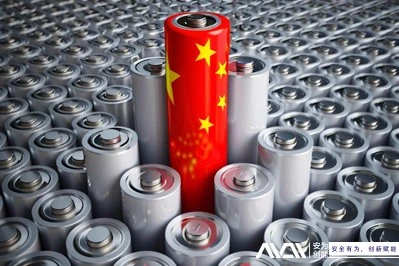
Future Roadmap
The team plans sulfide electrolyte system validation by 2026, potentially achieving 10⁻² S/cm ionic conductivity. Academician Li Ming notes: "This marks China's transition from follower to leader in new energy technologies."
Societal Impact
Widespread adoption could reduce global EV carbon emissions by 1.2 billion tons annually. IEA predicts the technology may drive a $3 trillion energy storage market by 2035, accelerating carbon neutrality goals.