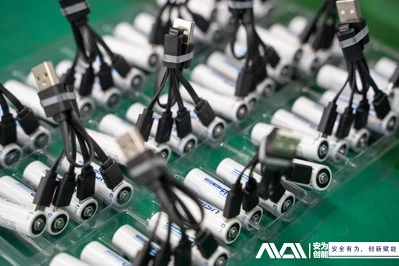
In smartphones, laptops, drones, and even power tools, the Type-C interface is rapidly replacing traditional charging ports. This transformation represents not just a physical upgrade but a profound evolution in energy efficiency, device compatibility, and user experience. As the Type-C interface deeply integrates with lithium battery technology, an efficient, secure, and sustainable mobile energy ecosystem is taking shape at an accelerated pace.
1. Type-C Interface: The "Super Engine" for Lithium Battery Charging
1.1 Power Leap: From 10W to 240W
Traditional USB interfaces, constrained by physical structures and protocol standards, long lingered around 10W charging power. In contrast, the Type-C interface, through breakthroughs in the USB PD3.1 protocol, has pushed the power ceiling to 240W with a voltage range extending to 48V. This revolution has propelled lithium battery charging into the "minute-level" era:
Consumer Electronics: Smartphone charging power has surged from 18W to 120W, enabling a 4,500mAh battery to fully charge in just 15 minutes.
Industrial Equipment: Power tools now support over 65W charging, completing a 2,000mAh battery charge in 30 minutes-a 300% efficiency boost.
Energy Storage: Portable power stations with Type-C interfaces support 100W bidirectional charging, enabling seamless energy transfer between "power banks" and devices.
1.2 Protocol Compatibility: The "Universal Key" Breaking Brand Barriers
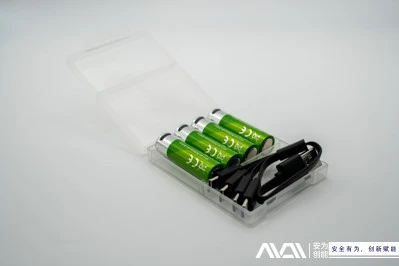
The Type-C interface's built-in CC1/CC2 communication pins enable dynamic negotiation of charging parameters. Take Southchip's SC2021A protocol chip as an example-it supports over 20 fast-charging protocols, including PD3.0, QC4.0, AFC, and FCP, achieving "one-cable charging for all devices." This compatibility is particularly transformative in the power tool sector:
Brands like Bosch and Makita now share charging protocols via Type-C, eliminating the need for proprietary chargers.
After the EU mandates Type-C standardization by 2024, an estimated 11,000 tons of e-waste will be diverted annually, saving consumers €250 million in charging device costs.
1.3 Intelligent Management: From "Brute-Force Charging" to "Precision Maintenance"
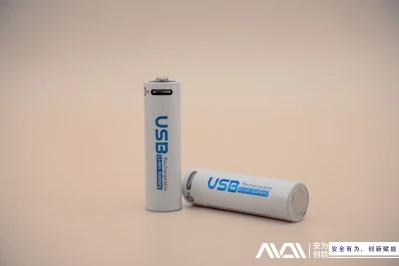
Modern Type-C charging systems employ MCU+ADC architectures for millisecond-level monitoring. Consider the M12028 charging management chip:
Thermal Control: Real-time battery temperature monitoring triggers current reduction when temperatures exceed 45°C.
Stage Optimization: A four-phase "trickle-constant current-constant voltage-cutoff" charging strategy extends battery cycle life by 30%.
Path Optimization: When devices are in use, external power is prioritized to minimize battery wear from frequent charge-discharge cycles.
2. Lithium Battery Evolution: Technological Breakthroughs for Type-C Compatibility
2.1 Material Innovation: The Rise of High-Nickel and Silicon-Carbon Anodes
To match Type-C's high-power demands, lithium battery cathodes have upgraded from NCM523 to NCM811, while anodes adopt silicon-carbon composites:
Energy Density: CATL's Qilin battery achieves 255Wh/kg-a 40% improvement over traditional designs.
Fast-Charging Adaptability: Silicon-carbon anodes enable 5× faster lithium-ion diffusion, supporting 6C charging (80% capacity in 10 minutes).
Safety Enhancements: Ceramic separators and electrolyte additives raise thermal runaway thresholds from 150°C to 220°C.
2.2 Structural Innovation: From "Lone Warriors" to "Collaborative Armies"
Multi-cell lithium battery串联 (2S/3S/4S) configurations dominate, yet voltage imbalance remains a challenge:
Passive Balancing: The M12028 scheme uses parallel resistors to dissipate excess energy from high-voltage cells, achieving ±10mV balancing accuracy.
Active Balancing: Southchip's SC5650 protection chip employs inductive energy transfer, boosting efficiency to 95% while reducing losses by 80%.
Modular Design: Power tools with 4S battery packs leverage SC8815 buck-boost chips for 8.4V–20V wide-voltage output.
2.3 Algorithmic Breakthroughs: "Black Technology" for Accurate State-of-Charge (SOC) Estimation
Traditional coulomb counting methods suffer 15% errors, but novel curve-fitting algorithms leverage machine learning for voltage-SOC modeling:
Data Collection: Battery charge/discharge curves are recorded at 10mV intervals, building a database of 100,000 data points.
Model Training: LSTM neural networks predict SOC changes with ±2% accuracy at 25°C.
Real-Time Correction: Temperature and current parameters dynamically adjust the model, resolving cold-environment SOC inaccuracies.
3. Application Scenarios: From Consumer Electronics to Industrial Revolution
3.1 Consumer Electronics: Redefining User Experience
Smartphones: The Xiaomi 15 Ultra supports 120W "second charging," delivering 50% 5 minutes and eliminating range anxiety.
Laptops: The MacBook Pro 16-inch achieves 140W charging via Type-C while powering 8K video output.
Wearables: The Huawei Watch GT 4's magnetic Type-C port cuts charging time by 50% and extends battery life to 14 days.
3.2 Industrial Sector: Empowering Smart Manufacturing
Power Tools: Makita's DLX2280 drill supports 65W fast charging, reducing recharge time from 3 hours to 45 minutes.
AGV Robots: Geek+'s P800 robot uses a 48V/50Ah lithium battery with Type-C for 15-minute hot-swapping during operation.
Medical Devices: Mindray's SV800 ventilator employs dual-battery hot backup with Type-C, enabling simultaneous charging and usage.
3.3 Energy Storage: Building a Green Ecosystem
Portable Power: The Elecjet 2000Pro supports 2,200W output and solar panel direct charging via Type-C, with 1,000 cycle lifespans.
Home Energy Storage: Tesla's Powerwall 3 uses Type-C clusters for 15kW bidirectional charging.
Grid Balancing: CATL's EnerC storage system achieves millisecond-level grid response through Type-C modular design.
4. Future Outlook: Toward 300W Power and Wireless Integration
4.1 Technological Iteration: The Promise of USB PD4.0
Expected by 2026, USB PD4.0 will shatter the 300W power barrier while integrating GaN (gallium nitride) technology:
Efficiency Gains: GaN devices cut losses by 50% and reduce charger sizes by 60%.
Expanded Applications: Support for electric vehicle portable charging, drone aerial refueling, and more.
Enhanced Security: Digital signature authentication prevents unauthorized charging device access.
4.2 Ecosystem Convergence: The "Dual Swords" of Wired and Wireless Charging
Xiaomi, Huawei, and others are developing "wired+wireless" dual-mode charging:
Collaborative Charging: Automatic switching to wireless mode when device temperatures rise.
Reverse Powering: Type-C ports supply power to wireless charging pads, creating closed-loop energy ecosystems for "power banks-phones-earbuds."
Standard Unification: Qi2.0 protocol integration with USB PD eliminates protocol fragmentation.
4.3 Sustainability: From E-Waste to Circular Economy
The EU's New Batteries Regulation mandates 70% lithium battery recycling rates by 2030, where Type-C interfaces will play a pivotal role:
Modular Design: Standardized interfaces lower battery replacement costs, boosting secondhand device circulation.
Energy Tracking: Blockchain records full lifecycle data to optimize recycling routes.
Material Recovery: Lithium and cobalt recovery rates from spent batteries could exceed 95%.
Conclusion: An Energy Revolution in Motion
The fusion of Type-C interfaces and lithium batteries represents not merely a technological leap but a fundamental reimagining of humanity's relationship with mobile energy. From 15-minute smartphone recharges to industrial equipment with "uninterruptible" power, and toward green energy recycling, this revolution is reshaping our energy landscape. By 2026, with USB PD4.0 standardization, GaN dominance, and digital battery identities, a more efficient, secure, and sustainable energy future is within reach.