

In the realm of rechargeable batteries, the choice between lithium and nickel - cadmium (Ni - Cd) batteries has long been a topic of discussion among consumers, manufacturers, and industry experts. As a supplier of rechargeable lithium batteries, I am well - versed in the characteristics and advantages of these power sources, and I am eager to share my insights on whether rechargeable lithium batteries are more efficient than nickel - cadmium batteries.
Energy Density
One of the most significant factors in determining battery efficiency is energy density, which refers to the amount of energy a battery can store per unit volume or mass. Lithium - ion batteries have a much higher energy density compared to nickel - cadmium batteries. This means that they can store more energy in a smaller and lighter package.
For portable electronic devices such as smartphones, laptops, and tablets, the high energy density of lithium batteries is a game - changer. These devices require a significant amount of power to operate various features and applications, but at the same time, consumers demand a sleek and lightweight design. Lithium batteries provide the perfect solution, allowing manufacturers to create thin and compact devices without sacrificing performance.
In contrast, nickel - cadmium batteries are bulkier and heavier for the same amount of stored energy. This makes them less suitable for modern, portable electronics. For instance, if you compare a D Size Lithium Battery with a D - size Ni - Cd battery, the lithium - based option will offer significantly more energy in a similar form factor, making it a better choice for applications where space and weight are crucial.
Self - Discharge Rate
Self - discharge is a phenomenon where a battery loses its charge over time even when not in use. Lithium batteries have a much lower self - discharge rate compared to nickel - cadmium batteries. Lithium batteries typically self - discharge at a rate of about 1 - 2% per month, while nickel - cadmium batteries can self - discharge at a rate of 15 - 20% per month.
This low self - discharge rate is highly beneficial for consumers. For example, if you have a flashlight powered by rechargeable batteries and you don't use it for a few months, a lithium battery will still retain most of its charge, ready for use when needed. On the other hand, a Ni - Cd battery in the same scenario would likely have lost a significant amount of its charge, requiring recharging before it can be effectively used.
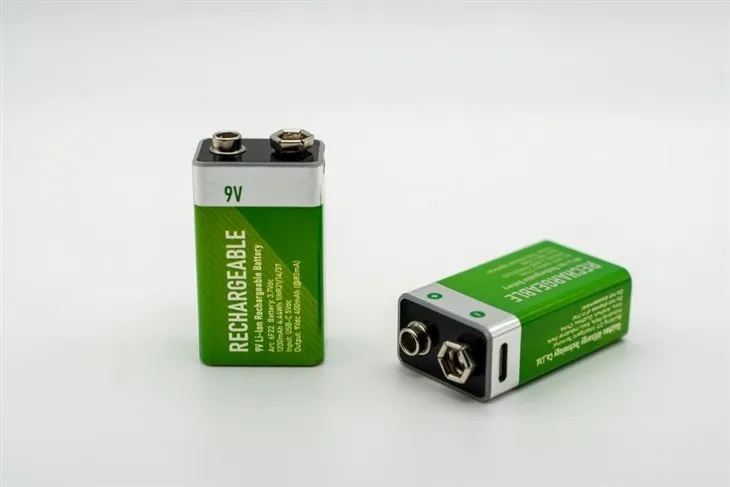
This characteristic also makes lithium batteries more suitable for applications where the battery needs to remain idle for long periods, such as emergency backup power systems. Our 9V Lithium Polymer Rechargeable Battery is an excellent example of a product that benefits from this low self - discharge rate, ensuring reliable performance when needed.
Cycle Life
Cycle life refers to the number of charge - discharge cycles a battery can undergo before its capacity drops to a certain level (usually 80% of its original capacity). Lithium batteries generally have a longer cycle life than nickel - cadmium batteries.
Modern lithium - ion batteries can typically withstand 500 - 1000 charge - discharge cycles, while nickel - cadmium batteries usually offer around 300 - 500 cycles. A longer cycle life means that lithium batteries will last longer before needing to be replaced, which is not only more cost - effective in the long run but also more environmentally friendly as it reduces battery waste.
For applications that require frequent charging and discharging, such as electric vehicles and power tools, the extended cycle life of lithium batteries is a major advantage. Our USB Rechargeable AAA Lithium Battery is designed to provide a high number of charge - discharge cycles, making it a reliable choice for small - scale electronic devices that are used intensively.
Memory Effect
Nickel - cadmium batteries are notorious for the memory effect. The memory effect occurs when a battery "remembers" a repeated partial discharge pattern and gradually loses its full - charge capacity. To prevent this, Ni - Cd batteries often need to be fully discharged before recharging.
Lithium batteries, on the other hand, do not suffer from the memory effect. This feature simplifies the charging process and allows users to charge their devices at any time without worrying about reducing the battery's lifespan. For example, if you charge your smartphone's lithium battery to 80% one day and then top it up to 100% the next, there is no negative impact on the battery's performance or capacity.
Environmental Impact
In terms of environmental impact, lithium batteries are a more sustainable option. Nickel - cadmium batteries contain cadmium, a heavy metal that is toxic to the environment and human health. When disposed of improperly, cadmium can leach into the soil and water, causing pollution and health risks.
Lithium batteries are generally considered to be more environmentally friendly. Although they also require proper disposal due to the presence of lithium and other chemicals, the overall environmental risk is lower compared to nickel - cadmium batteries. Additionally, the longer lifespan and higher energy efficiency of lithium batteries mean that fewer batteries need to be produced and disposed of over time.
Limitations of Lithium Batteries
While lithium batteries offer numerous advantages, they also have some limitations. They are more expensive to produce compared to nickel - cadmium batteries. This higher cost is often reflected in the retail price of products that use lithium batteries, which may be a deterrent for some consumers on a tight budget.
Lithium batteries are also more sensitive to high temperatures. Exposure to excessive heat can cause the battery to degrade more quickly and may even pose a safety risk in extreme cases. However, with proper design and thermal management systems, these risks can be minimized.
Conclusion
In conclusion, rechargeable lithium batteries are generally more efficient than nickel - cadmium batteries in terms of energy density, self - discharge rate, cycle life, memory effect, and environmental impact. While they do have some limitations such as higher cost and temperature sensitivity, the benefits they offer far outweigh these drawbacks for most applications.
As a supplier of rechargeable lithium batteries, I am committed to providing high - quality products that meet the diverse needs of our customers. Whether you are in the market for a D Size Lithium Battery, a 9V Lithium Polymer Rechargeable Battery, or a USB Rechargeable AAA Lithium Battery, we have the solutions to power your devices efficiently and reliably.

If you are interested in learning more about our rechargeable lithium battery products or have any questions regarding battery selection for your specific application, we encourage you to reach out. Our team of experts is ready to assist you in making the best choice for your power needs and to discuss potential procurement opportunities.
References
- Linden, D., & Reddy, T. B. (2002). Handbook of Batteries. McGraw - Hill.
- Koksbang, R., Sommer - Larsen, P., & Wagner, C. (1999). Lithium - ion Batteries: Science and Technologies. Springer.