

In the complex system of lithium batteries, the separator, although seemingly inconspicuous, plays a crucial role in battery performance. Positioned between the cathode and anode of the battery, the separator's primary functions are to prevent direct contact between the cathode and anode, which could lead to short circuits, while simultaneously allowing lithium ions to freely pass through during charging and discharging to complete the battery's operational cycle. The quality of the separator's performance directly impacts several key battery performance indicators, including energy density, power density, cycle life, and safety. This article will delve into the performance of lithium battery separators in detail.
1. Porosity and Pore Size
Porosity and pore size are important parameters for evaluating separator performance. Porosity refers to the number or proportion of micropores within the separator. Higher porosity provides more lithium ion transmission channels, which is conducive to improving the battery's rate capability, enabling the battery to maintain good performance during high-current charging and discharging. Additionally, high porosity aids in enhancing electrolyte wettability and ion migration rate, thereby improving the battery's overall performance.
However, porosity is not the higher the better. Excessively high porosity may lead to decreased mechanical strength of the separator, making it prone to cracking during battery assembly and use, thereby affecting battery safety and service life. Therefore, it is necessary to maximize porosity while ensuring mechanical strength.
Pore size similarly has a significant impact on battery performance. Appropriately sized pores can ensure smooth lithium ion passage while effectively blocking the passage of cathode and anode particles, preventing short circuits. If the pore size is too large, it may lead to direct cathode-anode contact, triggering safety issues; excessively small pores, on the other hand, increase lithium ion transmission resistance, reducing the battery's charging and discharging efficiency. Furthermore, pore uniformity is also crucial, as uneven pore sizes may result in uneven current distribution within the battery, impacting performance and lifespan.
2. Thickness
Separator thickness is another important factor affecting battery performance. Thinner separators can reduce battery internal resistance, enhance lithium ion transmission speed, thereby boosting the battery's energy density and power density. Additionally, thin separators contribute to reducing battery weight and volume, improving battery lightweighting.
However, excessively thin separators may compromise their mechanical strength and thermal stability. Under external forces or temperature changes, thin separators are prone to cracking or deformation, leading to internal short circuits or thermal runaway safety issues. Therefore, it is necessary to minimize separator thickness while ensuring mechanical strength and thermal stability.
3. Chemical Stability
During battery operation, the separator comes into contact with electrolyte and cathode/anode materials. Therefore, the separator must possess good chemical stability, capable of resisting electrolyte erosion and not reacting chemically with the cathode or anode. Otherwise, the separator may be corroded or decomposed, leading to decreased battery performance or even failure.
To improve separator chemical stability, surface modification or coating treatments are typically applied. For instance, coating a polyolefin separator with ceramic particles such as alumina or silica can significantly enhance its chemical stability and high-temperature performance. Additionally, grafting modification methods can be employed to introduce hydrophilic or hydrophobic groups onto the separator surface, improving its wettability or hydrophobicity with electrolyte.
4. Thermal Stability
Separator thermal stability has a significant impact on battery safety performance. Under abnormal conditions such as overcharging or overheating, the separator must maintain structural integrity to prevent further cathode-anode contact and prevent thermal runaway. Separators with good thermal stability can rapidly close pores at high temperatures, cutting off ion transmission channels, thereby enhancing battery safety.
To improve separator thermal stability, the following methods are commonly used: one is to prepare separators from high-temperature-resistant materials; the second is to add flame retardants or inorganic fillers to the separator; the third is to apply post-treatment processes such as heat treatment or radiation crosslinking.
For example, high-temperature-resistant materials like polyimide (PI) and polyaryletherketone (PEEK) can maintain structural integrity at higher temperatures, effectively preventing internal short circuits under extreme conditions. Additionally, ceramic-coated separators can maintain structural integrity at high temperatures, effectively preventing battery thermal runaway and explosions.
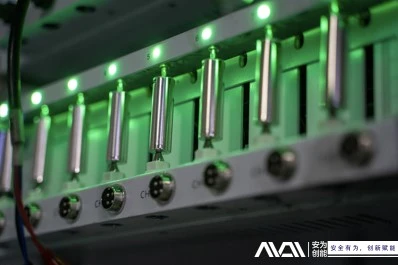
5. Wettability
Separator wettability refers to the electrolyte's ability to wet the separator surface. Good wettability enables the electrolyte to fully wet the separator, reducing lithium ion transmission resistance and improving battery performance. Wettability also affects battery cycle life and safety. Poor separator wettability can prevent the electrolyte from fully wetting the separator, potentially leading to poor internal ion transmission, impacting battery charging and discharging efficiency and cycle life. Furthermore, separators with poor wettability may cause localized overheating during charging and discharging, increasing battery safety risks.
To improve separator wettability, the following methods are commonly used: one is to select separators with high porosity and appropriate pore sizes; the second is to perform hydrophilic treatment or coat hydrophilic materials onto the separator surface; the third is to optimize electrolyte formulation and composition. For instance, coating a polyolefin separator with a layer of hydrophilic polymer or inorganic oxide particles can significantly improve its wettability with electrolyte.
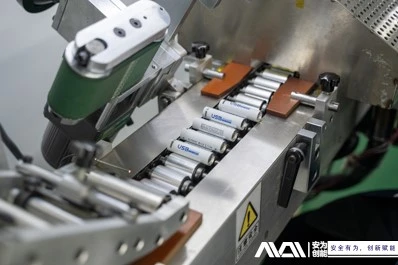
6. Mechanical Strength
Separator mechanical strength refers to its ability to withstand external forces without cracking or deformation. During battery assembly and use, the separator must withstand tensile, compressive, and other external forces. Therefore, the separator must possess sufficient mechanical strength to remain intact during battery use, maintaining stable electrode spacing.
To improve separator mechanical strength, the following methods are commonly used: one is to prepare separators from high-strength materials; the second is to apply post-treatment processes such as stretching or compression to the separator; the third is to add reinforcing agents or inorganic fillers to the separator. For example, multilayer composite separators, which combine separators of different materials and properties, can significantly enhance mechanical strength, thermal stability, and flame retardancy. Additionally, ceramic-coated separators can also improve separator mechanical strength to some extent.
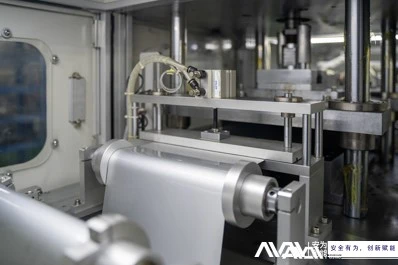
7. Other Properties
In addition to the aforementioned properties, lithium battery separators must also possess other properties such as gas permeability and electrolyte retention capacity. Gas permeability refers to the separator's ability to allow gas passage. During battery charging and discharging, a certain amount of gas is produced. If the separator's gas permeability is poor, these gases may accumulate within the battery, increasing internal pressure and affecting battery safety and service life. Therefore, the separator must possess a certain level of gas permeability to ensure timely gas venting during battery charging and discharging.
Electrolyte retention capacity refers to the separator's ability to retain a certain amount of electrolyte during battery operation. If the separator's electrolyte retention capacity is poor, the electrolyte may leak or evaporate from the separator, leading to poor internal ion transmission, impacting battery charging and discharging efficiency and cycle life. Therefore, the separator must possess good electrolyte retention capacity to ensure stable battery performance during prolonged operation.
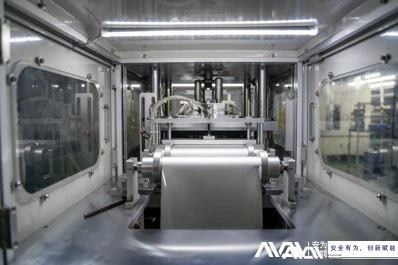
8. Conclusion and Outlook
In summary, the performance of lithium battery separators has a significant impact on the battery's overall performance and safety. Porosity, pore size, thickness, chemical stability, thermal stability, wettability, and mechanical strength are performance parameters that jointly determine separator quality. With the continued robust demand for lithium batteries in industries such as new energy vehicles, energy storage systems, and consumer electronics, the performance requirements for separators are also increasingly high.