

Abstract
With over 50 million new energy vehicles in operation and energy storage installations growing at an annual rate of 40%, batteries have become the core energy carrier. However, extreme temperature environments pose critical challenges: in summer 2025, electric vehicles (EVs) in Guangdong experienced an average 28% range reduction due to high temperatures, while winter range shrinkage in Inner Mongolia reached 50%. This paper systematically analyzes the intrinsic mechanisms of battery performance degradation under high and low temperatures from three dimensions-chemical reaction kinetics, material physical properties, and engineering applications-and proposes targeted solutions.
1. Performance Degradation Mechanisms under High Temperature
1.1 The "False Prosperity" of Capacity and Efficiency
Above 45°C, lithium-ion batteries exhibit a parabolic capacity trend. Tesla's 4680 cells show a 3.2% capacity increase at 35°C compared to the 25°C baseline, but capacity degradation surges to 18.7% at 55°C. This anomaly stems from accelerated lithium-ion migration in the electrolyte, which temporarily enhances active material utilization while triggering irreversible side reactions:
SEI membrane thickening: The solid electrolyte interphase (SEI) formed by electrolyte decomposition on the anode surface increases by 30-50%, raising lithium-ion transport impedance
Transition metal dissolution: Nickel and cobalt from cathode materials dissolve faster at high temperatures, contaminating the electrolyte and depositing on the anode
Gas generation and swelling: CATL's lab tests reveal 0.8 MPa internal pressure in prismatic aluminum cells after 8 hours at 60°C, causing casing deformation
1.2 Accelerated Lifespan Degradation
High-temperature damage follows an exponential pattern. BYD's Blade Battery tests at 60°C show:
72% capacity retention after 300 cycles vs. 91% at 25°C
2.3× faster electrode corrosion and 40% larger active material detachment area
Elevated thermal runaway risk, with chain decomposition reactions triggering combustion within 30 seconds above 120°C
1.3 Engineering Solutions
Material Innovations:
Solid-state electrolytes: Toyota's sulfide-based solid batteries raise thermal runaway thresholds from 150°C to 300°C
Electrolyte additives: Shin-Etsu's FEC additive forms dense protective films, extending high-temperature cycle life by 40%
System Design:
Advanced liquid cooling: NIO ET5's microchannel cooling plates maintain pack temperature uniformity within ±2°C
Intelligent thermal management: XPeng G9's X-HP3.0 system dynamically adjusts coolant flow, reducing high-temperature range loss by 18%
Usage Guidelines:
Avoid immediate charging after exposure: Tests show 40% lower charging efficiency when battery temperature exceeds 40°C
Recommended charging window: 0-45°C, requiring pre-conditioning outside this range

2. Performance Degradation Mechanisms under Low Temperature
2.1 Kinetic "Freezing" Effects
At -20°C, lithium-ion batteries suffer 35-50% capacity loss and 2-3× higher internal resistance due to comprehensive inhibition of internal transport processes:
Electrolyte viscosity surge: EC-based electrolytes become 10× more viscous at 0°C, reducing ionic conductivity to 1/5 of 25°C levels
Interface impedance spike: SEI membranes transition from amorphous to crystalline states, reducing lithium-ion transport channels by 60%
Polarization intensification: GAC Motor tests show 3.2× higher ohmic resistance and 4.8× higher concentration polarization resistance at -30°C
2.2 Dual Challenges in Charging/Discharging
Discharge performance:
Low-temperature lithium embedding impairment causes "lithium deposition" on graphite anodes
ZEEKR 001 tests reveal maximum discharge power dropping from 300 kW to 180 kW at -10°C
Charging performance:
Lithium dendrite risk: Current densities above 0.5C promote dendrite formation on anodes
BYD Han EV tests show charging times extending by 2.3× at -20°C
2.3 Engineering Breakthroughs
Material System Innovations:
Silicon-based anodes: Tesla's 4680 cells with silicon-carbon composites maintain 82% capacity at -20°C
Low-temperature electrolytes: Shin-Etsu's LF-303 achieves 1.2 mS/cm conductivity at -40°C
Thermal Management Upgrades:
Pulse self-heating: BYD's e-Platform 3.0 generates Joule heat via high-frequency battery pulsing, achieving 3°C/min heating at -20°C
Waste heat recovery: NIO's "Global Thermal Management 2.0" reduces heating energy consumption by 65% using motor waste heat
Usage Optimization:
Charge-on-demand strategy: Tesla Model Y maintains 20-80% SOC at -10°C to reduce degradation by 40%
Eco-driving mode: XPeng P7 lowers energy consumption from 16.5 kWh/100km to 13.2 kWh/100km in "Snow Mode"
3. Composite Damage from Temperature Cycling
3.1 Cumulative Material Fatigue
In regions with 30°C daily temperature swings, batteries undergo 1-2 thermal cycles daily, causing:
Tab welding fatigue: CALB tests show 200% resistance increase after 500 cycles
PE separator shrinkage: 3% contraction at high temperatures risks cathode-anode short circuits
Electrolyte redistribution: Gravity causes electrolyte concentration polarization on low-temperature sides
3.2 System-Level Synergistic Optimization
Structural Reinforcement:
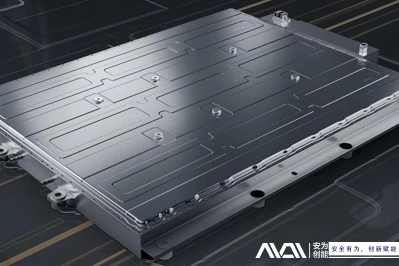
SVOLT Energy's LCTP3.0 pack uses dual-frame design for 1 million-cycle vibration resistance
CATL's Qilin Battery achieves 92% thermal expansion coefficient matching through integrated "cell-module-pack" design
Predictive Maintenance:
Huawei Digital Power's BMS predicts thermal runaway risks 48 hours in advance
Tesla's V11.0 software introduces "Battery Health Map" for real-time cell degradation visualization
4. Future Technological Evolution
4.1 Material Science Breakthroughs
Solid-state battery commercialization: Toyota plans 2027 mass production of 450 Wh/kg sulfide solid batteries (-40°C to 100°C operation)
Lithium-air battery exploration: Cambridge University's solid-state variant achieves 1,000 Wh/kg at 25°C
4.2 Thermal Management Revolution
Phase change materials (PCMs): BASF's microencapsulated PCMs maintain pack temperature uniformity within ±1°C
Photothermal coatings: MIT's vanadium dioxide coating absorbs 85% solar radiation at low temperatures
4.3 Intelligent Algorithm Advancements
Digital twin technology: BYD's battery lifecycle model predicts degradation 1,000 cycles in advance
Federated learning: Tesla's fleet-trained BMS reduces low-temperature range prediction error to <3%
Conclusion
The quest for temperature resilience is transforming from passive protection to active regulation. When solid electrolytes overcome interfacial resistance barriers, when photothermal coatings enable environmental energy self-sufficiency, and when digital twins precisely predict material degradation, batteries will finally break free from temperature constraints to become versatile energy revolution enablers. This silent technological revolution is redefining humanity's relationship with energy.