

Rechargeable lithium batteries, as indispensable energy supply devices in modern electronic equipment, have always been the focus of attention in the industry and among users concerning their safety. To ensure the safe use of lithium batteries globally, the International Electrotechnical Commission (IEC) and other standardization organizations have formulated a series of stringent safety standards and testing methods. This article delves into the international safety standards, testing methods, and certification processes for lithium batteries, aiming to provide valuable references for related industries.
I. International Safety Standards for Lithium Batteries
The international safety standards for lithium batteries are primarily established by the IEC, with IEC 62133 being a crucial standard for the safety performance of rechargeable lithium batteries and nickel batteries. This standard aims to ensure the safety of batteries during design, manufacturing, and use, avoiding electrical, chemical, or thermal hazards. IEC 62133 is divided into two parts: IEC 62133-1 applies to nickel-based batteries (such as nickel-cadmium and nickel-metal hydride batteries), while IEC 62133-2 specifically applies to lithium-based batteries (such as lithium-ion and lithium-polymer batteries).
IEC 62133-2 covers various safety requirements for lithium batteries, including cell and battery protection, casing structure requirements, battery management systems (BMS), overcharge protection, over-discharge protection, and safe operation under different environmental conditions. The standard requires batteries to have effective protective measures in their design to prevent dangers such as overcharging, over-discharging, and short circuits during charging, discharging, and storage. Additionally, the battery casing must be sufficiently robust to withstand external mechanical impacts and pressures, preventing rupture or leakage. Furthermore, lithium batteries typically require a management system to monitor battery voltage, current, and temperature to prevent overcharging, over-discharging, and overheating.
Apart from the IEC 62133 standard, several other related standards govern the safety performance of lithium batteries. For instance, IEC 61032 focuses on the protective performance of batteries, preventing the leakage of internal elements due to external pressure, impact, or other external factors. IEC 60068 is a broad environmental testing standard used to assess the stability of batteries under various environmental conditions, including temperature, humidity, vibration, and shock tests.
II. Testing Methods for Lithium Batteries
To ensure that lithium batteries comply with international safety standards, a series of rigorous tests are conducted. These tests aim to simulate various scenarios that batteries may encounter in actual use, verifying their safety and reliability. The following are some primary testing methods for lithium batteries:
Short-Circuit Test: The battery's poles are short-circuited to test its reaction under short-circuit conditions, preventing fires or explosions.
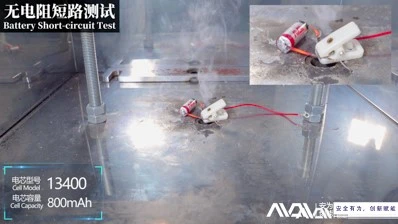
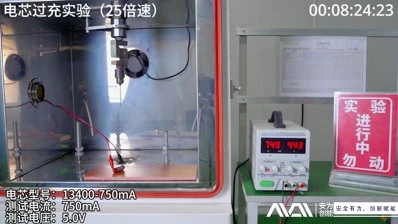
Overcharge Test: The battery is charged beyond its rated voltage to test its ability to prevent overcharging and ensure it does not explode or leak.
Over-Discharge Test: The battery undergoes an over-discharge test to ensure it safely shuts down under over-discharge conditions, preventing damage or safety hazards due to over-discharge.
Forced Discharge Test: Ensures the battery does not overheat or ignite due to uneven discharge or other factors when a fault occurs.
Temperature Cycle Test: Tests the battery's stability under extreme temperature changes, simulating its performance in high and low-temperature environments, ensuring no leakage, swelling, explosion, or ignition.
High-Temperature Test: Operates the battery in a high-temperature environment to observe its stability, ensuring it does not suffer thermal runaway.
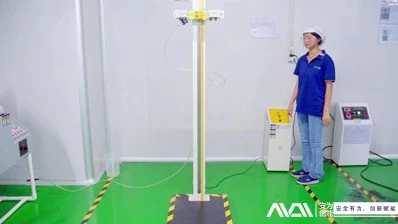
Vibration Test: Simulates transportation conditions through vibration, testing the battery's mechanical structure for stability and ensuring it is not damaged or fails due to vibration.
Drop Test: Tests whether the battery cracks, leaks, or poses a danger when dropped or impacted.
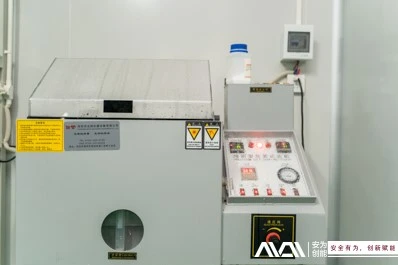
Compression Test: Applies external pressure to the battery to test whether it cracks, ignites, or explodes under force.
These testing methods cover the battery's electrical performance, mechanical performance, and environmental adaptability, ensuring its safety under various extreme conditions.
III. Certification Process for Lithium Batteries
To ensure that lithium battery products comply with international safety standards, manufacturers must undergo a series of rigorous certification processes. The following are the general steps for lithium battery certification:
Design Compliance with Standards: Manufacturers should ensure that battery design complies with the requirements of IEC 62133 and other relevant standards, including cell design, installation of protective circuits, and selection of casing materials and structures.
Preparation of Technical Documentation: Manufacturers need to prepare technical documentation, including battery specifications, design drawings, material lists, product manuals, etc., to prove that the product meets the requirements of international safety standards.
Product Testing: Manufacturers must send products to laboratories with IEC 62133 and other standard certification qualifications for testing. Test items include electrical performance, mechanical performance, environmental adaptability, and safety. The laboratory will conduct tests according to the standard-prescribed methods and issue test reports.
Certification Application: Manufacturers submit test reports and related technical documentation to the certification body to apply for IEC 62133 and other standard certifications. The certification body will review the submitted materials to ensure product compliance with standard requirements.
Factory Audit (if applicable): In some certification processes, the certification body may also audit the manufacturer's factory to ensure that production processes, quality control, and other aspects comply with international safety standards, ensuring consistent product quality.
Issuance of Certification Certificate: After review and testing, if the product meets the requirements of international safety standards, the certification body will issue a certification certificate. Manufacturers can label the product with the certification mark to prove its compliance with international standards.
Notably, certification requirements may differ in different countries and regions. For example, in China, according to the "Opinions of the General Office of the State Council on Deepening the Reform of the Electronic and Electrical Industry Management System" and related regulations, lithium-ion batteries and battery packs used in electronic and electrical products require mandatory product certification (CCC certification) management. Manufacturers need to apply for and obtain certification according to relevant standards and regulations.
IV. Conclusion
The international safety standards, testing methods, and certification processes for rechargeable lithium batteries are crucial safeguards for ensuring the safety and reliability of battery products. By following international safety standards and conducting rigorous testing and certification, manufacturers can ensure that their lithium battery products meet international standards in electrical performance, mechanical performance, and environmental adaptability. This not only facilitates compliant sales of products in the global market but also effectively reduces safety risks during use. Meanwhile, as technology advances and the market changes, international safety standards and testing methods will continue to be updated and improved to adapt to new demands and challenges. Therefore, related industries should continuously monitor the latest developments in international standards, continuously enhancing product safety and competitiveness.