
1,Charge-Discharge Testing: Ensuring Dual Safety and Performance Guarantees
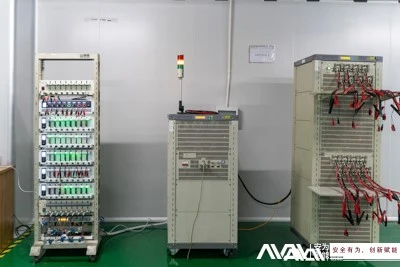
Charge-discharge testing is the first and most fundamental step in battery quality assessment. It aims to verify the battery's behavior under standard charging conditions and its discharge performance under different loads. During the testing process, we pay special attention to the following points:
Short-circuit Protection Mechanism: When charging the battery with a standard charging cable, the system detects the risk of accidental contact between the positive terminal and the negative terminal of an adjacent battery. In the event of a short circuit, the advanced circuit design should quickly activate the protection mechanism to prevent battery damage or even explosion. At the same time, we strictly monitor the temperature of the positive terminal during a short circuit to ensure it does not exceed 80°C, while the temperature of other parts of the battery should remain below 60°C to maintain overall safety.
Discharge Performance Testing: Under three load conditions of 50mA, 0.2C (where C represents the battery capacity, and 0.2C is 20% of the battery capacity), and Imax (maximum discharge current), we record in detail the battery's discharge curve, analyze the temperature rise during discharge, and assess the battery's capacity distribution (capacity differentiation). Additionally, we evaluate the conversion efficiency of the circuit board, which is the efficiency of converting input electrical energy into stored battery energy, as well as the voltage stability and internal lithium cell cut-off voltage when the battery discharges to its termination voltage. These are all crucial indicators for measuring battery performance.
2,Aging Testing: Verifying Long-term Reliability
Aging testing simulates the performance changes of a battery after prolonged use by accelerating the aging process to assess its lifespan and stability. This link focuses on:
Charge-Discharge Cycle Performance: Repeated charge-discharge cycles are conducted to observe the attenuation of battery capacity, ensuring that within the expected lifespan, the battery maintains high energy density and cycle stability.
Circuit Board and Lithium Cell Reliability: The performance stability of the circuit board under long-term operation is tested, including connection reliability and control accuracy. Simultaneously, we observe whether the lithium cell exhibits signs of aging such as expansion or electrolyte leakage.
Uniformity of Factory Shipment Charge: Through aging testing, batteries with consistent performance are screened out to ensure that products from the same batch have similar charge levels upon delivery, enhancing user experience consistency.

3,High and Low Temperature Testing: Adapting to Extreme Environmental Challenges
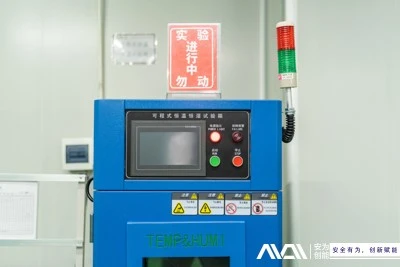
High and low temperature testing aims to verify the battery's adaptability in different temperature environments to ensure it operates normally under extreme conditions.
High Temperature Environment: In an environment of 60°C, the battery must be able to charge and discharge normally without lithium cell expansion, size changes, or abnormal increases in the circuit board's static current. This test not only verifies the battery's thermal stability but also ensures effective regulation by the Battery Management System (BMS) at high temperatures.
Low Temperature Environment: At -20°C, the battery must maintain good charge and discharge performance, preventing lithium cell deformation or other faults due to low temperatures. The low-temperature test emphasizes the cold resistance of battery materials and the precise control of the BMS at low temperatures.
4,Free Drop Test: Simulating Real-life Usage Scenarios
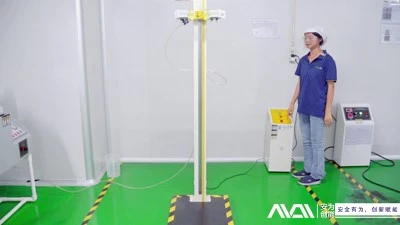
The free drop test assesses a battery's structural strength and drop resistance by simulating potential drops encountered in daily use. During the test, the battery is dropped freely from different heights and angles, and the appearance damage, internal structural integrity, and functionality after impact are recorded. This link is crucial for improving battery durability and user safety.
5,Compression Test: Ensuring Safety Under Extreme Pressure
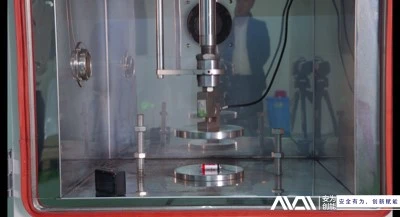
The compression test evaluates a battery's structural strength and safety by simulating its response to external compression. During the test, professional equipment applies gradually increasing pressure to the battery until a preset limit is reached. We observe whether the battery exhibits dangerous conditions such as rupture, electrolyte leakage, or short circuits, and whether the BMS can promptly respond and take measures to protect battery safety.
6,Vibration Test: Ensuring Stability During Logistics Transportation
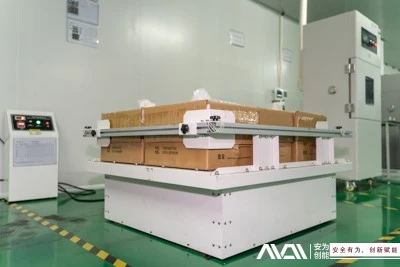
The vibration test simulates the vibration environment that a battery may encounter during logistics transportation, assessing its impact on the battery's structure, electrical connections, and performance. By simulating vibrations of different frequencies and amplitudes, we detect whether the battery experiences loosening, damage, or performance degradation. This test helps optimize packaging design to ensure the safety and stability of batteries during long-distance transportation.
Summary
AVEnergy's strict control over battery quality is not only reflected in the above six testing links but also throughout the entire production process. From the selection of raw materials to the intelligent management of production lines, from stringent quality control standards to continuous technological innovation, every step aims to provide users with safer, more efficient, and more reliable battery products. In this era of pursuing ultimate quality, AVEnergy will continue to uphold the principle of "Quality Above All Else," continuously exploring the boundaries of renewable energy technology, and contributing to global energy transformation and sustainable development.