

As an OEM 9V battery supplier, I often get asked about the impedance of our 9V batteries. Impedance is a crucial electrical property that can significantly impact the performance of a battery in various applications. In this blog post, I'll delve into what impedance is, how it affects OEM 9V batteries, and why it matters to our customers.
Understanding Impedance
Before we discuss the impedance of OEM 9V batteries, let's first understand what impedance is. In simple terms, impedance is the measure of opposition that a circuit presents to the flow of an alternating current (AC). It combines both resistance (the opposition to direct current) and reactance (the opposition to the change in current due to capacitance or inductance). Impedance is measured in ohms (Ω) and is represented by the symbol Z.
For batteries, impedance plays a vital role in determining how well they can deliver power to a load. A battery with low impedance can supply a large amount of current quickly, making it suitable for high - power applications. On the other hand, a battery with high impedance may struggle to provide sufficient current, leading to reduced performance and potentially shorter battery life.
Impedance in OEM 9V Batteries
OEM 9V batteries come in different chemistries, such as alkaline, lithium, and rechargeable nickel - metal hydride (NiMH). Each chemistry has its own characteristic impedance values, which are influenced by several factors.
Chemical Composition
The chemical composition of the battery is a primary factor affecting impedance. For example, alkaline 9V batteries typically have a relatively high internal resistance compared to lithium 9V batteries. This is because the chemical reactions in alkaline batteries are less efficient at conducting electrons, resulting in higher impedance. Lithium batteries, on the other hand, have a more favorable chemical structure that allows for better electron flow, leading to lower impedance.
Temperature
Temperature also has a significant impact on the impedance of OEM 9V batteries. As the temperature decreases, the chemical reactions inside the battery slow down, increasing the impedance. This means that at low temperatures, a 9V battery may not be able to deliver as much power as it can at room temperature. Conversely, at high temperatures, the impedance may decrease, but this can also lead to accelerated self - discharge and reduced battery life.
State of Charge
The state of charge (SOC) of a battery affects its impedance as well. As a battery discharges, its impedance generally increases. This is because the chemical reactants inside the battery are gradually depleted, making it more difficult for the battery to conduct current. When the battery is fully charged, its impedance is at its lowest, allowing it to deliver power more efficiently.
Measuring the Impedance of OEM 9V Batteries
There are several methods for measuring the impedance of OEM 9V batteries. One common approach is the AC impedance spectroscopy method. In this method, a small AC signal is applied to the battery, and the resulting voltage and current are measured. By analyzing the phase relationship between the voltage and current, the impedance of the battery can be calculated.
Another method is the DC pulse method. In this method, a short - duration DC pulse is applied to the battery, and the voltage drop across the battery is measured. The impedance can then be calculated using Ohm's law (Z = V / I), where V is the voltage drop and I is the current of the pulse.
Why Impedance Matters for OEM 9V Battery Users
The impedance of an OEM 9V battery can have a significant impact on the performance of the devices it powers. Here are some reasons why impedance matters:
Device Performance
Devices that require high - current pulses, such as some electronic toys and wireless microphones, need batteries with low impedance. If the battery impedance is too high, the device may not receive enough power to operate properly, resulting in reduced functionality or even failure to start.
Battery Life
High - impedance batteries tend to generate more heat during operation. This heat can cause the battery to age faster and reduce its overall lifespan. By using batteries with low impedance, users can extend the battery life and reduce the frequency of battery replacements.
Compatibility
Some devices are designed to work optimally with batteries of a certain impedance range. Using a battery with an incompatible impedance can lead to sub - optimal performance or even damage to the device. Therefore, it's important to choose the right battery with the appropriate impedance for the specific device.
Our OEM 9V Battery Offerings
As an OEM 9V battery supplier, we offer a wide range of 9V batteries with different chemistries and impedance characteristics to meet the diverse needs of our customers. Our alkaline 9V batteries are known for their long shelf life and are suitable for low - to - medium power applications. Our lithium 9V batteries, on the other hand, have low impedance and high energy density, making them ideal for high - power devices.
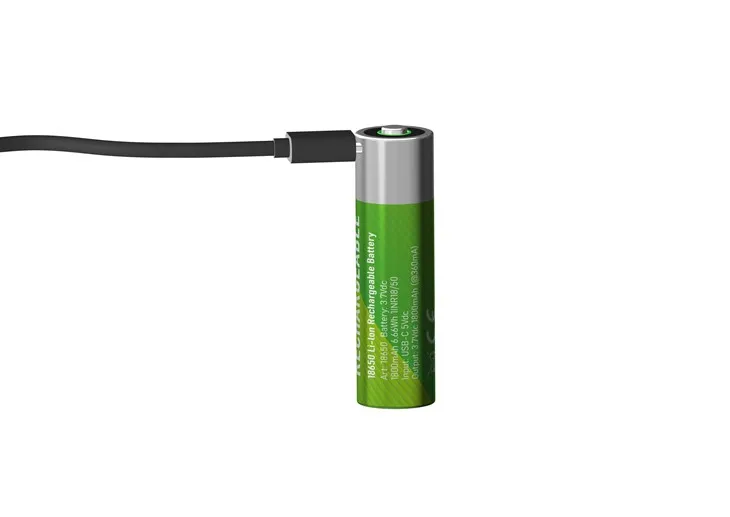
In addition to our 9V batteries, we also supply other types of batteries, such as D Size Lithium Battery and 18650A Battery and 18650A Battery. These batteries are also carefully engineered to have optimal impedance characteristics for their respective applications.

Conclusion
The impedance of an OEM 9V battery is a critical factor that affects its performance, battery life, and compatibility with various devices. As a supplier, we understand the importance of impedance and strive to provide our customers with high - quality 9V batteries that meet their specific requirements. Whether you need a battery for a low - power device or a high - current application, we have the right solution for you.
If you are interested in our OEM 9V batteries or other battery products, we encourage you to contact us for a purchase negotiation. Our team of experts is ready to assist you in finding the best battery solutions for your needs.
References
- Linden, D., & Reddy, T. B. (2002). Handbook of Batteries. McGraw - Hill.
- Xia, Y., & Wang, C. Y. (2011). Electrochemical impedance spectroscopy of lithium - ion batteries. Journal of Power Sources, 196(2), 504 - 511.
- Venkatesan, S., & Kishore, K. (2014). Influence of temperature on the performance of alkaline and lithium batteries. International Journal of Scientific and Research Publications, 4(7), 1 - 4.