

The cycle life of a rechargeable lithium C cell battery is a crucial metric that determines its long - term usability and cost - effectiveness. As a supplier of rechargeable lithium C cell batteries, understanding how different usage conditions affect this cycle life is essential for providing accurate information to customers and ensuring the best performance of our products.
1. Basics of Rechargeable Lithium C Cell Batteries
Rechargeable lithium C cell batteries are known for their high energy density, long shelf life, and relatively low self - discharge rate compared to other battery chemistries. They are widely used in various applications, from high - drain devices such as flashlights and portable power tools to low - drain applications like remote sensors.
The cycle life of a battery refers to the number of complete charge - discharge cycles it can undergo before its capacity drops to a predefined level, typically 80% of its original capacity. For rechargeable lithium C cell batteries, this can vary significantly depending on multiple factors.
2. Impact of Charging Conditions
Charging Rate
The charging rate, often expressed as a C - rate, has a profound impact on the cycle life of a rechargeable lithium C cell battery. A high C - rate means charging the battery at a faster pace. For example, a 1C charge rate implies charging the battery to its full capacity in one hour.
When batteries are charged at high C - rates, the internal temperature of the battery increases rapidly. This elevated temperature can cause accelerated degradation of the battery's electrodes and electrolyte. Over time, this degradation can lead to a shorter cycle life. On the other hand, charging at a lower C - rate, such as 0.2C, allows for a more uniform distribution of lithium ions within the battery, reducing stress on the internal components and extending the cycle life.
We recommend customers to use chargers with adjustable charging rates and to choose a lower rate whenever possible, especially for long - term battery health. Our company offers chargers that are specifically designed to optimize the charging process for our rechargeable lithium C cell batteries, ensuring a balance between charging speed and cycle life.
Charging Cut - off Voltage
The charging cut - off voltage is another critical factor. If the battery is charged beyond its recommended cut - off voltage, it can lead to overcharging. Overcharging causes the formation of lithium metal deposits on the electrodes, which can short - circuit the battery and significantly reduce its cycle life.
Conversely, if the charging cut - off voltage is set too low, the battery will not be fully charged, reducing its available capacity. Our rechargeable lithium C cell batteries come with clear specifications regarding the recommended charging cut - off voltage, and we provide detailed instructions to our customers to ensure proper charging.
3. Discharging Conditions
Discharge Rate
Similar to the charging rate, the discharge rate also affects the cycle life. High - discharge rate applications, such as powering a high - intensity flashlight or a power tool under heavy load, can cause rapid depletion of the battery's energy. This high - stress discharge can lead to a rise in internal temperature and mechanical stress on the electrodes.
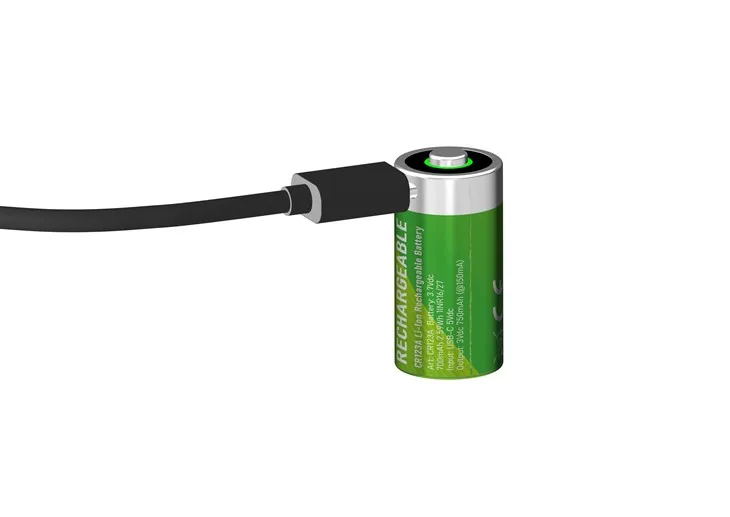

In contrast, low - discharge rate applications, like powering a small sensor, put less stress on the battery. The slower discharge allows the lithium ions to move more smoothly between the electrodes, resulting in a longer cycle life.
We have conducted extensive tests on our rechargeable lithium C cell batteries under different discharge rates. Our results show that batteries used in low - discharge rate applications can achieve up to 50% more charge - discharge cycles compared to those used in high - discharge rate applications.
Depth of Discharge (DoD)
The depth of discharge refers to the percentage of the battery's capacity that is discharged during each cycle. A shallow depth of discharge, such as discharging the battery to only 20% of its capacity before recharging, is less stressful on the battery compared to a deep discharge, where the battery is discharged to 80% or more of its capacity.
Deep discharges can cause irreversible damage to the battery's electrodes and electrolyte. By keeping the depth of discharge shallow, the cycle life of the rechargeable lithium C cell battery can be significantly extended. We encourage our customers to monitor the depth of discharge and recharge the battery before it reaches a critically low level.
4. Temperature Conditions
High Temperature
High temperatures accelerate the chemical reactions inside the battery. While this may initially increase the battery's performance, it also leads to faster degradation of the electrodes and electrolyte. At high temperatures, the electrolyte can break down, and the electrodes can lose their structural integrity.
For example, if a rechargeable lithium C cell battery is used in a hot environment, such as in a desert or inside a closed vehicle on a sunny day, its cycle life can be reduced by up to 30% compared to normal operating temperatures.
Low Temperature
Low temperatures, on the other hand, slow down the movement of lithium ions within the battery. This can lead to a decrease in the battery's available capacity and an increase in internal resistance. When the battery is discharged at low temperatures, it may not be able to deliver its full capacity, and repeated low - temperature discharges can also damage the battery over time.
Our rechargeable lithium C cell batteries are designed to perform well within a wide temperature range. However, for optimal cycle life, we recommend using the batteries within the temperature range specified in our product documentation.
5. Comparison with Other Rechargeable Lithium Batteries
To better understand the performance of our rechargeable lithium C cell batteries, it is useful to compare them with other popular rechargeable lithium batteries.
The Rechargeable Lithium 123 batteries are often used in small, high - drain devices. While they have a high energy density, their cycle life can be relatively short, especially when used in applications with high - discharge rates. Our rechargeable lithium C cell batteries, on the other hand, offer a more balanced performance in terms of cycle life and capacity, making them suitable for a wider range of applications.
The Lithium Ion Type 18650 Rechargeable Battery is another well - known rechargeable lithium battery. It has a cylindrical shape and is commonly used in laptops and electric vehicles. The 18650 batteries can have a long cycle life, but they may not be as convenient for applications that require a C - cell form factor. Our rechargeable lithium C cell batteries provide a similar level of performance in terms of cycle life while offering the advantage of a standard C - cell size.
The 18650A Battery is also a popular choice in the market. It has its own unique features, but our rechargeable lithium C cell batteries stand out in terms of their adaptability to different usage conditions and their ability to maintain a good cycle life.
6. Conclusion and Call to Action
In conclusion, the cycle life of a rechargeable lithium C cell battery is influenced by various usage conditions, including charging and discharging rates, depth of discharge, and temperature. By understanding these factors and following our recommended usage guidelines, customers can maximize the cycle life of our batteries and get the most out of their investment.
As a leading supplier of rechargeable lithium C cell batteries, we are committed to providing high - quality products and comprehensive technical support. If you are interested in purchasing our rechargeable lithium C cell batteries or have any questions about their performance and usage, please feel free to contact us for further discussion. We look forward to working with you to meet your battery needs.
References
- Arora, P., Zhang, Z., & White, R. E. (1999). Comparison of the structural and electrochemical properties of LiCoO2 and LiNiO2. Journal of the Electrochemical Society, 146(1), 316 - 321.
- Tarascon, J. M., & Armand, M. (2001). Issues and challenges facing rechargeable lithium batteries. Nature, 414(6861), 359 - 367.
- Xu, K. (2004). Nonaqueous liquid electrolytes for lithium - based rechargeable batteries. Chemical Reviews, 104(10), 4303 - 4417.