

As a seasoned supplier of 18650 batteries, I've encountered numerous inquiries regarding the proper way to determine if a 18650 battery is fully charged. In this blog post, I'll share comprehensive insights and practical methods to help you accurately assess the charge status of these popular lithium-ion batteries.
Understanding the 18650 Battery
Before delving into the charging verification process, it's essential to have a basic understanding of the 18650 battery. The Lithium Ion Type 18650 Rechargeable Battery is a cylindrical lithium-ion cell with a standard size of 18mm in diameter and 65mm in length. These batteries are widely used in various applications, including laptops, flashlights, power banks, and electric vehicles, due to their high energy density, long cycle life, and relatively low self-discharge rate.
The Charging Process
The charging process of a 18650 battery typically involves two main stages: constant current (CC) charging and constant voltage (CV) charging. During the CC stage, the charger supplies a fixed current to the battery until it reaches a predefined voltage level, usually around 4.2V for a standard lithium-ion 18650 battery. Once the battery voltage reaches this threshold, the charger switches to the CV stage, where it maintains a constant voltage while gradually reducing the charging current as the battery approaches full charge.

Methods to Check if a 18650 Battery is Fully Charged
1. Using a Battery Charger with a Charge Indicator
Many modern battery chargers are equipped with built-in charge indicators that provide a visual representation of the battery's charge status. These indicators can be in the form of LED lights, digital displays, or both. When using a charger with a charge indicator, follow these steps:
- Connect the 18650 battery to the charger and ensure it is properly seated in the charging slot.
- Observe the charge indicator on the charger. In most cases, a solid green light indicates that the battery is fully charged, while a blinking or red light may indicate that the battery is still charging or there is an issue with the charging process.
- Refer to the charger's user manual for specific instructions on interpreting the charge indicator lights.
2. Measuring the Battery Voltage
Measuring the voltage of a 18650 battery is one of the most accurate ways to determine its charge status. You can use a multimeter or a battery voltage tester to measure the battery's terminal voltage. Here's how:
- Set the multimeter to the DC voltage measurement mode and select an appropriate voltage range, typically 0-5V for a standard lithium-ion 18650 battery.
- Carefully connect the multimeter's positive (red) probe to the positive terminal of the battery and the negative (black) probe to the negative terminal.
- Read the voltage value displayed on the multimeter. A fully charged 18650 battery should have a voltage of around 4.2V. However, it's important to note that the voltage may vary slightly depending on the battery's chemistry, temperature, and age.
3. Monitoring the Charging Time
While not as accurate as measuring the voltage, monitoring the charging time can provide a rough estimate of the battery's charge status. Most battery chargers have a recommended charging time for a fully depleted 18650 battery. For example, a typical charger may take around 2-4 hours to fully charge a 2000mAh 18650 battery.
- Check the charger's user manual for the recommended charging time and compare it to the actual charging time. If the battery has been charging for the recommended duration and the charger's charge indicator shows that it is still not fully charged, there may be an issue with the battery or the charger.
- Keep in mind that the charging time may be affected by factors such as the charger's output current, the battery's initial charge level, and the ambient temperature.
4. Using a Battery Management System (BMS)
Some 18650 batteries are equipped with a built-in Battery Management System (BMS), which is an electronic circuit that monitors and controls the charging and discharging process of the battery. A BMS can provide accurate information about the battery's charge status, temperature, and health.
- If your 18650 battery has a BMS, you can use a compatible BMS monitoring device or software to check the battery's charge status. These devices can display detailed information such as the battery's voltage, current, capacity, and state of charge (SOC).
- Follow the manufacturer's instructions for using the BMS monitoring device or software to ensure accurate readings.
Factors Affecting the Charge Status
It's important to note that several factors can affect the accuracy of the methods mentioned above and the overall charge status of a 18650 battery. These factors include:
- Temperature: The charging and discharging performance of a 18650 battery is highly dependent on temperature. Extreme temperatures, both hot and cold, can affect the battery's capacity, voltage, and charging efficiency. It's recommended to charge and use the battery within the manufacturer's specified temperature range, typically between 0°C and 45°C.
- Battery Age and Cycle Life: As a 18650 battery ages and goes through multiple charge-discharge cycles, its capacity and performance gradually degrade. An older battery may not reach the full voltage of 4.2V even when fully charged, and its charging time may also increase.
- Charger Quality: The quality and compatibility of the charger can also affect the charging process and the accuracy of the charge status indicators. Using a low-quality or incompatible charger may result in overcharging, undercharging, or other issues that can damage the battery.
Conclusion
Determining if a 18650 battery is fully charged is crucial for ensuring its optimal performance and longevity. By using a combination of methods, such as checking the charger's charge indicator, measuring the battery voltage, monitoring the charging time, and using a BMS, you can accurately assess the charge status of your 18650 batteries.
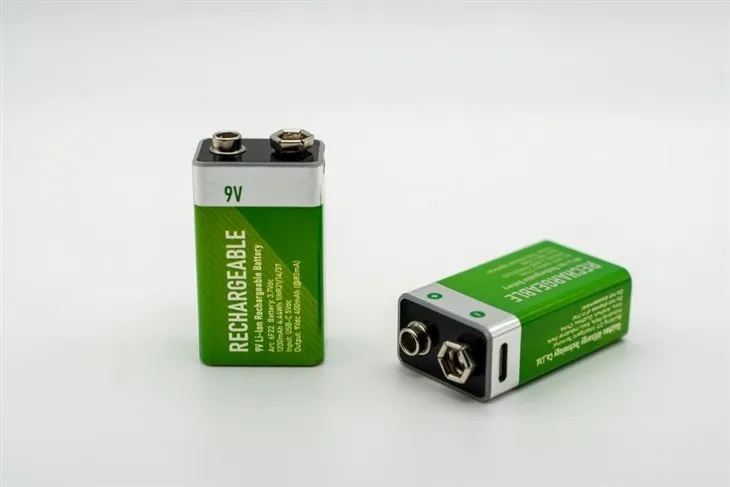
At our company, we are committed to providing high-quality Lithium Ion Type 18650 Rechargeable Battery along with other rechargeable lithium batteries like USB Rechargeable AAA Lithium Battery and 9V Lithium Polymer Rechargeable Battery. If you have any questions about our products or need assistance with battery selection and charging, please feel free to contact us for further discussion and potential procurement.
References
- Linden, D., & Reddy, T. B. (2002). Handbook of Batteries (3rd ed.). McGraw-Hill.
- Marsen, K. (2016). Battery Management Systems: Design by Modeling. Wiley.