

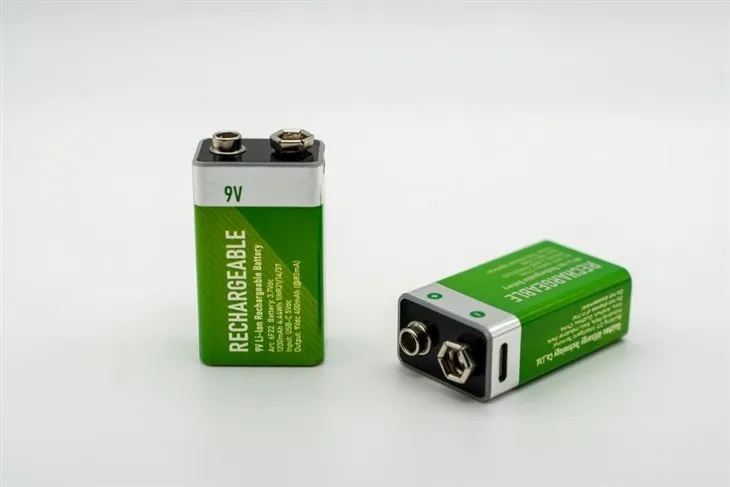
In the world of portable power, 9V lithium polymer rechargeable batteries have become a cornerstone for a wide range of applications, from small electronic devices to professional-grade equipment. As a supplier of 9V Lithium Polymer Rechargeable Battery, I often encounter inquiries about the relationship between charging voltage and charging time. Understanding this relationship is crucial for optimizing battery performance, ensuring safety, and meeting the diverse needs of our customers.
The Basics of Lithium Polymer Batteries
Before delving into the impact of charging voltage on charging time, it's essential to understand the fundamentals of lithium polymer batteries. These batteries are a type of rechargeable battery that uses a lithium polymer electrolyte instead of a liquid electrolyte found in traditional lithium-ion batteries. This design offers several advantages, including higher energy density, better shape flexibility, and improved safety.
The nominal voltage of a 9V lithium polymer rechargeable battery is typically around 9V, but the actual voltage can vary depending on the state of charge. When fully charged, the battery voltage can reach up to 9.6V, while a discharged battery may have a voltage as low as 6V. The charging process involves supplying electrical energy to the battery to reverse the chemical reactions that occur during discharge, thereby restoring the battery's capacity.
Charging Voltage and Charging Time
The charging voltage plays a significant role in determining the charging time of a 9V lithium polymer rechargeable battery. In general, a higher charging voltage can result in a faster charging time, but this relationship is not linear. There are several factors that influence the charging process and the overall charging time, including the battery's capacity, internal resistance, and the charging algorithm used.
Constant Current Charging
The charging process of a lithium polymer battery typically consists of two stages: constant current (CC) charging and constant voltage (CV) charging. During the CC charging stage, a constant current is applied to the battery until it reaches a predetermined voltage, usually around 9.6V for a 9V battery. This stage is characterized by a rapid increase in the battery's voltage as it absorbs the electrical energy.
The charging current during the CC stage is determined by the charger's design and the battery's specifications. A higher charging current can result in a faster charging time, but it also generates more heat and can potentially damage the battery if not properly controlled. Therefore, it's important to use a charger that is specifically designed for lithium polymer batteries and to follow the manufacturer's recommendations regarding the maximum charging current.
Constant Voltage Charging
Once the battery reaches the predetermined voltage, the charging process switches to the CV charging stage. During this stage, the charger maintains a constant voltage while gradually reducing the charging current as the battery approaches full charge. This stage is crucial for ensuring that the battery is fully charged without overcharging, which can cause irreversible damage to the battery.
The CV charging stage typically takes longer than the CC charging stage, as the charging current decreases as the battery's state of charge increases. The duration of the CV charging stage depends on several factors, including the battery's capacity, internal resistance, and the charging voltage. A higher charging voltage can result in a shorter CV charging time, but it also increases the risk of overcharging if the charger is not properly calibrated.
Factors Affecting the Relationship between Charging Voltage and Charging Time
While a higher charging voltage can generally result in a faster charging time, there are several factors that can affect this relationship. These factors include:
Battery Capacity
The capacity of a battery is measured in ampere-hours (Ah) or milliampere-hours (mAh) and represents the amount of electrical energy that the battery can store. A battery with a higher capacity will take longer to charge than a battery with a lower capacity, even if the charging voltage is the same. This is because a larger battery requires more electrical energy to reach full charge.
Internal Resistance
The internal resistance of a battery is a measure of the resistance to the flow of electrical current within the battery. A battery with a higher internal resistance will generate more heat during charging and will take longer to charge than a battery with a lower internal resistance. The internal resistance of a battery can increase over time due to factors such as aging, overcharging, and high temperatures.

Charging Algorithm
The charging algorithm used by the charger plays a crucial role in determining the charging time and the overall performance of the battery. A well-designed charging algorithm can optimize the charging process by adjusting the charging current and voltage based on the battery's state of charge, temperature, and other factors. This can result in a faster charging time, improved battery life, and enhanced safety.
Safety Considerations
When charging a 9V lithium polymer rechargeable battery, it's important to follow the manufacturer's recommendations and safety guidelines to ensure the safety of the battery and the user. Overcharging, overheating, and short-circuiting can all cause serious damage to the battery and can potentially lead to fire or explosion.
Overcharging
Overcharging occurs when the battery is charged beyond its maximum voltage, which can cause the battery to overheat, swell, and potentially explode. To prevent overcharging, it's important to use a charger that is specifically designed for lithium polymer batteries and to follow the manufacturer's recommendations regarding the maximum charging voltage and current.
Overheating
Overheating can occur during charging if the charging current is too high or if the battery is exposed to high temperatures. Overheating can damage the battery's internal components and can reduce its lifespan. To prevent overheating, it's important to use a charger that has built-in temperature protection and to avoid charging the battery in hot environments.
Short-Circuiting
Short-circuiting occurs when the positive and negative terminals of the battery are connected directly, which can cause a large current to flow through the battery and can potentially lead to fire or explosion. To prevent short-circuiting, it's important to handle the battery with care and to avoid exposing the terminals to conductive materials.
Conclusion
In conclusion, the charging voltage plays a significant role in determining the charging time of a 9V lithium polymer rechargeable battery. A higher charging voltage can generally result in a faster charging time, but this relationship is not linear and is influenced by several factors, including the battery's capacity, internal resistance, and the charging algorithm used.
As a supplier of 9V Lithium Polymer Rechargeable Battery, we are committed to providing our customers with high-quality batteries and chargers that are designed to optimize performance, ensure safety, and meet the diverse needs of our customers. If you have any questions or need further information about our products, please feel free to contact us to discuss your specific requirements and explore potential partnerships.
References
- Linden, D., & Reddy, T. B. (2002). Handbook of Batteries (3rd ed.). McGraw-Hill.
- Chen, Z., & Evans, D. J. (2012). Electrochemical Power Sources: Batteries, Fuel Cells, and Supercapacitors. Springer.
- Tarascon, J.-M., & Armand, M. (2001). Issues and challenges facing rechargeable lithium batteries. Nature, 414(6861), 359-367.