

Hey there! As a supplier of D size lithium batteries, I often get asked about how to test the performance of these powerhouses. Today, I'm gonna share some practical ways to test the performance of a D size lithium battery.
Why Testing is Crucial
Before we dive into the testing methods, let's talk about why it's so important to test these batteries. D size lithium batteries are used in a wide range of applications, from high - power flashlights to some specialized electronic devices. Ensuring their performance is top - notch is not only about customer satisfaction but also about safety. A poorly performing battery can lead to device malfunctions, reduced lifespan of the connected equipment, and in some extreme cases, even pose a safety hazard.
Initial Checks
The first thing you wanna do when you get a D size lithium battery is to do some basic visual and electrical checks.
Visual Inspection
Take a good look at the battery. Check for any signs of physical damage like dents, scratches, or bulges. A bulging battery is a big red flag as it could indicate internal issues such as overheating or a chemical imbalance. If you notice any of these problems, it's best not to use the battery and return it to the supplier immediately.
Voltage Measurement
Grab a multimeter and measure the open - circuit voltage of the battery. A fully charged D size lithium battery should have a voltage within a specific range. For most lithium - ion D size batteries, a fully charged battery might have a voltage around 4.2V. If the measured voltage is significantly lower, say below 3V, the battery might be depleted or have some internal problems.
Capacity Testing
Capacity is one of the most important performance indicators of a battery. It tells you how much energy the battery can store and deliver.
Constant - Current Discharge Test
One of the most common ways to test the capacity of a D size lithium battery is through a constant - current discharge test. You'll need a battery tester or a load resistor that can maintain a constant current draw.
First, fully charge the battery. Then, connect it to the load resistor or the battery tester set to a specific constant current. For example, you could set the current to 1A. As the battery discharges, keep track of the time it takes for the battery voltage to drop to a predefined cut - off voltage, usually around 2.5V - 3V.
The capacity (in ampere - hours, Ah) can be calculated using the formula: Capacity (Ah)=Current (A)×Discharge time (h). For instance, if the battery discharges at a constant current of 1A for 5 hours before reaching the cut - off voltage, its capacity is 5Ah.
Comparison with Rated Capacity
After calculating the capacity, compare it with the rated capacity of the battery. If the measured capacity is much lower than the rated capacity, the battery might not be performing as expected. This could be due to factors like aging, improper storage, or manufacturing defects.
Internal Resistance Testing
Internal resistance is another key parameter that affects battery performance. A high internal resistance can lead to voltage drops during high - current discharges, reducing the battery's ability to deliver power efficiently.
Load - Pulse Method
To measure the internal resistance, you can use the load - pulse method. First, measure the open - circuit voltage of the battery, let's call it V1. Then, apply a short - duration load pulse (say, for 10 seconds) to the battery using a known load resistor. During the load pulse, measure the voltage across the battery, let's call it V2.
The internal resistance (R) can be calculated using the formula: R=(V1 - V2)/I, where I is the current flowing through the load resistor during the pulse.
A low internal resistance is generally better as it means the battery can deliver power more efficiently, especially during high - current applications.
Self - Discharge Testing
Self - discharge is the phenomenon where a battery loses its charge over time even when it's not connected to any load. A high self - discharge rate can be a problem, especially for applications where the battery needs to be stored for long periods.
Long - Term Storage Test
Fully charge the battery and measure its voltage. Then, store the battery in a cool, dry place for a specific period, say 30 days. After 30 days, measure the voltage again. Calculate the percentage of voltage drop over the storage period.
A well - performing D size lithium battery should have a relatively low self - discharge rate. If the voltage drop is excessive, it could indicate issues with the battery's internal chemistry or the quality of the battery materials.
Temperature Effects on Performance
Temperature can have a significant impact on the performance of a D size lithium battery. Batteries generally perform better at moderate temperatures, around 20°C - 25°C.
High - Temperature Testing
To test the battery's performance at high temperatures, you can place the battery in a temperature - controlled chamber set to a high temperature, say 50°C. Repeat the capacity and other performance tests at this elevated temperature. You'll likely notice that the battery's capacity might decrease, and the internal resistance might increase at high temperatures.
Low - Temperature Testing
Similarly, for low - temperature testing, place the battery in a chamber set to a low temperature, like 0°C. Again, perform the capacity and other tests. At low temperatures, the battery's ability to deliver power might be severely limited, and the capacity could also be reduced.
Real - World Application Testing
Finally, it's always a good idea to test the battery in a real - world application. If the battery is intended for use in a flashlight, for example, install it in the flashlight and use it under normal operating conditions. Check for things like how long the flashlight stays on, whether the brightness remains consistent, and if there are any signs of overheating.
Other Related Products
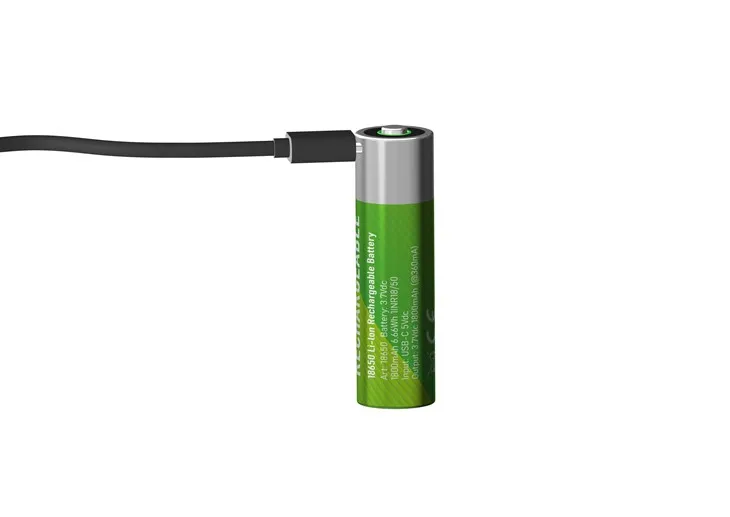
If you're interested in other types of rechargeable batteries, we also offer USB Rechargeable 9 Volt Battery, 18650A Battery, and Lithium Ion Type 18650 Rechargeable Battery. These batteries have their own unique performance characteristics and are suitable for different applications.
Conclusion
Testing the performance of a D size lithium battery is a multi - step process that involves checking various parameters like capacity, internal resistance, self - discharge rate, and the effects of temperature. By following these testing methods, you can ensure that you're getting a high - quality battery that meets your needs.

If you're in the market for D size lithium batteries or have any questions about battery testing, don't hesitate to reach out. We're here to provide you with the best products and support. Whether you're a distributor looking to stock up on high - performance batteries or an end - user in need of reliable power sources, we can help you find the right solution.
References
- Linden, D., & Reddy, T. B. (2002). Handbook of Batteries. McGraw - Hill.
- Berndt, D. (2011). Battery Systems for Utility Energy Storage. Wiley.