

Can a 9V lithium polymer rechargeable battery be used in a Bluetooth speaker?
In the ever - evolving world of audio technology, Bluetooth speakers have become a staple for music lovers on the go. These portable devices offer a convenient way to enjoy high - quality sound anywhere. One crucial aspect of a Bluetooth speaker's performance is its power source. As a supplier of 9V lithium polymer rechargeable batteries, I often receive inquiries about whether our batteries can be used in Bluetooth speakers. In this blog post, I will explore this question in detail, considering various factors such as voltage compatibility, power requirements, and battery performance.
Voltage Compatibility
The first and most fundamental consideration when using a battery in a Bluetooth speaker is voltage compatibility. Most Bluetooth speakers are designed to operate within a specific voltage range. A 9V lithium polymer rechargeable battery provides a nominal voltage of 9 volts. Many common Bluetooth speakers are designed to work with standard battery voltages, such as 3.7V (single - cell lithium - ion) or 7.4V (two - cell lithium - ion).
However, there are some high - end or larger Bluetooth speakers that are engineered to handle a 9V power supply. These speakers usually have more powerful amplifiers and additional features that require a higher voltage to function optimally. If a Bluetooth speaker is explicitly rated to accept a 9V input, then using a 9V lithium polymer rechargeable battery is a viable option.
It's important to note that attempting to use a 9V battery in a speaker not designed for this voltage can cause serious damage to the speaker's internal components. Over - voltage can lead to overheating, component failure, and even pose a safety hazard. Therefore, before using a 9V lithium polymer rechargeable battery, it is essential to check the speaker's user manual or specifications to ensure voltage compatibility.
Power Requirements
Apart from voltage, the power requirements of the Bluetooth speaker are also a critical factor. Power, measured in watts, is the product of voltage and current (P = V × I). A Bluetooth speaker's power consumption depends on several factors, including the size of the speaker, the number of drivers, and the volume level at which it operates.
A 9V lithium polymer rechargeable battery has a certain capacity, usually measured in milliampere - hours (mAh). This capacity determines how much energy the battery can store and, consequently, how long it can power the Bluetooth speaker. For example, if a Bluetooth speaker has a power consumption of 3 watts and the battery has a capacity of 1000 mAh (at 9V), we can calculate the approximate runtime. First, convert the battery capacity to ampere - hours (1000 mAh = 1 Ah). Then, using the power formula, we can find the current drawn by the speaker (I = P / V). So, I = 3W / 9V ≈ 0.33A. The approximate runtime would be the battery capacity divided by the current drawn, which is 1 Ah / 0.33A ≈ 3 hours.
In practice, the actual runtime may be shorter due to factors such as battery self - discharge, inefficiencies in the speaker's power management system, and variations in power consumption at different volume levels. Some high - powered Bluetooth speakers may require a battery with a higher capacity to provide a reasonable runtime. As a 9V lithium polymer rechargeable battery supplier, we offer a range of battery capacities to meet different power requirements.
Battery Performance
The performance of a 9V lithium polymer rechargeable battery is another aspect to consider when using it in a Bluetooth speaker. Lithium polymer batteries offer several advantages over other types of batteries. They have a high energy density, which means they can store a large amount of energy in a relatively small and lightweight package. This is particularly beneficial for portable Bluetooth speakers, as it allows for a more compact and lightweight design.
Lithium polymer batteries also have a low self - discharge rate. This means that they can hold their charge for a longer time when not in use compared to other battery chemistries. For example, a nickel - cadmium (NiCd) battery may self - discharge at a rate of up to 20% per month, while a lithium polymer battery may self - discharge at a rate of less than 5% per month.
In addition, lithium polymer batteries can provide a relatively stable voltage output throughout their discharge cycle. This is important for maintaining consistent audio quality in a Bluetooth speaker. A fluctuating voltage can cause distortion in the sound output, which is undesirable for any audio device.
However, lithium polymer batteries also have some limitations. They are more sensitive to over - charging and over - discharging compared to other battery types. Over - charging can cause the battery to overheat, swell, or even catch fire, while over - discharging can damage the battery's internal structure and reduce its lifespan. Therefore, it is necessary to use a proper charging circuit to ensure safe and efficient charging of the 9V lithium polymer rechargeable battery.

Other Battery Options
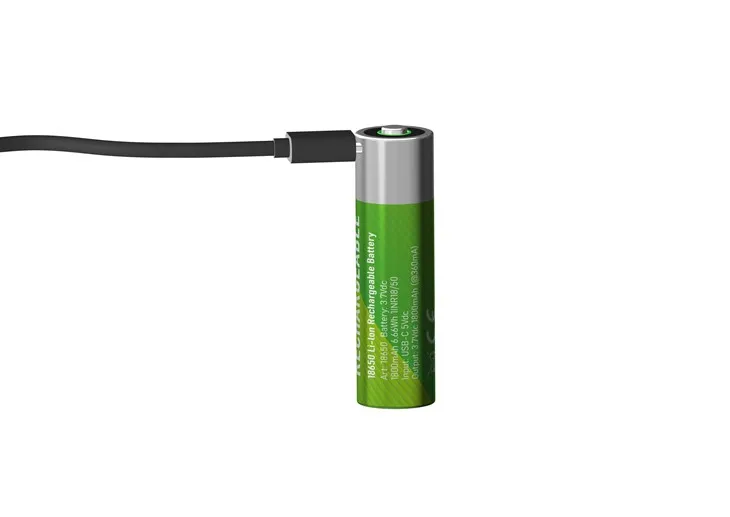
If a 9V lithium polymer rechargeable battery is not suitable for a particular Bluetooth speaker, there are other battery options available. For example, the 18650A Battery is a popular choice. It has a nominal voltage of 3.7V and comes in various capacities. Multiple 18650A batteries can be connected in series or parallel to achieve the desired voltage and capacity.
The Rechargeable C Battery Pack is another option. C - sized batteries are larger and can provide more power compared to smaller battery types. They are often used in larger Bluetooth speakers or audio devices that require a higher power output.
The Lithium Ion D Cell Rechargeable is also a viable alternative. D - sized batteries have a relatively large capacity and can offer a longer runtime for Bluetooth speakers.
Conclusion
In conclusion, a 9V lithium polymer rechargeable battery can be used in a Bluetooth speaker, but only if the speaker is designed to accept a 9V power supply. Voltage compatibility is the primary factor to consider, followed by power requirements and battery performance. As a supplier of 9V lithium polymer rechargeable batteries, we understand the importance of providing high - quality batteries that meet the specific needs of our customers.
If you are interested in using our 9V lithium polymer rechargeable batteries for your Bluetooth speakers or have any other battery - related inquiries, we encourage you to contact us for a detailed discussion. Our team of experts can provide you with professional advice and guidance on selecting the right battery for your application.
References
- Battery University: A comprehensive resource for battery knowledge, including information on lithium polymer batteries and their applications.
- Manufacturer's specifications of Bluetooth speakers and lithium polymer batteries.